

URGENT APPEAL - Further political prisoners in danger in Iran
PRESS RELEASE - For immediate use 19th June 2010

Outrage has been expressed by the Committee for the Defence of the Iranian People's Rights (CODIR) at the recent arrest of a number of workers and student activists in Iran.
The arrests follow the familiar pattern, established by the regime since the disputed presidential election of 12th June 2009, of arrest, trial without representation and severe sentences for those campaigning for peace and democracy.
CODIR has received information that in recent weeks a number of pro- reform activists have been arrested and given unusually harsh sentences including long term prison sentences.
Alireza Akhavan, an active member of the Centre for Workers' Rights in Iran was arrested by the security forces in the early hours of 4th June 2010 in Tehran. He is detained in wing 209 of the notorious Evin prison. The security forces searched Akhavan's house and confiscated a number of items including his writings, computer and other belongings. Akhavan is a well known figure in the protest movement in Iran with links to both the women's rights movement and the worker's rights movement.
According to further reports from Iran, Saeid Torabian, a member of the Tehran Public Bus Drivers Union was arrested on 9th June at 9am. His house was searched and his computer and mobile phone were confiscated and taken away for examination by the security services. Torabian is a well known leader of the Bus Workers union who has been arrested a number of times for his high profile campaigning in defence of worker rights.
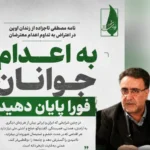
Since 7th December 2009, after his speech at the University of Amir-Kabir on the occasion of the Student's Day, Majid Tavakkoli, a member of the Islamic Student Association of the University of Amir-Kabir, has been detained and transferred to Evin Prison. Prior to his latest detention, he had been detained twice, in 2007 and 2008, and up to now he has spent almost two years in prison. He has recently been handed down an 8.5 year prison sentence.
On 19th May 2010, section 28 of the Revolutionary Court of Justice, sentenced two of the Daftar Tahkim Vahdat's Central Council members to a total of 16.5 years in prison. Daftar Tahkim Vahdat (Office for Consolidation of Unity (OCU)) is the nationwide organisation of the Iranian University Students. The OCU's two Central Council members, Ms Bahareh Hedayat and Mr Milad Assadi, were sentenced to 9.5 and 7 years in prison, respectively. The charges brought against them included propaganda against the system, acting against national security, insulting the Supreme Religious Leader and insulting the President.
Jamshid Ahmadi, Assistant General Secretary of CODIR, strongly condemned the action of the Iranian regime, stating,
"The regime has found itself unable to overcome the political crisis in the country and is targeting political prisoners in revenge. By arresting activists the government hopes to be able to frighten people from engaging in legitimate protest in Iranian cities and towns. The regime has chosen violent suppression as a response against peaceful and legitimate protest demanding basic human and democratic rights."
CODIR has protested against the upsurge of suppressive measures in Iran and has called on the Iranian regime to stop its human rights abuses. It has called on international public opinion to condemn the continuing arrests in Iran and call on the regime in Iran to stop executions.
Mr. Ahmadi, went on to state, "that it is only through a united and effective international campaign against the arrest and execution of political prisoners in Iran that the current atrocities can be stopped."
CODIR is calling upon all democratic individuals and organisations, in particular the labour and trades union movement, to write protest letters to the Iranian diplomatic missions and Embassies calling on the regime to halt all arbitrary arrests and executions and to demand that the Iranian regime:-
is calling upon all democratic individuals and organisations, in particular the labour and trades union movement, to write protest letters to the Iranian diplomatic missions and Embassies calling on the regime to halt all executions and to demand that the Iranian regime,
- Release from prison student leaders Bahareh Headyat, Milad Asadi, Majid Tavakkoli and activists Alireza Akhavan and Saeid Torabian
- End the torture and execution of political prisoners in Iran
- Immediately and unconditionally releases all political prisoners from detention
- Respects the international conventions guaranteeing human rights
CODIR has said that it is against these arrests and rejects capital punishment under any circumstances.
Letters should be sent to:-
Leader of the Islamic Republic
Ayatollah Sayed 'Ali Khamenei
The Office of the Supreme Leader
Islamic Republic Street - End of Shahid Keshvar Doust Street, Tehran, Islamic
Republic of Iran
Email: info_leader@leader.ir
via website: http://www.leader.ir/langs/en/index.php?p=letter (English)
Salutation: Your Excellency
ENDS
Contact Information:-
Postal Address:
B.M.CODIR
London
WC1N 3XX
UK
Website: www.codir.net
E-mail: codir_info@btinternet.com
Further information for Editors
CODIR is the Committee for the Defence of the Iranian People's Rights. It has been established since 1981 and has consistently campaigned to expose human rights abuses in the Islamic Republic of Iran.
CODIR has worked closely with the trades union movement in the UK, the peace movement, all major political parties and Amnesty International to press the case for an end to torture in Iran's prisons.
CODIR has published Iran Today, its quarterly journal, since 1981, explaining the latest developments in Iran and the most effective way that the British public opinion could demonstrate its solidarity with the people of Iran.
In recent years CODIR has worked closely with Stop the War Coalition and has been vocal against any form of foreign intervention in the internal affairs of the nation.
top
Iran's neoliberal agenda!
By Jamshid Ahmadi
Assistant General Secretary, CODIR
11 June 2010

On the fist anniversary of the fraudulent election that secured Ahmadinejad's second term as president, Iran is once again under the international media spotlight. Barely three days after the UN Security Council imposed devastating fourth term sanctions on Iran, the fundamentalist regime has clamped down on its seething population and banned the anticipated mass protest demonstrations planned for Saturday 12th June, the anniversary of the election. As the world public struggles to balance its total opposition to the UN sanctions and threats of military attack by the US and its allies with its abhorrence of the theocratic dictatorship and the adventurous and ill thought pronouncements and actions of the Ahmadinejad and his courtiers, this article exposes the true anti-popular roots and intentions of the regime and its continuing impoverishment and subjugation of the Iranian people.
As seen from the outside, Iran's Islamic regime is superficially characterised by its anti-western foreign policy and particularly by its verbal attacks against the US and Israel. There is a spectrum of opinion that interprets the regime's belligerent stance as "anti-imperialist" or rather "anti American". However, the vast majority of progressives rightly recognise that beneath its sloganeering facade lies a theocratic and reactionary regime fronted by Ahmadinejad's illegitimate government. Less noted is the regime's neo-liberal economic doctrine and its impact on the majority of the population, the working people and the poor.
Since the ending of Iran-Iraq war in summer 1988, the first peace-time government under Hashemi Rafsanjani, with the support of the spiritual leader (Ayatollah Khameneie), embarked on an IMF-based restructuring of the economy. Rafsanjani's era, dubbed as the "Restructuring Epoch through Economic Adjustment", was based on the free market mechanisms of privatisation, deregulation of the labour market, floatation of the currency and deregulation of prices. This soon left Iran's economy shattered with 49.5% inflation, $34 billion national debt and $22.5 billion trade deficit. At the same time, the rich got richer while the standard of living of the majority of Iran's population fell massively and structural poverty grew.
In spite of this, neo-liberal economic theory became predominant within various factions of the regime and those in power ignored the mass impoverishment they were creating. Eight years of Reformist government, from 1997, led by President Mohammad Khatami, continued on the same damaging neo-liberal path trying to create investment incentives and a secure climate for private capital in conjunction with deregulation of labour market. However, increased private sector investment was largely concentrated on non-productive activity, chiefly the import of goods and property speculation and the free market orientation resulted in more and more painful economic hardship for working people and increased unemployment. These grave consequences of neo-liberal economics massively discredited the reformist forces in the eyes of ordinary Iranians and Reformists' efforts to promote democratic changes and civic society paled into insignificance compared to the deepening poverty suffered by the majority of the people. The Reformists' unwillingness to confront economic-political corruption and the way in which the rich continued to get richer further fuelled people's mistrust.
Ahmadinejad, representing one of the most socially reactionary and economically conservative groupings within the regime was able to capitalise on the adverse and unpopular consequences of the Reformists' neo-liberal policies and in 2005, backed by the spiritual leader and the 'Islamic Guard Corps', was able to rig the election. At the same time, the Reformists, having lost credibility with the poor and marginalised, were unable to confront the new government.
At the outset, Ahmadinejad's populist slogans and attacks against the Reformists' economic plans proved popular among the marginalised and poor and certain disorganised sections of the working people and his propaganda enabled him to pose as the people's champion, promising to alleviate chronic poverty, fight corruption and challenge the supper rich. However, it soon became clear that this rogue champion of the people had no intention of reversing the regime's neo-liberal economic plans. Unrestrained privatisation and deregulation of the labour market continued at an even faster pace and workers' protests were crushed. Behind the smokescreen and his bogus anti-American and anti-corruption ranting, Ahmadinejad intended only to re-brand the regime's neo-liberal economic orientation not change it.
Since Ahmadinejad's first term in office there have been no significant increases in productive investments. The economic growth continues to be based solely on the export of crude oil and a form of parasitic capitalism which is engaged in speculation. The net result has been increasing hardship for working people and the poor. The key difference of Ahmadinejad's economic programme with the one operating before is solely the shifting of the dominant economic beneficiaries within the regime's elite. His free market based economic policies are designed to maximise profit and divert it towards new leading groupings in power.
Given Iran's under-developed and warped capitalist framework, the adoption of the neo-liberal economic model has been likewise distorted. However, Milton Freidman would have immediately recognised and admired certain fundamentals that are doggedly pursued by Ahmadinejad's government. Growing privatisation of key public assets and the development of a 'small government' that shrugs off direct responsibility for national economic development but strictly enforces a non-unionised and cheap labour workforce are examples to note. What is missing in Iran from Freidman's neo-liberal model is a totally open competitive market. This is not because of Ahmadinejad's 'anti-capitalist' outlook but because the open market has been deliberately avoided in order to preserve the interest of the oligarchs within the Islamic regime's ruling circles. The 'Islamic Guard Corps' is the key political supporter of Ahmadinejad and its high command has been the main economic beneficiary of the massive privatisations under Ahmadinejad. The Guard's high command, along with its associated cronies in the regime, is now the powerful and the dominant oligarch in Islamic Iran. It will do anything lawful or unlawful to expand its economic empire, including using intimidation and direct force.
It was during Ahmadinejad's first term in office that, with the active support of Ayatollah Khamene'i, the constitution was amended to require the government to privatise key state assets through Tehran's Stock Exchange. The lucrative parts of the oil industry, mines and the national telecommunication infrastructure have been the key areas targeted by the commanders of the Islamic Guard. Wherever possible Ahmadinejad's government has created single bidder tenders with the Islamic Guard or one of its umbrella organisations as the only contender. To justify this wholesale privatisation, Ahmadinejad described it as "giving people's affairs back to people" and dubbed the privatisation as the distribution of "Justice Shares" where ordinary people can become share owners! This is reminiscent of Margaret Thatcher's "share owning democracy" where, as intended, few shares at all ended up with the people.
I dealing with the government's economic problems and in particular the growing budget deficit, during the last 12 months Ahmadinejad's government has embarked on its extremely rightwing "economic shock therapy" which it has dubbed the "great surgery"! Ahmadinejad's plans aim to remove all major price subsidies and instead use this money to provide "cash payments" to the disadvantaged. This is one of the main planks of neo-liberal economics advocated by the IMF. This dangerous plan was even opposed by the parliament that is dominated by the supporters of Ahmadinejad's rigged election. The legislation had to be forced through with the help of the spiritual leader. All experts are warning that the resulting massive inflationary rise will hurt the working people and the poor. It should be noted that Iran lacks the necessary infrastructures in order to be able to divert the so called "cash payments" towards those in need.
Ahmadinejad's government, like its predecessors, sees neo-liberal economics as the remedy to all Iran's economic problems, while at the same time allowing the regime to protect the economic interests of its elites. Like its predecessors, Ahmadinejads government sees the workers of Iran as a dangerous force that needs to be contained in terms of its economic demands, desire to get organised and political activities.
The brutal crackdown by the Islamic Guards on those protesting against the illegal election of Ahmadinejad and continuing imprisonment and execution are not the actions of a state protecting itself against foreign interference. It simply represents the actions of a dictatorship using brute force to protect the political power and massive economic interests of its new oligarchs.
Jamshid Ahmadi is the Assistant General Secretary of CODIR, Committee for the Defence of the Iranian People's Rights. For further information on Iran please visit: www.codir.net or contact codir_info@btinternet.com
top
We struggle for progressive change! (Part 2)
Following the publication of the first part of the CODIR's interview with Jelveh Javaheri, one of the well known activists of the Iranian women's movement, we are pleased to publish the second instalment of that interview. In this part Jelveh answers a number of important questions about the state of the women's movement inside Iran. We encourage all supporters of human and democratic rights to study this important interview.
For the first part of this interview and a short biography of Jelveh Javaheri please visit the following link: http://www.codir.net/editorial.html#51 22nd May 2010

7. What is the central slogan of the women's movement at the current time?
In my opinion, the women's movement does not have a central slogan. However, the course of post-election actions indicates that some of the women's movement activists are more than anything pursuing non-violence and citizens rights, and as such, their slogan is to avoid violence. There are many groups that are after the elimination of discrimination against women. Their slogan remains that of equality between men and women and the elimination of all forms of discrimination against women. Nevertheless, there is no solid boundary between these groups and in general the slogan of equality and the elimination of discrimination could be seen implicitly among most of these groups.
8. Is the One Million Signature Campaign still active?
Yes it is active, but somewhat in shadow. Since 2 years ago, the pressure on the Campaign has been such that even if a meeting was organised over the phone, police and security forces would appear at the location of the meeting and interrogate the owner. This situation practically forced the large body of the Campaign to split into smaller groups. The organising tasks were split between these groups. This situation intensified after the recent elections. Nonetheless, we have been able to advance our work during this period by keeping a low profile and without media publicity. Whenever the connection between these groups was cut off or weakened, the Campaign moved more sluggishly but was able to restore its actions through reviewing and re-assigning tasks. This model, i.e. making the groups smaller and networking amongst them, had a significant impact on the continuation of the Campaign. I believe the Green Movement could utilise this model too because any one of these groups has an institutional role and after the completion of the Campaign goal, they will remain in place. Even today they could get connected with other networks. This is what happened when the mothers in the Campaign approached and expanded to Mothers of Peace and Mourning Mothers.
9. Were there any 8th March celebrations this year in Iran?
I wrote an extensive article about this subject. Prior to the 8th March a number of activists of the women's movement were trying to promote their demands in one way or another. However, on this day we were not able to publicise our demands as loudly enough as we should and act appropriately according due to the atmosphere after the election. This day could have become one of the protest days after the election, with its women-specific slogans, in which case it would have helped both the Green Movement and the women's movement. For whatever reason, this unity did not exist among women, and even the Green Movement did not consider this day in the list of its days of protest. That was how the opportunity of International Women's Day was wasted amidst the current Green atmosphere. Perhaps this was a reminder to think about re-uniting the movements.
It is true that the ambiance has changed. However, if we are thinking of completely abandoning the previous actions and starting fresh movements all over again, we will not only lose the experience we have gained in the past, but would not be able to properly organise our new actions. We will jump from one branch to another. I believe that the post-election events to a certain extent drove the women's movement into some sort of disarray. Many of the activists of the women's movement believe that, considering the new circumstances, the demands have to change. However, I think that demands must be pursued consistently in order to get results otherwise, if we keep shifting direction like this, we will have to go back to square one every time. In my view, the demands could be broadened but the previous demands will remain until they are attained. In particular, the demand to change discriminatory laws, which I believe is both a strategic demand which has the potential to mobilise the public and is also urgent, since the existence of such laws leads to broad violence against women and their lack of independence. Therefore, our demands should not change so swiftly and become isolated from the everyday lives of women. The modes of action, however, should be adjusted and it is these modes and methods that should be kept up to date.
10. What is the status of Non-governmental Organisations (NGOs) in Iran today?
I can definitely assert to the fact that during Ahmadinejad's administrations, NGOs were gradually silenced. Right from the inception of Ahmadinejad's administration, NGOs were put under pressure. First it was the state order that the permits of NGOs must be re-validated. One had to live in Iran and go through the NGO registration and the obtaining of permits during Khatami's government in order to understand what it means to renew the permit during Ahmadinejad's. I was active in one of these NGOs during Khatami's term. In those days, when the talks about the expansion of civil society and NGOs as wings of the state was going on, it took us two years to get our permit, and it was only a year after that it expired, only because the members of the central council of this NGO attended a peaceful gathering and demanded a change in the laws. The order to revoke our permit came directly from the Intelligence Department; even during the interrogations later on, they alluded to this fact. As such, during Ahmadinejad's administration, the permits of NGOs that were able to register, were revoked and those NGOs were simply shut down. In this period, the remaining NGOs are either dreadfully neutral and do not criticise any policies, or are state-related and in fact only carry the name of NGO.
11. What images of women do the mainstream media in Iran, including TV and radio stations, portray? What layers of women are the main audiences or targets of this state propaganda?
The policies of the mainstream media in Iran are somewhat different from each other. For instance, radio stations have better programmes than TV. Nevertheless, the unified policy of state media has become so misogynistic. Nowadays, polygamy is freely publicized on Iran's TV. Women are encouraged to stay at home [become housewives]. Divorce is considered a social problem and not a phenomenon. Female characters portrayed are far from characters of everyday life. The policies of radio and TV and newspapers such as Keyhan are very misogynistic, and in my opinion, very anti-man too. One of the recent ideas promoted by the state is pre-marital education and issuance of the marriage certificate. Imagine that during this education they portray a woman as delicate, subservient, with nice body shape, and a man as burly, rough. It is hard for us to imagine that such images are taught so explicitly. Many objected to these policies, even from the inner circle of the regime, but it had no bearing.
12. How is the relationship between the women's organisations with other civil movements, like the youth and student movements?
In recent years, the women's movement and its organisations have had very good relationships with the students to a large extent, simply because about 70% of students are females. Many of these students live outside their home city, which has a significant impact on their independent thinking and actions. During the reform years, many of these students were members of women's NGOs or they helped organise women's organisations in universities. Establishing the Women's Commission of Tahkim Vahdat" [Bureau for Consolidation of Unity, a major national student organization] was just one example. They organized a student movement with female demands, such as protesting against gender quotas in universities. In particular, after 12th June 2005, the women's movement organised joint actions with the student movement. On the day of 12th June, 2006, a large number of student activists, including Bahareh Hedayat were arrested. A number of them became involved in the One Million Signature Campaign too and absorbed numerous students to this civil movement. It must be noted though that due to their struggle on two fronts, i.e. academic freedoms and the elimination of discrimination against women, these students are under double coercion.
13. In one of your commentaries, you pointed out the silence or relative passivity of the women's movement. In your opinion, how could this be overcome? What are your recommended approaches for strengthening and harmonising the ranks of the women's movement?
I believe joint actions must be organised. Despite the wide-spread range of demands of the women's movement at the moment, I still think that this movement is pursuing specific demands and goals. For this reason, if it could focus on the common points, it would certainly be able to organise very broadly. For instance, on the topic of protest against the so-called Family Protection bill, I believe a collective demand could be agreed upon and this could be, as I mentioned previously, organised around the change in discriminatory laws, along with proposing alternative laws. For example, some have placed the stress upon labour laws; some on family laws; some on the laws and regulations governing universities; or supportive laws to eliminate violence against women; and have demanded equality and the elimination of discrimination in each of these areas. They are all engaged in other activities too, but they could jointly act together around legal issues. I believe this will make the women's movement and its networks stronger and will link these networks together. In this case, we could become stronger in the field of interest of others too, e.g. in the field of the labour laws we will stay beside the labour movement; on the university laws and regulations we will stay alongside the student movement; and on the topic of elimination of violence we will go along the Green Movement in certain paths. In my opinion, this movement has the capability of tying the movements together, as it is present in all of them, one way or another.
14. Do the Iranian women's organisations have friendship and collaboration with the women's organisations in other countries or with international organisations? How is international support and solidarity with the demands of Iranian women?
I believe this collaboration and relationship exists, and its history goes back to the years before the [1979] revolution. During the Constitutional Revolution [1906] many groups had this kind of relationships and after that, during the Pahlavi regimes, some groups, like the Union of the Women Lawyers of Iran, took part in international groups or had relationships with them. In the 1980's, when many of the activists of women's movement left Iran, they could make contact with feminist groups outside of Iran, and after the 80's and the end of Iran-Iraq war, this relationship extended inside of Iran. They became the connecting bridge between Iranian feminists and the feminists all around the world. Currently, and particularly after the launch of One Million Signature Campaign, this rapport has expanded. Since many of the Campaign groups are active outside of Iran, including in England, the US, Italy, Australia, France, Germany, Austria this relationship has been inevitably maintained. At the time of the arrest of activists of the women's movement inside Iran, we witnessed the support of many feminist and human rights groups from all over the world. These groups supported the goals of the Campaign too. In fact, this support is inevitable, because the problem of women is not an Iranian issue, but a global issue. Patriarchy is also a global phenomenon that could be overcome only through the wide-ranging support of the international women's movements for each other across the globe.
15. Do you have a message for CODIR and its readers and human rights, democracy and peace activists?
To follow on from my previous comments, I believe human rights, peace and democracy are global matters. We could not achieve these goals except with broad supports for each other. These three could only be sustained when they are sustained across the world. The threat is when we see that far or near countries around us are in overt or covert war, are suffering from despotism, or are directly suffering from violence. Under such circumstances, the society that we are living in will also inevitably suffer from these issues. At the end, I would like to thank you for caring about the domestic issues of Iran and publicizing them in the media.
top
Further political prisoners in danger of execution in Iran
PRESS RELEASE - For immediate use 18th May 2010

Further outrage has been expressed by the Committee for the Defence of the Iranian People's Rights (CODIR) at the announcement of further executions planned by the Iranian authorities following those last week of five political prisoners accused of 'actions against national security and links with counter revolutionary groups'.
CODIR is very concerned to learn that the Iranian press has quoted the Tehran Prosecutor General as confirming the planned execution of a number of other political prisoners who were arrested last year during the protests after the June 2009 presidential election, including a 70 year old man and his son.
Over the past few days a number of prominent pro- reform activists and leaders have been arrested. Some prisoners have been given unusually harsh sentences including long term prison sentences.
The regime's leaders now openly speak about the arrest of defeated presidential candidate Hossein Mousavi, and his wife, Zahra Rahnavard, a university lecturer, on charges of treason and "being at war with god" because they have criticised the execution of five political prisoners last week.
Jamshid Ahmadi, Assistant General Secretary of CODIR, this morning strongly condemned the action of the Iranian regime, stating,
"The regime has found itself unable to overcome the political crisis in the country and is targeting the political prisoners in revenge. The widespread preparation for protests across Iran on the anniversary of the fraudulent presidential election on 12th June has made the regime nervous. By executing political detainees the government hopes to be able to frighten the popular protest spreading in Iranian cities and towns. The regime has chosen violent suppression as a response against peaceful and legitimate protest demanding basic human and democratic rights."
CODIR has protested against the upsurge of suppressive measures in Iran and has called on the Iranian regime to stop its murderous practices. It has called on international public opinion to condemn the execution of political detainees in Iran and call on the regime in Iran to stop executions.
Mr. Ahmadi, went on to state, "that it is only through a united and effective international campaign against the execution of political prisoners in Iran that the current atrocities can be stopped."
CODIR is calling upon all democratic individuals and organisations, in particular the labour and trades union movement, to write protest letters to the Iranian diplomatic missions and Embassies calling on the regime to halt all executions and to demand that the Iranian regime,
- End the torture and execution of political prisoners in Iran
- Immediately and unconditionally releases all political prisoners from detention
- Respect the international conventions guaranteeing human rights
CODIR has said that it is against the atrocities committed by the theocratic regime in Iran and any other executions and rejects capital punishment under any circumstances.
Letters should be sent to:-
Leader of the Islamic Republic
Ayatollah Sayed 'Ali Khamenei
The Office of the Supreme Leader
Islamic Republic Street - End of Shahid Keshvar Doust Street, Tehran, Islamic
Republic of Iran
Email: info_leader@leader.ir
via website: http://www.leader.ir/langs/en/index.php?p=letter (English)
Salutation: Your Excellency
Head of the Judiciary
Ayatollah Sadeqh Larijani
Howzeh Riyasat-e Qoveh Qazaiyeh (Office of the Head of the Judiciary)
Pasteur St., Vali Asr Ave., south of Serah-e Jomhouri, Tehran, 1316814737
Islamic Republic of Iran
Email: Via website: http://www.dadiran.ir/tabid/75/Default.aspx First
Salutation: Your Excellency
And copies to:
Director, Human Rights Headquarters of Iran
His Excellency Mohammad Javad Larijani
Bureau of International Affairs, Office of the Head of the Judiciary, Pasteur St.,
Vali Asr Ave. south of Serah-e Jomhouri, Tehran 1316814737, Islamic Republic of Iran
Email: bia.judi@yahoo.com
Fax: + 98 21 5 537 8827 (please keep trying)
Also send copies to diplomatic representatives of Iran accredited to your country.
ENDS
Contact Information:-
Postal Address:
B.M.CODIR
London
WC1N 3XX
UK
Website: www.codir.net
E-mail: codir_info@btinternet.com
Further information for Editors
CODIR is the Committee for the Defence of the Iranian People's Rights. It has been established since 1981 and has consistently campaigned to expose human rights abuses in the Islamic Republic of Iran.
CODIR has worked closely with the trades union movement in the UK, the peace movement, all major political parties and Amnesty International to press the case for an end to torture in Iran's prisons.
CODIR has published Iran Today, its quarterly journal, since 1981, explaining the latest developments in Iran and the most effective way that the British public opinion could demonstrate its solidarity with the people of Iran.
In recent years CODIR has worked closely with Stop the War Coalition and has been vocal against any form of foreign intervention in the internal affairs of the nation.
top
Challenge to Anti-Women Laws in Iran (Part 1)
CODIR has recently interviewed Jelveh Javaheri on her views on the social and political developments in Iran since the rigged presidential elections of June 2009. In this issue we publish the first instalment of the interview with her. 15th May 2010

The Iranian women's movement is one of the key sections of the popular movement for democratic change in Iran. Women have played a leading role in the events since 1997.
Jelveh Javaheri, is a journalist and one of the founding members of the Campaign for Equality (Taqeer Baraye Barabari) which campaigned to collect One Million Signatures demanding an end to discrimination against women enshrined in Islamic Republic of Iran's legislation. She has been arrested on a number of occasions and incarcerated in the notorious Evin Prison.
She was also one of the co-founders of Hastia Andish Center, a leading women's NGO, which focuses on promoting women's rights through education.
CODIR has recently interviewed Jelveh Javaheri on her views on the social and political developments in Iran since the rigged presidential elections of June 2009. In this issue we publish the first instalment of the interview with her.
1. What is your assessment of the strong presence and role of women in the Green Movement?
This is not the first time that women have had a strong presence in political and social struggles. Women's presence was very strong during the Constitutional Revolution. This was also the case during the 1979 revolution. Perhaps this was why after the victory of the revolution many of the policies of the Islamic Republic with regard to women were contradictory. On one hand the political leaders, particularly clerics like Ayatollah Khomeini, wanted to mobilise women for the goals of the regime, while on the hand were trying to restrain women. In another words the contradictory policy that was pursued with respect to women, stemmed from their broad presence on one hand, and the need to mobilise them, on the other.
In the Green Movement the presence of women is very noticeable too and could not be ignored. It is of course stronger than the presence in the 1979 revolution. In my view, this condition has developed over time and it is because of the growing awareness of women and the gap between their demands and the realisation of these demands. Another form of this presence was seen in the presidential elections of 1997, when women rushed to the polling stations hoping to get closer to their demands. In all of the following elections this presence at the polls was very evident as women have had tangible demands. However, not only have their demands not been responded to, they have been openly or covertly curbed too.
This deep gap and disconnect, created between the realisation of women's demands and their real demands, has meant that Iranian women have been in continuous struggle through their daily lives in these years. As a result, the social movement of women has broadened its struggle during the past years because their issues have become broader and deeper than before. These social and individual struggles have both given hope for change to women and developed the will to resist, such that they have a strong and significant presence along with the Green Movement that is seeking change.
2. How is the relationship between the Green Movement and the women's movement? How is the gender struggle and the struggle for equality intertwined with the democratic struggle to deepen both and not desert the independent demands of women?
Democracy is the outcome of achieving the rights of women, human rights, environment, etc. As a result, during the struggle to gain their rights, women will inevitably engage in the democratic struggle too. They also have to separately pursue their own specific demands and we should not think that if we are moving on the way of democratic struggles we will necessarily attain the women's demands too.
Many of the activists of the women's movement state that the demands of people have broadened and radicalised, that women's movement, particularly the One Million Signature Campaign, could not respond to the expectations of people any more. Yet some believe that due to the security pressures, circumstances for this type of work has become difficult and people may have become disappointed in change. I don't think this way. I believe that the protests after the presidential elections of 2009 in the form of the Green Movement have created a dynamic and active space that could prepare more fertile circumstances for discussions about the rights of women in the society.
Hand in hand with the strong presence of women in these broad popular protests, the factor of discrimination against women has been repeatedly brought up and emphasized. For instance, Neda Aghasoltan was a symbol of not only the discrimination against women but also the courage and resistance of women. Anyway, I believe that today the people are more attentive to their destiny. At the same time, the struggles of women over the past years has resulted in the fact that the presence of women in popular struggles reminds people of the discrimination against women. On the other hand, practically nothing has changed in the state of women, i.e. demands like the change in discriminatory laws are still on the table. Therefore, with a timely and proper approach, this powerful potential of people for collective action could be utilised, and particularly women, who are ready to make a change in their destiny, could be drawn to this movement.
Under current circumstances, the social movements could raise the voice of their protest even higher by working together. Inevitably, this will not only help these movements expand but will also add to the diversity and dynamism of the current atmosphere and bring forward more tangible demands related to various social groups such as women, workers, students, etc. These are the demands for which people had entered the democratic struggle. If these collective actions work together, their outcome could help develop democracy. In reality, today a common point has been created between various social movements in Iran that ties all of us for common action. In fact, we all want to attain democratic means such as civil institutes, free gatherings, and people-oriented media.
3. Do you think that the previously tried forms of struggle, like the experience of the One Million Signature Campaign or other campaigns that resulted in raising the gender issue in society, must be revisited in the current situation and replaced by alternative methods?
In my opinion, both yes and no. Particularly in relation to the One Million Signature Campaign the previous activism could still be continued, because in my opinion, in the absence of people-oriented public media, talking face to face with people still is very efficient. We saw that this method was adopted by the Green Movement too and was even employed prior to elections. During the protests after the elections, many people notified each other of rallies through one to one communication. However, because we should never move in a hollow space, new tactics must also be employed in the new atmosphere.
4. The hundred-year old movement of women has been successful in publicising the gender-related demands among certain social strata. How do you see the demands of working people and the possibilities of organising them to raise their awareness?
Unfortunately not much significant work has been done in Iran about the working women. The reason might be that due to the sensitivity of the Islamic Republic to any form of labour-related organisations, no organisation has been formed to deal with the matters related to female workers which they themselves could steer. Even if such an organisation was set up, it would not be able to develop a broad and steady movement. Although in such movements as the One Million Signature Campaign the goal was to go among various classes and groups of women and to depict their pain and suffering through face to face action, but the demands of working women was not directly raised. The Campaign tried hard to engage various social forces and was successful in raising its legal demands, which were class-neutral demands, to working women, but was not able to organise them around these demands. I believe it is necessary to have independent movements developed by the working women and other social forces, including women of other classes, should fully support this effort. In other words, somehow the practical awareness must be developed among working women.
5. What are the urgent demands of Iranian women at present? Whether in conjunction with the recent post-election events or in general, what is the status of women's organisation in Iran in terms of the scope and extent of activities? What would be the challenges facing women activists in the new Iranian year?
The question about the urgent demands of Iranian women at present is not a question that could be easily answered. I think that the demands of activists in the women's movement may not necessarily have priority in the demands of Iranian women. Up until the recent elections, and particularly in the last few years, the activists of the women's movement had been emphasising certain specific demands, such that you could identify various groups by their demands. For instance, those who put emphasis on changing the discriminatory laws, such as the One Million Signature Campaign, protestors against the Family Law, and No-Stoning Campaign; those who were striving to heighten the political participation of women, such as the coalition of reformist women; those who called attention to the laws related to gender segregation that systematically ban the presence of women in public events, such as the coalition against gender discrimination in universities and the campaign for the right of women to enter stadiums; and those who fought to eradicate honour-related family violence among Kurdish women, such as the committee against honour violence.
Among all of these efforts, the one demand that seems to have dominated over these years amongst various groups of women was the demand to change the discriminatory laws. For example, at the same time that students groups were pursuing the trade demands of female students, they also joined in alliances that were pursuing the change in discriminatory laws and made efforts to spread these demands among scholars. The coalition of reformist women attempted to build up the religious renascence views and enhance the political involvement of women in order to further impact on decision making about the change in the discriminatory laws. Also, the committee against honour violence paid due attention to changes in discriminatory laws related to honour killings, while it struggled against existing traditions and conventions among Kurds, and most of its members also participated in the One Million Signature Campaign.
It seems like these groups have somewhat changed after the elections. I believe that after the elections, the women's movement, like other movements, somehow did not have adequate coherence. Maybe if this movement had adequate coherence after the elections, it would have had favourable results and achievements. This lack of coherence could be attributed to a certain degree to the unfamiliar circumstances and the excitement of events on one hand and on the other hand the widespread security atmosphere preventing the formation of organisations in the years prior to the elections. It seems that at this moment the activists of the women's movement more than anything need democratic means to express and pursue their demands. This way, some may draft their demands mostly around attaining and establishing these means like the reformist women. Some many resort to collective action to achieve their demands and in doing so, inevitably seek democratic means, like the One Million Signature Campaign.
6. What do you think about the intensification of some legal restrictions against women such as passing the so called "Family Protection" law in the judiciary committee of the parliament, reducing the working hours of women, etc?
This tendency is now picking up pace. In fact, after the ninth government (Ahmadinejad's administration) took office, we witnessed all kinds of plans to practically keep women at home. This trend was faced with broad protests in the past few years but today it appears that the government and conservative forces are trying to take advantage of the current chaotic circumstances and push this trend ahead faster. First and foremost, educational institutes such as daycare centres, schools and universities are targeted, along with the laws related to the family and employment of women. That is, by promoting the Islamisation of educational institutes once again, and at the same time changing the laws towards more discrimination against women, the government is moving faster than ever toward tighter controls over women, and keeping women at home. Besides these changes we witness a grave invasion against feminism and equality-seeking movements of women in universities and through the state media, in a manner that equates these movements to the "masculinisation of women" and portray them as destroyers of the family. But in essence, it is the plans of the state and parliament that destroy women and in the long run drives families into crisis.
to be continued...
top
Five political prisoners executed in Iran
PRESS RELEASE - For immediate use 9th May 2010

The Committee for the Defence of the Iranian People's Rights (CODIR) is calling for international condemnation of the execution by the Iranian authorities this morning (9th May) of five political prisoners accused by the theocratic regime of actions against "national security" and "links with counter-revolutionary groups".
Opposition forces in Iran allege that the trumped-up charges levelled against these five victims are identical with charges fabricated by the regime to justify harsh treatment, including execution, of its political opponents. CODIR has in the last two years campaigned for the release of Farzad Kamangar and Shirin Alam Hooli.
Farzad Kamangar was arrested by Ministry of Intelligence officials along with two other members of the Kurdish minority, Ali Heydariyan and Farhad Vakili, in Tehran around July 2006. The three men were sentenced to death on 25 February 2008 after being convicted of 'moharebeh' (enmity towards God), a charge levelled against those accused of taking up arms against the state, in connection with their alleged membership of the armed group, the Kurdistan Workers Party (PKK). The trial took place in secret, lasted only minutes, and failed to meet Iranian and international standards of fairness.
Ali Heydariyan and Farhad Vakili also received additional sentences of 10 years' imprisonment for forging documents. Under Iranian law, they must serve their prison sentences before being executed. The death sentences of all three men were upheld by the Supreme Court. Ali Heydariyan and Farhad Vakili were executed this morning along with Farzad Kamangar, an active member of his local teacher's union.
Also executed were Mehdi Eslami and Shirin Alam Hooli.
It is noteworthy that all five victims had repeatedly rejected the allegations of being involved in terrorist activities. In the case of Farzad Kamangar, a teacher and journalist, his main "crime" was that during a short visit to Tehran he had stayed in the house of Ali Heydaryan and Farhad Vakili whom he knew. The authorities alleged that they had discovered explosive materials from a car belonging to Ali Heydaryan and Farhad Vakili. Farzad's crime in effect was that he was in the wrong place at wrong time.
Shirin Alam Hooli was a twenty eight year old Kurdish woman who had been sentenced to death in Iran for her alleged support for PJAK, a militant opposition group. Convicted of 'enmity against God', since her arrest she had routinely and repeatedly been subjected to torture and degrading treatment to confess to supporting PJAK. She had no access to legal representation during her long and gruelling interrogation period. Her rights as an accused were never observed.
Jamshid Ahmadi, Assistant General Secretary of CODIR, this morning strongly condemned the action of the Iranian regime in executing these 5 political detainees.
"Fearing the eruption of a new wave of popular protests on the first anniversary of the fraudulent presidential election of 12 June 2009, the regime has attempted to inculcate a climate of fear and terror in Iran" he said.
"The regime's rush to execute these prisoners, in the face of international concern about the sharp deterioration in the human rights situation over the past year, is a disgrace. Instead of engaging in dialogue with international human rights agencies such as Amnesty International and the UN Commission on Human Rights about their concerns, the regime is intensifying its murderous activities against the opposition. It seems that the theocratic regime wants to prove that it intends to ignore completely international public opinion. This is a very dangerous tactic."
Mr Ahmadi added: "CODIR calls on all democrats and advocates of human rights across the world to condemn today's executions and demand an end to these barbaric acts, by writing to the Embassies and diplomatic missions of the Islamic Republic of Iran in every country."
CODIR has said that it is against these and any other executi
ENDS
Contact Information:-
Postal Address:
B.M.CODIR
London
WC1N 3XX
UK
Website: www.codir.net
E-mail: codir_info@btinternet.com
Further information for Editors
CODIR is the Committee for the Defence of the Iranian People's Rights. It has been established since 1981 and has consistently campaigned to expose human rights abuses in the Islamic Republic of Iran.
CODIR has worked closely with the trades union movement in the UK, the peace movement, all major political parties and Amnesty International to press the case for an end to torture in Iran's prisons.
CODIR has published Iran Today, its quarterly journal, since 1981, explaining the latest developments in Iran and the most effective way that the British public opinion could demonstrate its solidarity with the people of Iran.
In recent years CODIR has worked closely with Stop the War Coalition and has been vocal against any form of foreign intervention in the internal affairs of the nation.
top
CODIR addresses Peace Conference in New York

On the weekend before the Nuclear Non-Proliferation Treaty (NPT) Review Conference, scheduled for 3rd May - 28th May 28 at the United Nations in New York, the 2010 people's International Conference for a Nuclear-Free, Peaceful, Just and Sustainable World, was held on April 30th and May 1st 2010 in New York City, United States. The conference was organised by the International Planning Committee of the 2010 Nuclear Non-Proliferation Treaty Review Conference and the Mission and Social Justice Ministry of the Riverside Church. More than 800 delegates from around the world participated in the plenary sessions and workshops of the conference.
The main banner on the table of the plenary speakers read: No Nukes, Fund Human Needs. As well as the many delegates from the host nation, Japan, France and Britain, NGO representatives from Canada, Germany, Korea, Israel, India and Russia were amongst the participants. The prestigious speakers included Tadatoshi Akiba the mayor of Hiroshima, Socorro Gomes the president of the World Peace Council and Ban Ki-moon the Secretary General of the United Nations who addressed various sessions of the conference.
On the second day of the conference, the participants welcome the bearers of the "Abolition Torch". The organisers of the conference also co-organised the "International Day of Action" rally, march and music festival, on 2nd May, in New York city. The festival called for the abolition of nuclear arms and for world peace. It aimed to send a message to the world and the leaders who will attend the UN for the Nuclear Non-Proliferation Treaty review that:
- We want a Nuclear Free Future!
- Fund Human Needs, Not War!
- End the Wars in Iraq and Afghanistan!
- Protect the planet instead of destroying it with war and nuclear proliferation!
On the second day of the conference films and documentaries about the atomic bombing of Hiroshima were screened. The Declaration of the Conference International Planning Committee was also released on the second day. For more information about the conference, speakers and workshops, see
http://peaceandjusticenow.org
Nazar Habib, CODIR's representative at this important conference, attended two of the workshops as a panellist and speaker, Nuclear Weapons Free Zone in the Middle East and National Struggles Against the Violence of Global Imperialism. In the second workshop which was sponsored by the US Peace Council and the World Peace Council representatives from Canada and Israel were among the panellists. CODIR's representative spoke about the two bitter experiences of the people of Iran. The first of these was the 1953 coup d'ètat against the popular movement of Iran and the democratically elected prime minister, Mohammad Mosadegh, staged by US and British intelligence services. The second was the war that was imposed on Iran shortly after the popular revolution of 1979, launched by Saddam Hussein's regime, provoked by imperialist forces. The tensions around Iran's nuclear policy while the naval fleet of the US and NATO, including nuclear submarines, are patrolling around the Persian Gulf, was also briefly mentioned. All of these events highlighted the struggle of the Iranian people for independence, democracy and social justice.
The Nuclear Weapons Free Zone in the Middle East was co-sponsored by CODIR. Issam Makhoul of the Emil Touma Institute for Palestine and Israel Studies and a previous member of Knesset, and Phyllis Bennis from the Institute for Policy Studies (Washington, DC) were among the other panellists (and co-sponsors) of this workshop. The full text of the speech of CODIR's representative delivered in this workshop follows.
Greetings!
This conference is taking place at a time when the Middle East and the world are gripped by a deep multi-faceted crisis. This is a crisis whose main victims are not only the ordinary and working people of the world but also the opportunity for sustainable peace and progress. As far as the Middle East region is concerned, the continued presence of occupying forces in Iraq and Afghanistan, the tensions in and around nuclear Pakistan, the chronic crisis in Palestine and Lebanon, and the real possibility of a new military conflict involving Iran are the political realities in this region. Despite the change of administration in the US, and the statements of President Barack Obama about a change of course, the people of this region are still suffering, mainly because of the aggressive and war-mongering polices of the Israeli government backed by the US.
We certainly hope that during the course of this international conference a better understanding would be achieved of the direction of events in and around the Middle East and the factors influencing the worrying situation in this sensitive area of the world. These include:-
- the accumulation of nuclear weapons by a few Asian states and Russia;
- the aggressive policies of the US administration and its allies in the region (in particular Israel);
- the role that a number of reactionary regimes in the region are playing; and
- the strength and ability of the democratic forces to influence the international balance of forces on the peaceful future of the region.
The controlling role of the US in some of the countries of the region enables it to gain access to oil and gas reserves and gives it crucial geo-political control over a region that is the connecting bridge between three continents. Many of the countries in this region are in the best position for the transport of vast oil and gas reserves to the East and West. By having complete control over the production and price of oil, the US could potentially put pressure on its economic rivals like China, Russia, Japan and the European Union.
The events of recent decades have demonstrated time and again that the US administration is not a force for peace and development in the Middle East. The wars that devastated Iraq and Afghanistan; the continued US support for the Israeli government; the occupation of the Palestinian people and their lands; and the threats of further military attacks and interference aimed at pressuring countries like Iran are examples that can not be overlooked. The US administration has exploited every possible excuse to justify its military presence in the region and continued support for its strategic allies in the region such as Israel, Turkey, Egypt, Jordan, Pakistan and others.
The only weapons that peace activists have are their plans, policies, solidarity, and their power to mobilize people. In our policies we should elaborate on the links between the struggle for peace and progress with the fight for democracy and human rights.
As peace-loving forces, we are also democrats. Peace can be best maintained under democratic conditions, and our campaign for democracy and human rights could be most successful under peaceful conditions. However, the history of the Middle East is full of examples of imperialism's plots and aggression and repression by tyrannical regimes. The key to understanding the reality of the situation in the Middle East is to understand the vicious circle of imperialist adventures, the devastating and irresponsible policies of local dictatorships against their own people, and the manner in which these two lend a hand to each other to build tense circumstances which they both benefit from.
In our view there is a clear and distinct difference between our understanding of imperialism and its policies and those of the Islamic fundamentalist forces. The theocratic regime of Iran, dreams about an Islamic empire whose mission is to wage and win the war between "Islam and the Infidels". They think of war as a "blessing" which is why Iran continued the war with Iraq unnecessarily for about 6 years after Saddam's forces were forced out of Iran about a year and a half into the 8-year war. For us, struggle against imperialism goes hand in hand with the struggle for peace, democracy, social justice and building a world free from aggression and war. Our struggle, however, can only succeed through building peaceful, mass movements for an alternative world order and not through military adventurism or acts of terror.
Let me briefly touch specifically on the situation in Iran. The consequences of corruption, and adopting devastating and repressive policies by the Iranian regime, have been poverty and hardship for ordinary working people. It is important to know that in Iran not only the state and various branches of power have been militarized, but the economy is also in the hands and under the control of military or para-military groups, particularly the Revolutionary Corps. A fundamentalist expansionist regime that lacks the support of the ordinary people, is faced with discontent by the people, is militarized in every aspect of life. It will do anything to stay in power, from brutal repression to calculatedly creating tension and risk of war in order to avert social progress. The provocative rhetoric of the heads of the regime about Israel and the catastrophe of the Holocaust should also be looked at in this light. Due to its irresponsible and belligerent foreign policies, the political and diplomatic position of the regime is very weak in the international scene.
On the other hand, since domestic national production is ruined and the country heavily depends on oil revenue and foreign imports, the sovereignty of the country is being played in the hands of regional powers. In reaction, the regime brings into play its military might and the national oil money to interfere in the internal affairs of other countries, and also to gain the support of other fundamentalist groups, as it has done for years in Afghanistan, Lebanon, Iraq, etc. We believe that such a regime could irresponsibly spark the flames of war at any time.
The dynamics of these policies for the people of Iran are reflected in the uncertainty which is now facing the regime. Following the 12 June presidential election last year protests have swept the country. These protests have demanded change, freedom, an end to repression and the recognition of human rights in Iran. They have been met with violence, repression and imprisonment for many. Such a response is that of a regime which does not have confidence in itself and can only resort to the use of the state machinery to hold on to its power.
The voices of the outside world, making themselves heard in support of the ordinary people of Iran, can add to that pressure for change upon the regime. The voices of delegates to this conference are vital in this respect, to ensure that the Iranian people know that they are not alone in the stand they are taking against the anti-democratic practices of the clerics.
Our position against Imperialist Intervention
In recent years the world has witnessed the constant stand–off between the US administration and the Iranian regime over the issue of nuclear weapons. It is imperative to reiterate that the issue of nuclear crisis and the resulting international tensions, and escalation of friction in the Persian Gulf region truly concerns the national and patriotic forces in Iran and international peace movement. Recognizing the national right of a country, including the right to peaceful use of nuclear energy, CODIR has always asserted its strong opposition to any foreign interference in Iran's domestic affairs. We have, at the same time, stated that promoting and taking advantage of these policies by the theocratic regime of Iran is just a disguise to suppress the rights of people and to distract public opinion from the escalating domestic problems. The aggression of the US and its allies in the region, which have led, under various guises, to a total military occupation of two neighbouring countries, and its unprecedented military presence in the Persian Gulf, are other concerning issues that cannot be neglected.
The progressive and peace-loving forces have a unique responsibility to not only oppose the US plans for the Greater Middle East but to mobilize the people on a broad anti-intervention program directed at building the foundation for peace, democracy, development and social justice. Clearly the struggle to put an end to the military adventurism of US and its allies in our region is important. In particular an immediate end to the occupation of Iraq and Afghanistan; the return of occupied territories by the Israeli government as per UN resolutions; and to avoid another destructive war imposed against Iran or any other nation are important duties of the peace activists and progressive forces of the world.
The Committee for the Defence of the Iranian People's Rights pledges its support for this struggle and its noble goals and is conscious of its responsibility in these critical moments. We are also determined to continue our struggle for creating the widest support for the struggle of the Iranian people for peace, human rights, democracy, and social justice.
Long live international Solidarity
For Peace and Democracy
Thank you for your attention.
1-May-10
top
GREETINGS ON MAY DAY 2010
Support the struggle of the Iranian people for peace, freedom and democracy! 1 May 2010

Around the world, for over one hundred years, workers and their trade unions have celebrated May Day - International Labour Day. It is the day on which workers internationally show their shared commitment to justice and freedom. Since the first International May Day in 1890, it has been celebrated in public gatherings but also in jails and prisons - for there are still governments which forbid unofficial gatherings on the first of May.
On this May Day, as we celebrate the achievement of workers across the world, the Committee for the Defence of the Iranian People's Rights (CODIR) continues to seek your support for the imprisoned, oppressed and disenfranchised people of Iran.
For years, workers attempting public May Day demonstrations in Iran have been harassed, beaten, and jailed. For many years, workers and labour rights supporters seeking to organise May Day gatherings have been sentenced to public whippings.
Mansour Osanloo and Ebrahim Madadi, leaders of the Union of Workers of Tehran and Suburbs Bus Company, are currently serving five-and three and a half-year sentences, respectively, solely for their union activity. Osanloo has been harshly treated and denied essential medical treatment. Just weeks before the establishment of the union in 2005, activists including Osanloo were attacked severely by company thugs and members of government sponsored organisations. Further examples include the attack on the trades union of Haft Tappeh Sugar Cane Company, whose leadership has been sacked from their jobs and are imprisoned, as well as attacks upon the teachers union.
Since the presidential elections on 12th June 2009 major protests have swept across the cities of Iran as people take to the streets to make known their opposition to the Ahmadinejad government. The immediate demands of protesters centred on the outcome of the election itself in which Ahmadinejad, against all the odds and the opinion of most observers, was declared the winner.
The outrage which was triggered at the flagrant manipulation of election results by the authorities however, has now become a more generalised demand for change in the Islamic Republic of Iran.
The imprisonment of trades unionists, peace activists, students and women's rights activists is nothing new for the Islamic Republic, such activities have been going on since the early 1980's, and have seen the regime condemned by progressives across the world. The recent protests however have seen this process intensified with as many as 5,000 people arrested and imprisoned following the protests last year.
In Iran today the voices of the ordinary people are not heard and every attempt is made to silence those who speak out.
On this May Day we ask you to add your voice to the pressure from the international community to,
- condemn human rights abuses in Iran;
- demand the release of all trades unionists and other political prisoners;
- demand free and fair elections; and
- demand the freedom to set up independent trades unions.
Postal Address: B.M.CODIR, London,WC1N 3XX UK
Website: www.codir.net
E-mail: codir_info@btinternet.com
What is the Committee for the Defence of the Iranian People's Rights (CODIR)?
CODIR has been established since 1981 and has consistently campaigned to expose human rights abuses in the Islamic Republic of Iran.
CODIR works closely with the trades union movement in the UK, the peace movement, all major political parties and Amnesty International to press the case for an end to torture in Iran's prisons.
In recent years CODIR has worked closely with Stop the War Coalition and has been vocal against any form of foreign intervention in the internal affairs of the nation.
top
Iran's Youth Seek Radical Change! (Part 2)
CODIR recently interviewed Soheil Asefi, a well known, young Iranian journalist, campaigning for democracy and social justice in Iran. In this extensive exclusive interview, that will be published in two parts, Soheil Asefi speaks about the reality of life in Iran today. In the following pages, we publish the first part of this interview. CODIR encourages all those supporting the campaign for peace, democracy and social justice in Iran to read this facinitating commentary. 10th April 2010

CODIR: University students in Iran have had a substantial role in the political events of the recent 80 years. The movement that led to the revolution of February 1979 had significant and vital ties with the universities and university students. The left revolutionaries had a stronghold in universities at the time of the February revolution. Could the same be said about the developments of recent months?
S. A.: As far as I know through my close contacts with Iran, in all the days of the recent months, all the left forces were present on the stage. There is no systematic and organised presence though, and there are still debates among the left activists over this movement, and what is actually known as the Green Movement. Regrettably they have not concurred over a common denominator yet. A number of leftists fully support the Green Movement whereas some other groups would like to go along with it while keeping their distance and independent flag. There are some that totally oppose it. There are also left political prisoners, from Mansour Ossalu and Ibrahim Madadi, two trade unionists who are in jail because of pursuing their trade union rights, to women activists like Aliyeh Eghdamdoost who is in prison only because she attended the peaceful demonstrations of women. Recently a great number of left activists who were arrested and some were released on bail, like Omid Montazeri who is a left student activist and was said to have been sentenced death and later on his sentence was reduced to six years in prison. Despite the unprecedented clamp down on left political parties and organisations in Iran during the last 31 years the left is still present at all levels of society and the regime's fear from their presence and their potential power is very evident in the recent events. Official authorities of the Islamic Republic have repeatedly warned against the presence of Marxists in the recent movement. But they (left) always do what they have to do, even under circumstances that their organisation and assembly becomes almost non-existent. They make use of their past historic experiences, and that's the secret of their survival.
CODIR: The extreme leftist from one side, and reactionary right forces from the other side, both maintain that the policies and actions taken or being taken by Ahmadinejad have an "anti-imperialist" or even "socialist" nature. Part of this is the result of close relations between the Iranian government with Latin American states and President Hugo Chavez of Venezuela. As a young writer and a progressive thinker, what do you think about this matter? How do you see the nature of policies introduced by Mr. Ahmadinejad?
S.A.: This is a very rudimentary question. This is the subject that has provoked extensive debates and discussions among the Iranian left forces on one hand, and between these forces and the extremist neo-liberal forces in Iran on the other hand. After the collapse of the Soviet Union, uni-polarization on one hand, and competition among the great powers of the world over the global markets on the other hand, there has been some ambiguity about the global scene for some of the progressive forces of the world. As you pointed out in your question, those two mentioned forces take advantage of this situation for their own goals and contrary to the reality of the situation in Iran. Unfortunately, at the peak of the struggle of the Iranian people, the voice of the progressive and left forces of the world did not resonate as it should have in support of the popular movement in Iran. In some cases we witnessed such cliché and superficial characterisation of the existing situation that made the conscious Iranian activists deeply sad, e.g. all of these events are 'velvet' and are steered by the great Western powers, particularly the US, that the Ahmadinejad government is elected by the masses and is in confrontation with the US. Surely, the right also drew on these sometimes and claimed that your global friends are friends of Islamic fascists.
For instance, over the time that I have been living in Germany, as a journalist in exile that has always been radical and independent, various media have interviewed me many times, except the few left press that are published here. This is because the perspective of part of the global left about various developments, especially in Iran, is unfortunately not a realistic and objective look at the political scene in Iran. Yes, the Islamic Republic has been in dispute with the US from the day it was created and established but this hostility stems from their deeply reactionary and anti-modern nature. In fact, it was behind the slogan of "Down with USA" that they crushed thousands of anti-imperialist and left forces in an organised manner, and this suppression of left forces in various areas is still going on.
Under the pretext of the threat of the Islamic Republic, Americans have deployed military forces to a large part of the Middle East in the past 30 years. This game, being a critical game for political Islam, was created directly by imperialism at a certain point in world history and cost the Iranian people big time. We have to see a country which is independent and raises the flag of opposition to the US and imperialism, that will move forward and promote the interests of working people and to expand democracy. Today, we are talking about a country that claims the most opposition to the US but the use of the term "imperialism" and "syndicate" is banned in it. Imperialism has a clear economical definition. This is a complicated situation and in this complexity, it is difficult to say where Bolivia or Venezuela stands and what other countries in the Americas are doing.
The closeness between the head of the Iranian government and Latin American countries and Hugo Chavez really shocks and deeply saddens the progressive and left forces in Iran. They have tried many times to have their voice heard by those who claim to strive for "another world", and so far this effort has been practically fruitless. This amity with the present president of Iran and their support for him and Iran's regime, which is under the control of mullahs, is shocking to us. What they do is unbelievable and is not consistent at all with the basic pillars of today's civilisation and democracy, socialism, and our views and beliefs, which they claim to believe in too. Though they talk about opening new ways to fight imperialism in the world of socialism, regrettably they follow the outdated and obsolete approach and thesis of "the enemy of my enemy, is my friend."
Their policy makers must know better than in today's world, there are two forces in struggle with imperialism:
1. The camp of progressive, peace-loving and justice-seeking forces, which includes them and us;
2. The camp of regressive forces, remainders and remnants of slavery and feudalism era who want to take the people of the world back to the Stone Age.
The Iranian regime and the friend of theirs, Ahmadinejad, are in the first ranks of the second camp. A review of all the events of the recent months in Iran, and the economic plans of this coup government, which are pursuing the prescriptions of the World Bank and the IMF against the interests of the people and especially the working class, indicate the real orientation and nature of Islamic regime. Despite the fact that Khatami had a strong inclination toward neo-liberal economy, the Khatami government was not able or did not want to control all negative aspects of the "structural adjustment" policy. Even at that time there were clear and evident indications that the competition, i.e. militarised capitalism, was taking shape and rising to power. When this capitalism took the power, it put the plan for elimination of subsidies on its agenda for several reasons.
One justification was that since the 3rd Development Plan the preparations were made for "targeted subsidies" [i.e. elimination of subsidies], and some sort of stabilisation and shift was planned. Here it is also necessary to recognise the roots of the specific policies of those governments in neo-liberalism. The other pretext in favour of the government was the interpretation of Article 44 of the Constitution (dealing with ownership in macro economy) and the role of this Article in favour of the government. [With the executive order of the Islamic Supreme Leader] the 9th government [1st terms of Ahmadinejad in office] gained a solid support in terms of high military and political power, and from the clergy and also ideologically. Therefore, it got the opportunity to implement these changes and reforms. The other reason was that the Ahmadinejad government itself was very keen on making these changes. The militarised capitalism has its own needs and necessities, one of them is the elimination of subsidies. The ultimate goal of neo-liberal and neo-conservative capitalism (which eventually is the economic model of the Ahmadinejad government) is to eliminate the subsidies, because it wants to convert labour to a commodity and release it in the market, and not taking any responsibility to protect wages and the standard living of people. These responsibilities are considered barriers for the foreign investments which the government is seeking with a staggering hunger. We clearly see that with regard to development plans and economic studies they constantly recommend getting the approval of a foreign consultant in any way possible, even by paying extra money. In many cases they know that a foreign consultant does not even have ten percent of the information or analytical knowledge of a domestic consultant, but they insist on getting its approval. This is because they want to open the doors for foreign capital. Foreign capitalism does not like unions and syndicates; does not like subsidies. It just wants to take advantage of cheap labour and run its business. It wants to take advantage of unemployment, and reduced wages.
Anyway, in my opinion, if any of the previous governments and even any of the religious reformist candidates had assumed power at the current situation, it would have been facing a deep economic crisis. I believe Ahmadinejad's government is the most extreme right-wing government that Iran has ever seen.
CODIR: Could the current movement in Iran be considered as a movement of the middle classes as opposed to and in contrast to the interests and demands of the working people and working class? Why is that some groups outside of Iran, in keeping with accusations of the regime and its propaganda system against this movement, regard this movement as similar to the developments in Ukraine and Georgia, in favour of the US and therefore take a hostile position against it?
S.A.: You may call it a middle class movement, but whether in the present stage it is against the interests and demands of the working class of Iran or not, there is no reason or proof or analysis that confirms it. In developing countries like Iran, the middle class plays a central role and has a significant weight. As it develops and grows, this movement could and should attract the working class to it, but that a wider discussion. The course of this movement in the current stage is very important in drawing the working class to it.
What I have noticed with regard to the interaction of Americans with the popular movement of Iran in the recent months is that they do not try so much to exploit these developments in an organised manner. They try to intervene through steering and directing, and support propaganda. For a long time, they have been employing certain individuals under various titles. There are various think-tanks that finance these individuals. There are also "Green Movement" businessmen. They may drag certain segments of the middle class, who may not have a high political knowledge, plus a number of sincere but uninformed political activists inside and outside of Iran to follow them. However, in my opinion, the objective developments in Iran are much more convoluted and complicated than the intentions of these individuals. Some of them have been part of the Islamic Republic's regime. Some of them have now left the country and are mostly residing in the US and Britain, serving the interests of ultra right-wing. Under the guise of reformists they present themselves as guardians of the "Green Movement" and declare that the whole world is green.
I believe that the Green of the people of Iran, in fact the rainbow spectrum of the demands of the people of Iran, is far from the Green of the "Green Movement" businessmen who are alien to the laws of social development and think of Iran as the scene to implement their velvet revolution theories. They are financially and morally supported by the above-mentioned centres and would like to inflict their theories upon the discontented people of Iran and execute those theories. In my opinion, there was no connection between the two presidential candidates and the US. This is the truth. What happened in Iran was different from the events in Ukraine or Georgia. In Iran, we are talking about a historical background of struggles, and then there is a government of a regime with the characteristics that were mentioned before. Overall, despite the intentions of some individuals or reformist political groups, to organise and execute a velvet revolution, knowing the circumstances in this society and this regime I don't believe that such methods could ever be executed in this form in Iran.
There are many complexities. My final conclusion is that from the point of view of American system, Iran's government is a conforming government in the economic arena, but on the political stance, which is important at the global level, Iran is defiant. I give you a few examples. For the West, the price of oil is not as important as the security of oil. We saw that the price of oil soared to as high as $140/B. But if the security of oil is at risk, then the West will step in. Who puts the security of oil at risk? Iran? We don't know.
The other argument is that the US has attempted to approach Iran in friendship a number of times. One instance was the scandal of MacFarlane and Iran-Contra. This has happened many times and later on it became known that some things were happening behind the scene. One of the reasons for what happened to Tudeh Party of Iran after the revolution had to do with this. This party was the victim of such behind-the-scene developments. Uncovering the clandestine networks of Mujahedin and Fadaian organisations was not an easy job. I don't believe that they were identified merely by mullahs and doomed to that destiny. This is not conspiracy theory or like the reasoning that the Iranian right-wing employs in an attempt to smudge the historical facts; today, there are numerous facts to make us believe this.
CODIR: What is the role of the working people in this protest movement? Does the current movement encompass the slogans and the working people of Iran? What is the role of left political forces and the socialist and left intelligentsia in this movement?
S.A.: As I mentioned earlier, in these past month many of left political forces and socialist intellectuals stood beside the people and accompanied them everywhere, and as in the past, paid dearly for it too. Although the media is not available to them for these efforts to be visible as they should be, the proof is in many names that you may hear in the news. In my opinion, the socialists and the working class must consciously move shoulder to shoulder with this movement without giving up their own ideals, with their own banner and not under the flag of any Green (or any colour for that matter) political tendency that would be making the same mistake as in the February revolution. This was the large-scale strategy of some progressive political groups and they dearly paid for it too. I believe that the objective at the current phase is democracy and transition to a secular system, and particularly such democracy that the people take part in its making. Therefore, I believe that the left and democratic forces in Iran could accomplish their task by advocating their own class and trades union demands in a democratic movement. Socialist and democratic tasks could both be pursued at the same time. If there is going to be confrontation or hindrance, let it be from the other side. Let them ask us to break away our course from the lefts, workers and working people who have a history of struggle in this country. I think when a democracy-seeking, democratic movement is formed, the veteran and powerful left, socialist, democratic, and labour movement has to assume its historic task in that movement. They should not side with those who are the real enemies of the working people and whose hearts are somewhere else but at this stage are in opposition to the regime. These progressive forces must diligently find the common points and accompany the movement in specific ways, and leave their mark on it, however small it may be.
I believe that social activity through awareness and gaining experience in action, and particularly learning from historical lessons, would help the fresh leadership of this movement and impact upon its direction. I don't believe in a calculating "common front" view to say that for now let's go together and will have our dispute later. A discrete analysis, and demands that satisfy the needs of all in the society and are democratic must be pursued right from the beginning. The working class has been fighting for freedom for a long time now. For instance, one of their demands has been to have organised trades unions. What did the Bus Transit workers (VAHED) want? In the first place, they wanted a union. What do Metalworkers want? What do the workers of Alborz Rubber want? Their own union! Parallel to this, they want a decent living too. They have economic demands too. Similarly, the modern middle class that have participated and engaged in the Green Movement, besides its democratic demands which they took to the streets under the pretext of elections, could have trade demands too, and in fact it does. Teachers in the streets could say "where is my vote?" don't just put anybody over my head and make him a minister. I would like him to be someone with whom I can engage in free and effective negotiations, and tell him my priorities. I suppose economist narrow-mindedness and dogmatic and calculating views are a factor too, particularly among a large part of religious reformists and their cohorts inside and outside of Iran. This is not a tendency that would have standards and criteria and analysis.
CODIR: How do you see the future of the current developments in Iran? What is your view point?
S.A.: The fact is that after the recent events, the Islamic Republic has completely lost its legitimacy. The people learned quite a few things in this process. Awareness has become institutionalised. When I talk to people in Iran, despite the disastrous economical and social conditions that worsen every day, the people are very fearless and hopeful. I cannot foretell the type and fashion of the change process in Iran now, but I believe that this process of change, even if it drags for a longer time, will raise the awareness of the society about certain concepts. I hope that this historical transformation will lead to a relatively stable democratic situation and course and the establishment of secularism.
I don't believe that the regime intends to retreat. I don't know how far the militarised capital will go in dispute with other parts of the regime. Will the regime give concessions to the West and US to secure its survival? I don't know, and due to the structure and nature of the Islamic Republic I am not too sure or optimistic about realisation of their plans and their survival. Anyway, I think that now they intend to do so. For instance, passing the "Economic Plan" bill with such a rush was to complete a puzzle that was laid out years ago and if this piece of puzzle was not completed, the plan would have remained unfinished. Monopolising the power and capital in the hands of a bunch of military people must accompany the elimination of subsidies for the labour force, and instead, those who serve to protect the status quo must be rewarded. I am concerned yet optimistic about the future outlook. What I expect from the progressive forces and our friends across the world is solidarity with the popular movement in Iran, and to put as much pressure as possible on the governments to consider the disastrous situation of human rights in Iran when dealing with Islamic Republic. Nuclear energy is not of concern to the people of Iran. It would be great if in the course of solidarity with the people of Iran, particular discussions, dialogues and also actions are organised and held by the left forces around the world so that left and democrat forces of Iran could participate in them and have their views voiced by the media. This is a very serious void. The voice of the left and progressive forces of the world has not been in concord with the democratic struggle of the Iranian people. They must open their eyes and have an active presence in public. This is what we can and must do at this moment.
CODIR: Are you familiar with CODIR's activities? Do you visit CODIR's site? What do you think about the contents of CODIR as a defendant of the democratic rights and freedoms in Iran?
S.A.: Yes, I have occasionally followed CODIR and have always been glad that a progressive group in Britain is vocal and on the side of the struggles in my country through raising awareness and media work. These types of activities must be expanded at this stage. There must be a more powerful presence in the scene by getting help from Iranian democrat activists and international and Iranian left forces. There is a lot to say and many untold points. Thank you for this opportunity.
top
Iran's Youth Seek Radical Change!
CODIR recently interviewed Soheil Asefi, a well known, young Iranian journalist, campaigning for democracy and social justice in Iran. In this extensive exclusive interview, that will be published in two parts, Soheil Asefi speaks about the reality of life in Iran today. In the following pages, we publish the first part of this interview. CODIR encourages all those supporting the campaign for peace, democracy and social justice in Iran to read this facinitating commentary. 10th April 2010

CODIR: Mr. Soheil Asefi, thank you for accepting CODIR's invitation for this interview. To begin with, could you please briefly talk about yourself and your views? When and why did you leave Iran?
S. A.: Thank you for the invitation and the opportunity to speak on behalf of some of the forces whose voices are not reflected in the mainstream mass media. First and foremost I define myself as an independent journalist who has paid for his radical and independent views. From the age of 15 I started working with cinema and cultural publications. Over time I wrote for the politics and culture pages of numerous papers in Iran. There are no dissident and independent publications in today's Iran. For some time there was the possibility of writing for some of the religious reformist papers. Under circumstances when independent research and analysis of the contemporary history of Iran was rare, numerous articles of mine were published in the history, politics and culture pages of the high-circulation daily "Shargh", and were well received. This reaction, and the overwhelmingly positive reception of people in Tehran and other cities of Iran, highlighted the thirst for information and knowledge following the thirty-year old pressure and suppression by religious rule over Iran. It was at this stage that we witnessed the emergence and growth of most of the left student media, and also a new chapter with a presence in virtual media and the ability to speak in new ways.
As asserted by those who worked closely with me, those articles drastically changed the atmosphere in the Iranian newspapers. I remember that during the peak of my works, the person who is referred to as a reformist by the religious reformists, i.e. Ayatollah Hashemi Rafsanjani, referring implicitly to the articles that were printed in some of the country's newspapers as "analysis of history", was quoted to say that "this is indicative of an awakening of those who used to say that this 'revolution' in ours and is not Islamic." With ever increasing pressure, including warnings from the office of the head of the country to the publishers of these reformist newspapers about their contents, including my articles, the prospect of my collaboration with printed media in Iran diminished. This happened at a time when the "religious reformists" themselves never tolerated my company, even though my articles were always laid-out on the front page due to their journalistic nature. For some time, and through censors, I was allowed to write in this or that section of their papers. However, the hysteria of "religious reformists" against independent, radical and left groups, led to a point that I had no chance to write for printed media anymore.
I then had no choice but to start up my own paper. But where? In the virtual space! My Weblog whose title was my own personal name, i.e. Soheil Asefi, was launched. This was at a point in time when Weblog publishing in Iran was very young. This Weblog was filled with many articles about the politics and culture of Iran and the world. From time to time, some pieces that were published in the printed media were also reflected in this Weblog. Also, quite a number of links to the news sites in various Farsi and global media were posted which according to our web-meter, were visited daily by hundreds of Farsi-speaking visitors from all over the world, including the remote rural areas of Iran. Working for the electronic daily "Rooz" (RoozOnline) was the next step. This daily was published by a few reformist journalists in and out of Iran. During my collaboration with this electronic daily, many articles, reports and interviews with various authorities and members of the Islamic parliament about current issues were published. These were concurrently published in my own Weblog too. This project was also disrupted after the security forces raided my house and confiscated my computer, my rough drafts and archives. They even took my poems and my university writings; I was a screenplay student.
Four days later I was detained by the Islamic Revolutionary Court. Then there were many days of solitary confinement and interrogation while a large archive of 10-years of professional journalistic work was on the interrogator's table in the infamous detention center 209 of the Intelligence Ministry within the notorious Evin prison. Interrogators in the Islamic Republic, who call themselves "experts", questioned me word by word about every single one of my pieces and writings and wanted to know about my "motivation" to do "this"! I had to answer for every word in my pile of articles. I had to explain the reasons for my opposition to the executive order [of the Supreme Leader] on the Article 44 of the Constitution, which deals with the privatisation policies of the regime. The "experts" or interrogators interrogated me for several days on two fronts, i.e. the left and the media. They were always unhappy that I did not cooperate with them. I told them many times that I am not their "co-worker". I spent the entire period of my detention, which involved torture and mostly psychological torture, in solitary confinement.
At that point in time, and despite the political strains in the new government, many of my "reformist" and so-called "liberal" or "neutral" colleagues who currently are in jail or free on bail or outside the country, still had their publications and were active, but never tolerated my presence and company. It is interesting that in prison it was indirectly proposed to me to be at least a "reformist". This situation continued with assigning bail for me and sending me to the general ward of the prison alongside the financial and drug criminals, etc. My bail was originally set at 500 million toomans (~$500,000) which was unprecedented for a journalist. Later on, with the efforts of my family and my mother Nahid Kheirabi, who herself is a journalist and political activist, and the pressure from media, my bail was reduced to 100 million toomans (~$100,000) and the collateral was the house that belonged to my father Shahrokh Asefi, who was educated and lived in Europe for many years. He was a young engineer from the ambitious revolutionary generation who returned to Iran after the revolution; he earned this house with his work.
When I was temporarily released, I had lost 11 kilos. After 60 days in solitary confinement, although I was in good spirits, my general health was not very good. I was still banned from writing and the university administration told me that I could not continue my studies and graduate (I had one semester left to graduate), after about 4 years incurring financial and other costs. Eventually, after so much fighting back, I managed to get my bachelor degree in cinema. However, continuing my education, professional journalistic work, and even my daily life became impossible. To continue my education and work, about a year and a half ago I left Iran for Germany. Presently, I reside in Germany under the "Writers in Exile" program that is run by the German P.E.N. Centre and the Human Rights Office of the city of Nuremberg. From time to time I write a column in a local newspaper. I am trying to continue my professional work as a journalist who is the voice of his nation.
CODIR: A powerful protest movement has been going on in Iran in the past few months that has entirely overshadowed the developments in Iran. It seems that the youth and students have a significant role in this protest movement. What is the reason for this weighty role of the youth in these events?
S.A.: Well, as you may know, more than 70% of the Iran's population today is made up of young people. These youth, very much like the youth their age anywhere else in the world, have their needs and demands that are not fulfilled by the framework of Islamic Republic. The students, too, have always been in the forefront of the struggle of the people of Iran for democracy and social justice in the past 50-60 years or so. A significant part of the discontent against the rule of the Ayatollah's consists of women and the youth, as you may have seen in the pictures that were sent out from Iran. At present, 65% of Iranian students are women, and the number of female professors is also high. The laws of the Islamic Republic however, value each woman as half of a man. The rules and regulations that were set in place by the theocratic regime, after the revolution of 1979, instituted discrimination in areas like testifying and marriage. Therefore, considering this situation and the everyday violation of their basic rights, it is natural that women and young people are at the forefront of protests. In the 21st century these youth and women are demanding their basic rights and step into the struggle for these rights.
CODIR: You yourself, and all the youth that participate in the current protests against the Islamic regime were born in the years after the revolution of February 1979 and during the years of the Islamic Republic. Do you see these protests as a movement to restore the achievements of the revolution, or do you believe that this protest movement is the continuation of that revolution? Basically, from the perspective of the youth, what do you think is the nature of this protest movement?
S.A.: The youth my age are from the generation who in their formative years became familiar with concepts such as "revolution" only in the educational text books of the Islamic Republic and the atmosphere that dominated the society. Naturally we do not have positive feelings toward these terms. In essence, we do not even know the real meaning of these terms. The political tendency that essentially opposes any kind of radicalism and fundamental changes has been condemning any sort of progressive thinking. In the midst of the suppression by the theocratic regime and the collapse of the East Bloc this tendency has promoted its own objectives. I can tell you that the majority of today's young generation in Iran is not much aware of the history of the world developments, for instance, the reasons behind the 1979 revolution and the developments after that.
I briefly mentioned in my answer to your previous question that the generation that you see in the streets, is seeking to regain its violated basic rights. The right to choose outfits, life style etc. are among the most basic human rights that potentially 70% of a society with Iran's background is deprived of. If we call the recent movement the "movement of joy" we have not gone too far. This is a movement whose demand is to fill the gap that has been created by the ruling regime in the past 31 years. This movement desires another kind of life, human life based on the criteria declared in the Universal Declaration of Human Rights that has no place in the models of the Islamic Republic. The image that some of today's youth have from the previous regime sometimes consists of yearning for the lost social freedoms and life style, but this is just on the surface. The reality is one of years of resistance for this generation in pursuit of the most basic social rights, during a regime whose culture stems from Shiite weeping and grieving; from the time that it found itself in the midst of the Iran-Iraq war years; to the years of imprisonment, executions, and harassments and arrests in the streets; until today when it is mourning for many in its generation who were shot in streets or were killed or harmed in prisons under torture or rape.
I remember the time when I was lying in my cell and was thinking about outside. In response to my cynical question about the number of mullahs in Iran the interrogator said "there are as many mullahs in Iran as the number of your hairs!" I remember the dreary days after freedom, when the society and particularly my generation was so politically inactive. I would have never dreamed and believed in that cell that only two years later I would witness such scenes of people, and the younger generation in particular, in the streets. What happened? The answer to your question is here: in my evaluation, this is undoubtedly a movement to revive the three historic slogans of freedom, independence, and social justice. These have always been in the core programme of change-seeking forces since the Constitution Revolution, and every single time were defeated. You could see these three historic components during the February revolution too, and today once again you can see it in the minds of a generation that has been the target of the ruling regime to estrange it from revolutionary concepts.
In 1988, during the massacre of political prisoners who were revolutionary radicals- a great potential for change, any one of whom could have played an alternative role in the future of Iran- not only were the prisoners physically eliminated, but as I mentioned earlier, all kinds of books about political philosophy were also published and promoted in the Islamic Republic that essentially refuted any form of aspiration and radicalism as being "ideological". I remember one of my interrogators telling me repeatedly that Marxism is "good" in the sense of "justice" and so on, but you know that today is capitalism's time! This blend of contradictions in the present system of Iran is the real image of what is happening there today. I see the recent protest movement as the logical extension of the real concept of the unfinished revolution of February 1979. On a historic basis, I know and believe that the slogan of "Where is my Vote?", chanted repeatedly by people during the events of recent months after the election, is a historic reference to the same search for the revival of the progressive slogans of the February 1979 revolution. It might be that a large number of people, particularly the young generation, are not able to analyse this movement of theirs in this manner, but I believe that their movement follows the same logic that I have mentioned.
CODIR: What are the main demands of the protest movement? Does this movement have an organised leadership? How do you see the role of Mr. Mousavi and Mr. Karrubi in this movement?
S.A.: In order to answer your questions, I have to quickly mention the events that happened prior to the presidential election and continue at present. A pseudo-election was held in Iran. As was the case in all of these past 30 years, there was no democratic process, unlike the process in liberal democracies. The more radical candidates of the religious reformist faction were all disqualified and only three were allowed; previous president, Mohammad Khatami, who fully abided by the Supreme Leader; the ex-speaker of the parliament who was known for being conservative and obeying the Supreme Leader; and the last Prime Minister of the Islamic Republic who in the past years was always quiet and did not come into sight.
Over some election games, Mohammad Khatami withdrew, and the remaining candidates of the religious reformists were then Karrubi and Mousavi, i.e. two of the closest individuals to Ayatollah Khomeini. One was the Prime Minister during the war with Iraq, which was a dark time for social conditions. In this period, thousands of militant activists and political prisoners were mass executed in a national catastrophe. The other candidate had always had key positions in the regime at various periods, and during the Khatami presidency, he was known to be the brake against reformists. There was also another candidate, Mohsen Rezaei, an ex-commander of Sepah (Islamic Revolution Guards Corps) who in today's structure of power sides with Akbar Hashemi Rafsanjani, and was not taken very seriously.
As well as the social and cultural pressures, the psychological atmosphere that developed amid the presence of the most extremist factions of religious fundamentalists in the Ahmadinejad government was a factor in the election climate. These religious conservatives wanted to eradicate all the openness gained during the religious reformist government. This was balanced by the deep abhorrence of a large section of people, especially the urban middle class, of Ahmadinejad and his intention to return the society to the situation of the 1980's. On the other hand, great sections of the population were disappointed with the in-system reforms and the trend that Khatami had represented.
The "system", at this time tried to heat up the cold process of elections by arranging televised electoral debates. The dire political and economic position of the Ahmadinejad government was a good opportunity to bring part of the silent population to the stage with the hope of reform through Mousavi and Karrubi. Holding a high turn-out election would pull the desired rabbit out of the hat, which I believe was the election of Ahmadinejad, who was very close to the main foreign macro-policies and domestic nuclear policies of the regime and also close to Ayatollah Khamenei. However, the entire scenario did not happen as such.
The people's demands which I referred to previously as the logical continuation of the February 1979 revolution, upset the equations once again. Election campaigns turned into colorful festivals to announce the participation of a large section of the urban middle class in Iran, who up until then were living in depression and a gloomy atmosphere. Masses, and the youth in particular, in Tehran and a few other large cities of the country took to the streets and stayed out late to chant and cheer in a festive mood. As part of my job, during this time I followed every moment of developments in Iran. Among these people you could see people with green symbols that represented Mir Hussein Mousavi's campaign. Out of these people, many wanted to vote for him, and some did not want to vote for anybody. There were others that did not carry any green symbol, and may have wanted to vote or not to vote. This variety, this rising up for change, that incidentally became the election motto of one of the candidates, i.e. Mehdi Karrubi, was the very nature of the protest movement that is going on in Iran. For the first time ever during the election campaigns, Mr. Karrubi's team, which consisted of a number of religious and semi-religious neo-liberal reformists, introduced a package of well developed and detailed programmes for various strata of people. All of this was happening at a time when neither of the two reformist candidates, nor Ahmadinejad, had any structured economic plans or ways out of the crisis except the prescriptions of the IMF.
However, the popular demands had led to an uprising and the media propaganda had raised the bar for people's expectations. The election was held with a large turn-out. A large section of the silent minority who were disappointed with Mohammad Khatami came to the polls again if only to repulse Ahmadinejad. Contrary to what many expected, in the very first hours after the election, the desired candidate of the Supreme Leader and militarised capital was pulled out of the polls as the landslide winner. The religious reformists claimed that the election was fraudulent and an election coup had been perpetrated. Once again there was a reason to go to streets for the same people who had chanted and cheered in the streets. A huge rally was held that attracted people from various strata of the population, not only the middle class but also a large section of the less fortunate in the south of Tehran. Neither Mousavi nor Karrubi had called for this rally.
In reality, it was after that million-strong presence of people that these two woke up from the shock of this turn out and joined the people. The rally was pushed to violence and I believe you all know about the stories of killings, arrests and tortures. That demonstration, in which all chanted with one voice in the streets: "don't fear, don't fear, we are all together", was never repeated again! The reformists had no specific and horizontal plan to organize this huge popular potential for realising change, and they themselves were afraid of this massive presence of people who poured into streets like a revolution. This movement went on. Referring to the green symbol used by Mousavi, it was called "The Green Movement". A diverse spectrum of people, particularly from the middle class in Iran and abroad, participated in this movement. It was suggested that there was no distinct leadership, that Mousavi and Karrubi were the symbolic leaders. As ever the opportunists got to work to take advantage of the media that had, to no avail, tried to contain that popular Green that I described, exclusively for them.
The "Green Movement" became a business in Washington and London and Paris where some claimed to be the representatives of the religious reformism. Some demanded their own share and some denied the essence of the movement and dreamed of their imaginary revolutions. All of this was going on outside of Iran, more than inside Iran, and among various political activists. I believe that in this chaos the demand and objective of the popular movement in Iran is to get rid of the principle of Supreme Leadership and move to some sort of secular system based on the Universal Declaration of Human Rights. This may not be your final objective, or mine but it is the interim and basic target under the current situation against a system that has continued its rule in the most sensitive area of the world, based on its own rationale for 31 years, has suppressed revolutionaries and its opposition in the harshest way possible. This is a regime that has seen nothing but the continuing and systematic violence of human rights right from the beginning and the creation of extensive economic and social crises.
As I see it, Mehdi Karrubi and Mir Hussein Mousavi and their supporters, as part of the existing regime and within the framework that they are defined, have done their job- with whatever motivation they may have, under circumstances that due to systematic suppression in the past 31 years in Iran, means no other serious alternative is left. In essence the slightest presence of opposition to the Islamic Republic is not tolerated but these individuals have stepped up the movement for transition to another phase, with their own terms. Let's also not forget that a large portion of population is traditionally religious, and remember on what specific course and against which regime we are moving. But whether these individuals want or are able to act accordingly, I am not sure at all. What structured and detailed plan is there? Unfortunately none! This is the very vacuum of democrat alternatives under current circumstances that hurts. Some analysts, however, believe that based on similar experiences in other nations over different periods and phases, these kinds of movements will dictate their own reactions and we have to wait for more divisions in the body of the Islamic Republic regime. Personally, although I do not reject Mousavi and Karrubi, I am not their supporter and have no specific expectations from this political faction.
CODIR: What are the main demands of the youth in this protest movement?
S.A.: The demands of the youth are those I mentioned earlier. They want jobs. They want a free space to breathe and to have the basics of a human, decent life. Their movement is the movement of joy. It is the movement for change and to reject the devastating legislated inequalities enforced in the present regime. Maybe after dealing with these demands that are their basic rights, they will think of freedom and that there are other more profound concepts too. The existing situation is very natural in the current circumstances in Iran; 31 years of friction between the ruling culture and the youth who today, thanks to information technology have access to everything in the world and demand fundamental changes. They don't want mullahs anymore.
CODIR: In developing countries the youth that take part in social movements are normally very ambitious, they want class and gender equality, social justice and preservation of the environment, and are in solidarity the working class. Could the same be said of the demands of the youth movement in Iran?
S.A.: I guess in my response to your previous question I tried to picture the current scene of events in Iran and speak about the demands of the youth and the reality of what is happening in Iran. Regrettably, 31 years of the Islamic regime in Iran has made a large part of the young generation estranged from these concepts. There are, however, ambitious and idealistic young people among this generation. They have flourished. They have grown. Some are rising from the ashes of their parents, but their views are more dynamic about the world. The new generation of the left and ambitious movement in Iran continues its own way despite the disarray and the exploitation of some groups of this movement. Like any other movement in Iran, this movement lacks the necessary organisation. This part of the young generation of Iran is informed and knows about its counterparts all over the world. It exists in the shape of journalist, student activists, labour activists, women activists and environmental activists. Its approach essentially has an eye on the demands of the working class of Iran. It is active in NGO's, which until recently were scarcely present. It is concerned with the rights of children, women, gays, the environment and is active in these areas. It makes the effort to raise the awareness of society about these matters. Due to the unprecedented extent of suppression, particularly in the past few months, many of these activists were incarcerated, sentenced to long prison terms, are out of jail with hefty bails, or were forced to leave the country. However, some activities are now pursued underground and more seriously. Last year during HumanitÉ Festival in Paris, when I saw the passion and mood and spirit of solidarity, and the wonderful change-seeking youth from all over the world, I thought of my friends and ambitious youth who are imprisoned in Iran or are continuing their work in Iran under repression. The media must be the voice of the struggles and demands of this component of the young generation of Iran.
to be continued...
top
Urgent appeal against death sentence
PRESS RELEASE - For immediate use 9th February 2010

The Committee for the Defence of the Iranian People's Rights (CODIR) is calling for urgent action to prevent the execution of a young woman imprisoned in Tehran since April 2008.
Shirin Alam Hooli is a twenty eight year old Kurdish woman who has been sentenced to death in Iran for her alleged support for PJAK, a militant opposition group. Convicted of 'enmity against God', since her arrest she has routinely and repeatedly been subjected to torture and degrading treatment to confess to supporting PJAK. She has had no access to legal representation during her long and gruelling interrogation period. Her rights as an accused were never observed.
CODIR has access to Hooli's account of her imprisonment smuggled out of Evin Prison. In describing the circumstances of her arrest she states,
"The arrest was made by uniformed and plain clothes members of Sepah who started beating me as soon as we arrived at their headquarters without even asking one question. In total I spent twenty five days at Sepah. I was on hunger strike for twenty two of those days during which time I endured all forms of physical and psychological torture. My interrogators were men and I was tied to the bed with handcuffs. They would hit and kick my face and head, my body and the soles of my feet and use electric batons and cables in their beatings. At the time I didn't even speak or understand Farsi properly. When their questions were left unanswered they would hit me until I passed out."
Strenuous efforts were made by her interrogators to break her hunger strike including intravenous feeding. Regular beatings have been a feature of her prison term, often blindfold and handcuffed. One glimmer of hope was the prospect of hospital treatment for her injuries. However, as Hooli makes clear, her trip to hospital was for entirely different reasons,
"The next day they took me to hospital in handcuffs and blindfold. The doctor put me on a bed and injected me. I lost my will and answered everything they asked in the manner they wanted and they filmed the whole thing. When I came to I asked them where I was and realised I was still on a hospital bed and then they transferred me back to my cell."
Forced confessions and torture have been a regular feature of prison life in the Islamic Republic of Iran and CODIR has campaigned consistently to force Iran to observe its obligations under international conventions. CODIR Assistant General Secretary, Jamshid Ahmadi, said that the treatment of Shirin Alam Hooli was a shocking indictment of Iran's approach to human rights.
"It is ironic that we have received this news so close to the anniversary of the revolution", he said. "At a time when the Iranian Government will be urging people to celebrate its 'achievements' the reality of its approach to opposition is made clear. Shirin Alam Hooli has not even had access to the basic rights of defence counsel, surely the minimum expectation in any justice system?"
CODIR have launched an urgent appeal to prevent the execution of Shirin Alam Hooli and are urging letters and e mails to be sent to the leaders of the Islamic Republic
- demanding that all those detained, must be protected from torture or other ill treatment, allowed access to their families, lawyers and any necessary medical treatment and should be brought before a judge without delay so they may challenge the lawfulness of their detention.
PLEASE SEND APPEALS TO:
Leader of the Islamic Republic
Ayatollah Sayed 'Ali Khamenei
The Office of the Supreme Leader
Islamic Republic Street – End of Shahid Keshvar Doust Street, Tehran, Islamic
Republic of Iran
Email: info_leader@leader.ir
via website: http://www.leader.ir/langs/en/index.php?p=letter (English)
Salutation: Your Excellency
Head of the Judiciary
Ayatollah Sadeqh Larijani
Howzeh Riyasat-e Qoveh Qazaiyeh (Office of the Head of the Judiciary)
Pasteur St., Vali Asr Ave., south of Serah-e Jomhouri, Tehran, 1316814737
Islamic Republic of Iran
Email: Via website: http://www.dadiran.ir/tabid/75/Default.aspx First
Salutation: Your Excellency
And copies to:
Director, Human Rights Headquarters of Iran
His Excellency Mohammad Javad Larijani
Bureau of International Affairs, Office of the Head of the Judiciary, Pasteur St.,
Vali Asr Ave. south of Serah-e Jomhouri, Tehran 1316814737, Islamic Republic of Iran
Email: bia.judi@yahoo.com
Fax: + 98 21 5 537 8827 (please keep trying)
Also send copies to diplomatic representatives of Iran accredited to your country.
ENDS
Contact Information:-
Postal Address:
B.M.CODIR
London
WC1N 3XX
UK
Website: www.codir.net
E-mail: codir_info@btinternet.com
Further information for Editors
CODIR is the Committee for the Defence of the Iranian People's Rights. It has been established since 1981 and has consistently campaigned to expose human rights abuses in the Islamic Republic of Iran.
CODIR has worked closely with the trades union movement in the UK, the peace movement, all major political parties and Amnesty International to press the case for an end to torture in Iran's prisons.
CODIR has published Iran Today, its quarterly journal, since 1981, explaining the latest developments in Iran and the most effective way that the British public opinion could demonstrate its solidarity with the people of Iran.
In recent years CODIR has worked closely with Stop the War Coalition and has been vocal against any form of foreign intervention in the internal affairs of the nation.
Amongst CODIR's supporters are Tony Benn, Rodney Bickerstaff (former General Secretary of UNISON), Ken Cameron (former General Secretary of FBU) and Louise Richards (former Chair of the International Section of UNISON).
top
Unjust hangings in Iran condemned
PRESS RELEASE - For immediate use 31st January 2010

The Committee for the Defence of the Iranian People's Rights (CODIR) has condemned the execution of two men who were hanged on Thursday after being convicted in unfair trials of "enmity against God" and being members of Anjoman-e Padeshahi-e Iran (API), a banned group which advocates the restoration of an Iranian monarchy.
The deaths of Mohammad Reza Ali-Zamani and Arash Rahmanipour are the first executions known to be related to the post-election violence that erupted across Iran in June and has continued since. However, Arash Rahmanipour's lawyer, Nasrin Sotoudeh, says he could have played no role in the election protests as he was arrested before the disputed June election and has been imprisoned ever since. Sotoudeh claims her client was forced to confess in a "show trial" after members of his family were threatened. Mohammad Reza Ali-Zamani was accused of illegally visiting Iraq where he was alleged to have met US military officials.
The two men's lawyers were not informed of their clients' executions, as is required by Iranian law. According to the Iranian authorities, at least nine other people are currently on death row in Iran after being sentenced to death in similar post-election 'show trials'.
CODIR Assistant General Secretary, Jamshid Ahmadi, condemned the killings as a form of state terror against the opposition.
"These executions are clearly designed to send out a message", he said. "The Iranian authorities want the opposition to know that the Islamic Republic will bend even its own rules to prevent the voices of the Iranian people being heard. The government of Iran is prepared to terrorise its own population rather than negotiate with the opposition over the disputed election."
Mr Ahmadi added: "The regime is trying to frighten people about the consequences of continuing their protest demonstrations, especially given the approaching anniversary of the Revolution which is likely to be a focus for discontent."
According to Iranian officials, over 40 people have died in demonstrations since the election, which were violently repressed by the security forces. Human rights organisations believe the number to be much higher. More than 5,000 people have been arrested, many of whom were tortured or otherwise ill-treated.
Scores have been sentenced to prison terms, and in some cases flogging, after unfair trials, and at least 11 have been sentenced to death.
With the anniversary of the Iranian Revolution approaching on 11th February, CODIR is concerned that further executions may occur in order to increase the pressure upon the opposition.
CODIR adds its voice for the call to please write immediately:-
- demanding that all those detained, must be protected from torture or other ill-treatment, allowed access to their families, lawyers and any necessary medical treatment and should be brought before a judge without delay so they may challenge the lawfulness of their detention;
- calling for anyone held solely for their peaceful participation in demonstrations to be released immediately and unconditionally, and for others suspected of criminal offences to be tried promptly and fairly without recourse to the death penalty;
- calling on the authorities to ensure the policing of any further demonstrations meets international policing standards, including the use of firearms only as a last resort where strictly unavoidable in order to protect life and urging that an impartial investigation be conducted into the deaths of all those killed.
PLEASE SEND APPEALS BEFORE 19 FEBRUARY 2010 TO:
Leader of the Islamic Republic
Ayatollah Sayed 'Ali Khamenei
The Office of the Supreme Leader
Islamic Republic Street – End of Shahid Keshvar Doust Street, Tehran, Islamic
Republic of Iran
Email: info_leader@leader.ir
via website: http://www.leader.ir/langs/en/index.php?p=letter (English)
Salutation: Your Excellency
Head of the Judiciary
Ayatollah Sadeqh Larijani
Howzeh Riyasat-e Qoveh Qazaiyeh (Office of the Head of the Judiciary)
Pasteur St., Vali Asr Ave., south of Serah-e Jomhouri, Tehran, 1316814737
Islamic Republic of Iran
Email: Via website: http://www.dadiran.ir/tabid/75/Default.aspx First
Salutation: Your Excellency
And copies to:
Director, Human Rights Headquarters of Iran
His Excellency Mohammad Javad Larijani
Bureau of International Affairs, Office of the Head of the Judiciary, Pasteur St.,
Vali Asr Ave. south of Serah-e Jomhouri, Tehran 1316814737, Islamic Republic of Iran
Email: bia.judi@yahoo.com
Fax: + 98 21 5 537 8827 (please keep trying)
Also send copies to diplomatic representatives of Iran accredited to your country.
ENDS
Contact Information:-
Postal Address:
B.M.CODIR
London
WC1N 3XX
UK
Website: www.codir.net
E-mail: codir_info@btinternet.com
Further information for Editors
CODIR is the Committee for the Defence of the Iranian People's Rights. It has been established since 1981 and has consistently campaigned to expose human rights abuses in the Islamic Republic of Iran.
CODIR has worked closely with the trades union movement in the UK, the peace movement, all major political parties and Amnesty International to press the case for an end to torture in Iran's prisons.
CODIR has published Iran Today, its quarterly journal, since 1981, explaining the latest developments in Iran and the most effective way that the British public opinion could demonstrate its solidarity with the people of Iran.
In recent years CODIR has worked closely with Stop the War Coalition and has been vocal against any form of foreign intervention in the internal affairs of the nation.
Amongst CODIR's supporters are Tony Benn, Rodney Bickerstaff (former General Secretary of UNISON), Ken Cameron (former General Secretary of FBU) and Louise Richards (former Chair of the International Section of UNISON).
top
Urgent action required to free political prisoners
PRESS RELEASE - For immediate use 15th January 2010

Amongst those arrested were Leily Afshar, a 29 year old photographer who was pulled from her car by plainclothes officials near an anti-government demonstration; Atieh Yousefi, a women's rights campaigner arrested in the city of Rasht; and Reza al-Basha, a Human rights organisations around the world are combining to call for the release of hundreds of people believed to be held incommunicado following mass arrests in Iran on 27th and 28th December 2009. The arrests followed protests against the regime which took place on the Shi'a Muslim festival of Ashura which took place on the 27th December.
Syrian national studying in Iran who works as a part time reporter for Dubai TV.
Leily Afshar has been permitted one phone call to her family in which she confirmed that she was being held in the notorious Evin Prison section 209. Atieh Yousefi was allowed to meet her family on 1st January. It is not known where Reza al-Basha is being held.
The three are amongst hundreds of prisoners detained without charge or trial by the government of the Islamic Republic, with little or no access to their families, lawyers or appropriate medical treatment.
These arrests follow a long pattern of arrest and detention without charge or due process following the disputed election of 12th June 2009 which saw Mahmoud Ahmadinejad installed as the Iranian president for a second term. Protests against the election outcome have increasingly become expressions of discontent with the regime and have met with violent responses by the security forces.
The wave of arrests at the end of December was the most extensive yet. Opposition website Jaras suggests that at least 1300 were arrested across Iran and human rights groups calculate that at least 300 prisoners involved in the protests are being held in Evin Prison in Tehran. Jaras also notes that since the demonstrations over 180 journalists, human rights activists and members of political parties linked to Mir Hossein Mousavi and former president Khatami have been detained.
Speaking on Behalf of the Committee for the Defence of the Iranian People's Rights (CODIR), Assistant General Secretary, Jamshid Ahmadi, expressed his outrage at the actions of the Iranian government.
"It is simply not acceptable that the government of Iran is able to act with impunity and round up opponents in this manner", he said. "The regime is adopting a strategy of both silencing opposition activists and arresting the journalists who can tell the real story of what is going on in Iran. Ensuring that word of their actions reaches the international community is vital. We must make it clear that their behaviour is not acceptable and that people around the world will continue to speak out in solidarity with the Iranian campaigners for peace, democracy and social justice."
Mr. Ahmadi pledged the ongoing activities of CODIR in support of the campaign for the unconditional release of those arrested in the demonstrations in December and all prisoners held without charge in Iran's prisons.
CODIR adds its voice for the call to please write immediately:-
- stressing that Leily Afshar, Atieh Yousefi and Reza al-Basha, and all those detained, must be protected from torture or other ill-treatment, allowed access to their families, lawyers and any necessary medical treatment and should be brought before a judge without delay so they may challenge the lawfulness of their detention;
- calling for anyone held solely for their peaceful participation in demonstrations on or following Ashura to be released immediately and unconditionally, and for others suspected of criminal offences to be tried promptly and fairly without recourse to the death penalty;
- calling on the authorities to ensure the policing of any further demonstrations meets international policing standards, including the use of firearms only as a last resort where strictly unavoidable in order to protect life and urging that an impartial investigation be conducted into the deaths of all those killed.
PLEASE SEND APPEALS BEFORE 19 FEBRUARY 2010 TO:
Leader of the Islamic Republic
Ayatollah Sayed 'Ali Khamenei
The Office of the Supreme Leader
Islamic Republic Street – End of Shahid Keshvar Doust Street, Tehran, Islamic
Republic of Iran
Email: info_leader@leader.ir
via website: http://www.leader.ir/langs/en/index.php?p=letter (English)
Salutation: Your Excellency
Head of the Judiciary
Ayatollah Sadeqh Larijani
Howzeh Riyasat-e Qoveh Qazaiyeh (Office of the Head of the Judiciary)
Pasteur St., Vali Asr Ave., south of Serah-e Jomhouri, Tehran, 1316814737
Islamic Republic of Iran
Email: Via website: http://www.dadiran.ir/tabid/75/Default.aspx First
Salutation: Your Excellency
And copies to:
Director, Human Rights Headquarters of Iran
His Excellency Mohammad Javad Larijani
Bureau of International Affairs, Office of the Head of the Judiciary, Pasteur St.,
Vali Asr Ave. south of Serah-e Jomhouri, Tehran 1316814737, Islamic Republic of Iran
Email: bia.judi@yahoo.com
Fax: + 98 21 5 537 8827 (please keep trying)
Also send copies to diplomatic representatives of Iran accredited to your country.
ENDS
Contact Information:-
Postal Address:
B.M.CODIR
London
WC1N 3XX
UK
Website: www.codir.net
E-mail: codir_info@btinternet.com
Further information for Editors
CODIR is the Committee for the Defence of the Iranian People's Rights. It has been established since 1981 and has consistently campaigned to expose human rights abuses in the Islamic Republic of Iran.
CODIR has worked closely with the trades union movement in the UK, the peace movement, all major political parties and Amnesty International to press the case for an end to torture in Iran's prisons.
CODIR has published Iran Today, its quarterly journal, since 1981, explaining the latest developments in Iran and the most effective way that the British public opinion could demonstrate its solidarity with the people of Iran.
In recent years CODIR has worked closely with Stop the War Coalition and has been vocal against any form of foreign intervention in the internal affairs of the nation.
Amongst CODIR's supporters are Tony Benn, Rodney Bickerstaff (former General Secretary of UNISON), Ken Cameron (former General Secretary of FBU) and Louise Richards (former Chair of the International Section of UNISON).
top
Ahmadinejad, Phoney Champion of People
By Jamshid Ahmadi Assistant General Secretary, CODIR 13th January 2010

The Iranian people are paying a heavy price for daring to resist the outcome of the rigged election of Ahmadinejad in June 2009. In the months since the fateful election, the theocratic regime has been quickly moving towards a full- blown military dictatorship. It is threatening further oppression through mass arrests and summary executions aimed at creating an atmosphere of fear and intimidation, while demanding allegiance to the spiritual leader (Velayte-Faghi).
Exploiting the distaste of international public opinion for the disastrous interventions in neighbouring Iraq and Afghanistan, the regime is trying to blame "foreign forces" for its troubles. Ahmadinejad and his main backer, Ayatollah Khamenei, try to present themselves as champions of "anti-imperialism" and advocates of national liberation struggles in Palestine, Lebanon and elsewhere. What they are trying carefully to hide is the true nature of their political, economic and social policies.
During the past three weeks, since 27th December 2009, nearly 2000 people have been arrested for being associated with the million strong protest movement. Amongst those arrested are well known political figures such as Ibrahim Yazdi, the leader of Iran's Freedom movement and the country's first Foreign Minister after the 1979 Revolution, a number of journalists, scores of women activists and all key cadres of the Office for Consolidation of Unity (Dafter Tahkim Vahdat), Iran's strongest University Students' organisation.
This is at a time when the government, headed by Ahmadinejad, is attempting to implement a neo-liberalist "economic shock therapy". This programme intends to remove all major price subsidies and replace them with "cash payments to the needy".
Many critics of Ahmadinejad's economic plan, amongst them well-known economists and academics, including prominent supporters of the rigged presidential election, have expressed fear and serious doubt about the impact of these policies on the economy and the poor. They argue that the lack of accurate socio-economic data and the necessary infrastructure makes it completely impossible to distribute the so called "cash handouts" equitably.
Chronic structural corruption will funnel this massive fund towards the black market and the shadow economy, exposing the working people to massive price rises. The risk of a major social backlash is very real and even the Majlis (Islamic parliament), which is dominated by the conservative hardliners, is reluctant to rubber stamp Ahmadinejad's economic plan. The government however, with the support of the spiritual leader, Ayatollah Khamenei, and backed by the Islamic Guards Corps' high command, is bulldozing away the resistance and is trying to implement the plan at any cost.
Ahmadinejad's insistence on passing the plan through the Majlis is in part because Iran's economy is very weak and his government is hard pressed to balance the budget in spite of massive oil revenues. Also, the annual multibillion dollar size of the fund, which can be generated by eliminating price subsidies, is an irresistible source from which to siphon off money. Contrary to its claim for honesty and probity, the Ahmadinejad government is highly corrupt. The president has held sway over an administration that generates astronomical wealth for certain factions within the regime. It is notable that during his first term, his government pursued a large-scale privatisation programme under the banner of "downsizing government". The net effect has been rising unemployment, widespread poverty and rampant inflation in aid of wealth generation for a band of new rich fat cats. This process in turn has led to an enormous expansion of the political and economic powerbase of the elite within the Guards Corps and Basijis militia.
The Guards Corps has become a major economic powerhouse which has been absorbing key strategic assets under the guise of privatisation.
The militarisation of the ruling regime during Ahmadinejad's administration, combined with "economic shock therapy", is analogous with the rise of South American juntas. Jailing of trade unionists, journalists, women and student activists is now a daily occurrence. The rigging of the election and subsequent oppression are part and parcel of this process.
The regime's deafening propaganda is trying to portray Ahmadinejad and his government as an anti-capitalist force and a people's champion. In Iran, Ahmadinejad's populist and empty gestures have now been exposed for what they blatantly are. This has led to a massive and growing popular movement against dictatorship.
The Iranian masses and their progressive organisations are campaigning for peace, democracy and social justice. They need the widest international support of the labour and trades union movements. The clerical regime is continuing with its posturing - claiming conspiracies, seeking scapegoats and responding with its customary iron fist.
There are many comparisons in the history of world politics, but whatever subtleties of difference there are, the theocratic regime in Iran has clearly demonstrated that it is on the wrong side of history. Supporters of the movement for peace, independence, freedom and liberty in Iran across the world should not be dragged to that side with it.
Jashid Ahmadi is Assistant General Secretary of CODIR, Committee for the Defence of Iranian People's Rights. For further information on Iran please visit: www.codir.net or contact codir_info@btinternet.com
top
Regime seeks to choke off information flow
Iran's leaders have announced measures to tighten their grip on the control of information in the country and extend the climate of fear through mass arrests. Jane Green continues her assessment of the rapidly unfolding events in the Islamic Republic. 6th January 2010

The leadership of the Islamic Republic of Iran has this week reinforced its two pronged strategy of attempting to choke off information and arresting key activists in an attempt to gain control of the situation in the country. The International Federation of Journalists (IFJ) this week (5th Jan) issued a press statement condemning the recent arrests of journalists and media union leaders following recent demonstrations at the end of December.
IFJ General Secretary, Aidan White, stated,
"There is systematic repression and brutal intimidation of media and journalists under the cloak of restoring public order."
At least 12 journalists, including Association of Iranian Journalists General Secretary, Badralsadat Mofidi, and Vice President Mashaalah Shamsolvaezin were amongst those arrested along with Syrian reporter Reza al-Basha who works for Dubai TV.
The IFJ has also spoken out against the severity of sentencing describing as "absurd" the seven year and four month jail term and 34 lashes handed down to Iranian journalist Bahman Ahmadi Amoui.
Aidan White vowed that,
"The international community of journalists will stand by their colleagues in Iran. The government will not restore order or end this crisis without respect for the rights of people to protest and of journalists to tell the story"
However, while the IFJ has been speaking out against the suppression of free expression in Iran the regime has been moving steadfastly in the opposite direction. On the same day as the IFJ statement the Intelligence Ministry in Tehran announced a ban on contacts with foreign organisations. The prime targets include think tanks, universities and news media, including the BBC.
The regime is accusing foreign governments of waging a 'soft war' against the Islamic Republic. The regime has also prohibited "irregular contact" with foreign embassies and citizens. Internally the reformist website Rab-e Sabz has been banned as "counter-revolutionary."
These measures are a clear indication that the information reaching the outside world is shaking the regime and the combination of suppressing journalistic activity while actively closing down media outlets is aimed at stemming the flow of information that does not carry the official government line.
The media clampdown follows hard on the heels of the regime's consistent targeting of human rights activists and organisations, most recently the Committee of Human Rights Reporters (CHRR), which has seen a further wave of arrests in the past two weeks.
CHRR is an independent organisation that monitors human rights violations in Iran. It has been active over the past four years and played an influential role in reporting on violations of the rights of political prisoners, children, women and students.
Three prominent members of the organisation, Shiva Nazar Ahari, Koohyar Goodarzi and Saeed Haeri were arrested on the way to the funeral of Ayotollah Montazeri in Qom on the 20th December 2009. On 2nd January 2010, Parisa Kakayi and Mehrad Rahimi were summoned to the Intelligence Ministry and arrested, resulting in incarceration in Evin Prison's notorious section 209.
According to reports members of the committee are under huge pressure to confess to having co-operated with the anti-regime Organisation of Mojahedin Khalgh. CHRR protest that these accusations are groundless as such co-operation would compromise the independence of CHRR.
Numerous other examples of CHRR activists being arrested and threatened could be cited but these few examples give an indication of the lengths to which the regime is prepared to go in order to terrorise existing activists and scare off new recruits. The closure of the CHRR website is a further indication that the regime is attempting to squeeze out alternative sources of information.
In this situation the work of CODIR along with other human rights, peace and solidarity organisations is vital in ensuring that the voices of the Iranian people are heard by the outside world.
Pressure upon the UK and EU governments must be redoubled in calling for the immediate release of political prisoners in Iran; an end to human rights abuses; and to allow representatives of Amnesty International and the UN Commission of Human Rights to visit Iran and examine conditions at first hand.
Jane Green is the National Campaign Officer of CODIR, Committee for the Defence of the Iranian People's Rights. For further information on Iran please visit: www.codir.net or contact codir_info@btinternet.com
top
Urgent appeal to prevent further human rights abuses in Iran
PRESS RELEASE - For immediate use 6th January 2010

Human rights organisations are calling on governments across the globe to demand an immediate end to the flagrant violations of human rights being perpetrated by the government of the Islamic Republic of Iran.
Following demonstrations on the 27th December 2009 over 2,000 people have been arrested by the Iranian authorities. Those arrested were engaged in legitimate protest to the regime's failure to acknowledge the defeat of Ahmadinejad, its preferred candidate, in the 12th June 2009 presidential election in Iran.
However, as a consequence of exercising the freedom to assemble and protest, many people are being subject to the most inhumane treatment, with the Iranian Parliament (Majlis) contemplating the implementation of even more draconian measures to silence those opposed to the present government.
CODIR (Committee for the Defence of the Iranian People's Rights) has learned that in recent days:-
1. A bill drafted with the support of 36 conservative and ultra reactionary members of parliament is calling for the reduction of the period between someone being sentenced to death for political opposition and his or her execution, from 20 to just 5 days. The architect of the bill is Ruhullah Husseinian, a conservative clerical leader who has a history of opposition to the followers of reform in the country.
2. Prisoners are being kept in harsh and inhumane conditions. They are denied blankets and proper clothes in the middle of a bitter winter. Shiva Nazar Ahari, a human rights activist and blogger, who was arrested on her way to attend the funeral of Ayatollah Montazeri in Qom, is denied blankets and has been restricted in her access to toilet facilities.
3. Since the 27th December demonstrations in Iran a large number of women activists have been arrested and arrests continue. They include Mansoureh Shojaee, Zohre Tonekaboni, Badrulsadat Mofidi, Mahin Fahimi, Leyla Tavassoli, Noushin Ebadi (sister of Shireen Ebadi), Nasrin Vaziri, Niloofar Hashemi Azar, Atieh Yousefi, Bahareh Hedayat, Nafiseh Asghari, Maryam Zeya, Mahsa Hekmat, Parisa Kakaei, Forough Mirzaei and Sara Tavauli.
Women activists who were arrested at the protest demonstration on 27th December, including Azar Mansouri, Sommayyeh Rashidi, Zahra Jabbari, Kobra Zaghe Doust and Mehdieh Golrou, are still in prison. Reports indicate they are being treated with indescribable violence.
4. There are persistent calls from the religious leaders aligned with Ayatollah Ali Khamenei and President Ahmadinejad for opponents of the regime and participants in the anti government demonstrations to be hanged.
5. According to reports received from Iran on 3rd January 2010, a number of followers of the Bahai' faith were arrested and incarcerated in the notorious Evin prison in North West Tehran. Amongst them is Zhinoos Sobhani, a well known human rights activist. Baha'is have been harassed and persecuted across Iran. This represents a worsening of repression of the already persecuted Baha'I faith. In the 1980s Bahai leaders and followers were arrested and many executed and adherents are still not allowed to work in public services and as civil servants.
In response to the above new evidence of an increase in human rights abuses Jamshid Ahmadi, Assistant General Secretary of CODIR, expressed concern that the regime is trying to start a new wave of terror in order to regain control and force the protesters from the street.
"It is simply unacceptable that the regime feels it can respond in this way", said Mr Ahmadi, "There have been major concerns expressed across all levels of Iranian society about the outcomes of the June election. Even senior sections of the clergy, including former presidents Rafsanjani and Khatemi, have expressed their doubts in public."
Mr Ahmadi went on to express the view that the institutionalised violence of the regime would not bring about a solution to the present problems in Iran.
"The Iranian regime must find a way of engaging in dialogue with the opposition about the issues they raise", he said. "Without any platform for negotiation, protest will inevitably end up on the streets and the authorities only appear to be able to address that response with the use of force."
In response to the recent human rights abuses CODIR has issued a set of demands for action as follows:-
CODIR demands immediate action by the government of the United Kingdom and governments of the European Union to protest to the Iranian authorities e.g. Iranian Embassies across the world, calling on the regime to:
• Release of all those arrested immediately
• Cease all executions in Iran
• Allow representatives of Amnesty International and the UN Commission of Human Rights to visit Iran and examine conditions at first hand
• Lift all censorship on newsmedia, restore access to the worldwide web and free communications channels with immediate effect.
ENDS
Contact Information:-
Postal Address:
B.M.CODIR
London
WC1N 3XX
UK
Website: www.codir.net
E-mail: codir_info@btinternet.com
Further information for Editors
CODIR is the Committee for the Defence of the Iranian People's Rights. It has been established since 1981 and has consistently campaigned to expose human rights abuses in the Islamic Republic of Iran.
CODIR has worked closely with the trades union movement in the UK, the peace movement, all major political parties and Amnesty International to press the case for an end to torture in Iran's prisons.
CODIR has published Iran Today, its quarterly journal, since 1981, explaining the latest developments in Iran and the most effective way that the British public opinion could demonstrate its solidarity with the people of Iran.
In recent years CODIR has worked closely with Stop the War Coalition and has been vocal against any form of foreign intervention in the internal affairs of the nation.
Amongst CODIR's supporters are Tony Benn, Rodney Bickerstaff (former General Secretary of UNISON), Ken Cameron (former General Secretary of FBU) and Louise Richards (former Chair of the International Section of UNISON).
Postal Address:
B.M.CODIR
London
WC1N 3XX
UK
Website: www.codir.net
E-mail: codir_info@btinternet.com
top
Arrests continue as regime's legitimacy crumbles
As the number of arrests in Iran following the security force inspired violence of 27th December continues to rise, Jane Green considers the tactics of intimidation now being employed by the regime and the crisis of legitimacy facing the Islamic Republic.

Latest reports in the Western media suggest that 1,000 activists were arrested in clashes in Tehran alone last Sunday during the festival of Ashura, the most significant festival in the Shia calendar. This unprecedented round up of protesters has been followed by pronouncements form the Iranian regime that the protests were simply the work of "foreign enemies". Foreign Minister, Manouchehr Mottaki, is said to have threatened Britain with "a slap in the mouth" for alleged involvement in the activities.
Quite how "foreign enemies" have the capability to mobilise hundreds of thousands on the streets of Tehran and other Iranian cities is not made clear by Mr. Mottaki. Nor is it made clear why the relatives of known oppositionists have now become targets for arrest and assassination by the regime. Following the killing by security forces of Ali Mousavi Khamane, nephew of reformist opposition leader Mir Hossein Mousavi, on Sunday, a wave of arrests have followed.
The sister of Nobel Laureate, lawyer and peace activist, Shirin Ebadi, was arrested in Tehran on Monday night. Noushin Ebadi, a lecturer in medical science at Tehran Azad University, has no history of political activism. Her arrest is a clear attempt to put pressure upon Shirin Ebadi, currently in London, to end her opposition to the regime.
Similarly, the arrest of Shahpour Kazemi, the brother of Mir Hossein Mousavi's wife, Zehra Rahnavard, is clearly aimed at increasing the pressure upon Mousavi and his family following the murder of his nephew on Sunday. Other recent arrests include those of Ibrahim Yazdi, the leader of the nationalist Iran's Freedom Movement, and the first Foreign Minister after the 1979 revolution; Mohammad Moein, son of former higher education minister Mostafa Moein; and the brother and nephew of former interior minister, Abdollah Nouri.
The international Committee for Human Rights in Iran has compared the regime's tactics to those "consistent with the tactics of criminal gangs."
These arrests, along with the retreat to blaming foreign intervention for opposition activities, highlight the lack of control over events exercised by the leaders of the Islamic Republic. The protests following the stolen election of 12th June have increasingly brought the legitimacy of the Islamic Republic itself into question, as opposition to the Ahmadinejad government becomes more generalised opposition to the clerical regime. It is interesting to note that the protesters have repeatedly called for a return to the ideals of the popular 1979 revolution for democracy and against the pro-US Shah's regime.
While initially drawing its support from the intelligentsia, professional classes and the universities, the popular Green Movement in Iran is now drawing in wider sections of the population in Tehran and other major cities. Even amongst sections of the ruling elite, including clerics such as Hashemi Rafsanjani and former president Khatami, there is increasing recognition of the need for change in order to save the credibility of the Islamic Republic. Such breadth of opposition does not yet have a single point of unity around which to rally, but it is a range of opposition it would be foolish of the regime to ignore.
The coming weeks will certainly provide the regime with some significant tests. The 40th day after the death of Ayotollah Montazeri, traditionally an occasion for further mourning, falls at the end of January, closely followed by the anniversary of the 1979 revolution in February. Other significant events and anniversaries will follow including International Women's Day (8th March), International Worker's Day (1st May) and the anniversary of Ahmadinejad's 're-election' on the 12th June.
There can be little doubt that the commanding heights of economic and political power in Iran remain in the hands of the clerical elite with the backing of the armed forces and the Guards Corps. Whether that power can claim a popular democratic legitimacy however has been severely tested since the 12 June and is likely to face further tests in the months ahead. It may be too soon to predict a second revolution In Iran, but the theocratic regime that came to power as a result of 1979 revolution is certainly facing its most significant and lasting crisis to date.
Jane Green is the National Campaign Officer of CODIR, Committee for the Defence of the Iranian People's Rights. For further information on Iran please visit: www.codir.net or contact codir_info@btinternet.com
top
PRESS RELEASE - For immediate use
28th December 2009

Ibrahim Yazdi, the leader of the nationalist Iran's Freedom Movement, and the first Foreign Minister after the 1979 revolution, was arrested early this morning. The arrest follows on from those of Mehdi Arabshahi, a leader of the Tahkim Vahdat, the powerful national student movement, and Mohammad Moein, the son of Mostafa Moein, a former minister of higher education and reformist candidate at the 2005 presidential election. Many others have also been arrested. The authorities have confirmed the arrests of 300 opposition activists yesterday.
There are widespread fears that the regime will attempt to arrest more leaders and activists of the protest movement in the coming days. Pressure is mounting upon the regime, following recent protests on the festival of Ashura on 27th December.
Reacting to this, Jamshid Ahmadi, Assistant General Secretary of CODIR (Committee for the Defence of Iranian People's Rights), stated today (Monday) that,
"The theocratic regime, caught by surprise by the numerical strength and radical slogans of the protest demonstrations in recent days, is resorting to extremely suppressive measures. The regime has ordered the disabling of the mobile phone networks and today the Internet system is malfunctioning."
CODIR is calling on people across the world to protest against the killing of demonstrators in Iran. Mr Ahmadi stated,
"We call for the release of all those arrested and an end to all attempts to intimidate protesters demanding democracy and human rights. We also call for an immediate reinstatement of the communication network."
Mr Ahmadi further called on the labour and trade union movement in Britain and across the world to protest to the Iranian regime about its brutal policies.
"We should remind the theocratic regime in Iran about its obligations under the UN Charter and the Universal Declaration of Human Rights of which Iran is a signatory."
ENDS
Further information for Editors
CODIR is the Committee for the Defence of the Iranian People's Rights. It has been established since 1981 and has consistently campaigned to expose human rights abuses in the Islamic Republic of Iran.
CODIR has worked closely with the trades union movement in the UK, the peace movement, all major political parties and Amnesty International to press the case for an end to torture in Iran's prisons.
CODIR has published Iran Today, its quarterly journal, since 1981, explaining the latest developments in Iran and the most effective way that the British public opinion could demonstrate its solidarity with the people of Iran.
In recent years CODIR has worked closely with Stop the War Coalition and has been vocal against any form of foreign intervention in the internal affairs of the nation.
Amongst CODIR's supporters are Tony Benn, Rodney Bickerstaff (former General Secretary of UNISON), Ken Cameron (former General Secretary of FBU) and Louise Richards (former Chair of the International Section of UNISON).
Postal Address:
B.M.CODIR
London
WC1N 3XX
UK
Website: www.codir.net
E-mail: codir_info@btinternet.com
top
Regime change by the people, for the people!
Recent events in Iran have further exposed the divisions within the ruling clergy and the desire of the Iranian people for change. Jane Green continues her series of articles on post election Iran with an assessment of recent events and the prospects for 2010.

The death of reformist cleric Ayotollah Hosaein Ali Montazeri on 19th December has sparked a run of protests in Iran which have both caught the authorities off guard and surprised the opposition by their scale. Official reports suggest that the turnout at Montazeri's funeral on 21st December was up to 500,000 people. Opposition sources claim that the numbers were nearer to one million. Either way, this convergence upon Qom, a city with a population of only 700,000 is significant.
Montazeri had been one of the pillars of the 1979 revolution in Iran but fell out with Ayotollah Khomenei, whom he was designated to succeed, over the Islamic Republic's human rights record and specifically the mass execution of political prisoners in 1988. Montazeri questioned the legality and necessity of the execution of political prisoners. Montazeri was put under house arrest in1997 for criticising the current Supreme Leader, Ayotollah Ali Khamenei. Earlier this year he made clear his opposition to the manipulated outcome of the June 2009 election, which returned Mahmoud Ahmadinejad to the presidency by a 'landslide' and sparked the current wave of nationwide protests in Iran.
In this context, the death of Montazeri has helped to re-ignite an already volatile situation. On key occasions since the June elections the Iranian people have taken to the streets to demonstrate their opposition to the regime. These have included the ceremony to swear in President Ahmadinejad on the 5th August; Quds Day on the 18th September; the 4th November anniversary of the US Embassy occupation; and, most recently, Students Day on the 7th December.
The protests on the 7th December included students waving Iranian flags without the Islamic Republic's emblem and burning posters of Ayotollah Ali Khamenei. Security forces used teargas and rubber bullets to disperse the protests and attempted to suppress news of the events by sealing off universities, blocking internet and mobile phone communications. In spite of these measures images of the protests reached Western media and showed widespread violence against protesters.
Even without the death of Montazeri further flashpoints were inevitable. The 27th December is the festival of Ashura, the most important day in the Shia calendar, and the opposition once again took to the streets. The resulting clashes were the bloodiest yet with the security forces firing live ammunition at protesters. Latest estimates suggest that up to 15 people are reported dead, including Ali Mousavi, the nephew of reformist movement leader Mir Hossein Mousavi. You Tube footage showed police motorcycles burning in the streets, crowds freeing protesters from the Basiji militia and police being stripped of their uniforms and weapons.
The events of the 27th December may yet be significant for three further reasons. Firstly, the unprecedented use of force by the security services undermines the claims of the state to be upholding Iran's religious traditions. The festival of Ashura commemorates Imam Hossein, grandson of the Prophet Mohammad and regarded as a martyr in the fight against oppression. Secondly, unlike in previous demonstrations where many protesters covered their faces, images from the 27th December show many people with their faces exposed indicating a growing level of defiance on the part of the opposition. Thirdly, reports suggest that some members of the security forces refused to obey orders when asked to fire on protesters.
If true, this final point is perhaps the most significant as the identification of the security and armed forces with the cause of the people would signify a major shift in the balance of power. While it may be too early to proclaim such a shift in the power balance in Iran, the fact that protests have not subsided following the June election and that they have increasingly focussed upon the authority of Ayotollah Ali Khamenei will give the authorities cause for concern. Such a shift begins to raise questions about the legitimacy of the Islamic Republic itself, not just the government.
How this balance changes will be the critical factor in determining the fate of Iran into 2010 and in particular the fate of the Islamic Republic. The ongoing response of the Iranian people to continued repression should be matched by an equal level of solidarity in the labour, trades union and peace movements across the world to ensure that Iran moves in the direction of genuine democracy. With the hovering threats of both Israel and the United States casting their shadow, it is vital that regime change in Iran is by the people, for the people and not imposed by external forces to meet an external Western agenda. Moving into 2010, this will be the main task of those across the world looking to support the true voices and the actions of the Iranian people.
top
CODIR Calls for the immediate release of Atefeh Nabavi

Atefeh Nabavi , a female student activist , that had been arrested on 15th June during the protest demonstrations after the presidential election, has been sentenced to 4 years of imprisonment, at the Revolutionary Court presided by Judge Ghomi .
Atefeh Nabavi had been charged of "Having relationship with the Iranian People's Mojahedin Organisation of Iran" and "Participating in the illegal demonstration on 15th June" by district 12 of Revolutionary Court last week. However the Judge dropped the charge of having relationship with the PMOI but she was convicted of the charges such as "disturbing the public order" and "Cahoot and collusion against the regime through participating in illegal demonstration".
Nasrin Sotoodeh, the defence lawyer of this student activist, commenting on the heavy sentence passed for her client said: this is the example of an unfair sentence. It is not rational or compatible with any legal norm and practice that Miss.Nabavi being condemned because of her family's political background.
Sotoodeh stated: Against all the judical rules, the investigations and cross examinations in the court session was about Atefeh Nabavi's family background and the Judge totally ignored the principle of "crime and punishment being personal".
Sotoodeh added: Because of the fact that this sentence is unfair, I hope that the appeal court will take into consideration the legal reasoning of this case and declare the innocence of Miss.Nabavi. Because it is not rational that a society condemns its intellectuals to a 4 year imprisonment just for participating in a silent demonstration with the slogan of "where is my vote".
Atefeh Nabavi was transfered to the section 209 of Evin Prison after being arrested and then after 95 days, moved to Methadon Quarantine for addicted prisoners of the public section.
The passing of the heavy sentence of 4 years imprisonment for this political prisoner has taken place in the circumstances that Iranian courts in recent years hadn't issued heavy prison sentences against women activists.
Committee of Human Rights Reporters considers the issued sentence against Atefeh Nabavi as an unfair and illegal one and calls for the special attention of the international human rights organisations to her dossier. Issuing of such a sentence indicates that the government will now start to issue heavy sentences against women activists.
top
Intelligentsia under attack
The suppression of dissent within the intelligentsia in Iran continues apace following the 12th June elections. Jane Green considers the latest attacks upon journalists, theologians and academics in Iran and the impact upon civil society.

In mid September Iran's supreme national security council issued a directive banning newspapers from publishing any news regarding the 12th June presidential elections or the two candidates most critical of the results, Mir Hossein Mousavi and Mehdi Karoubi.
As outrageous as such a move may seem it was merely the latest in a long line of steps taken by the regime to suppress opposition views. The process started before the elections when the state run radio and TV networks effectively boycotted opposition campaigns, while applauding that of incumbent Mahmoud Ahmadinejad. When even this tactic failed to deliver the desired outcome Yas, the newspaper supporting Mousavi, was shut by Tehran's prosecutor general while Etemad Melli, the official paper of Karoubi's National Trust party was also closed.
Following the elections many journalists who held views close to those of the opposition candidates were arrested. Many of them, including Issa Saharkhiz, Ahmad Zeidabadi, Saeed Leylaz and Mohammed Atrianfar are still behind bars.
Journalists however are not the only target of the regime. Prominent theologians are being targeted through the arrest of their children. The association of Qom Theological Centre's teachers and researchers is a clerical group close to reformers which issued a statement following the elections questioning the legitimacy of the outcome. The group has subsequently issued several statements protesting against show trials, deaths, tortures and arrests which have followed the elections in June.
The children of prominent members of the group have been arrested and held without charge on the basis of warrants issued by a special clerical court in Qom. Not surprisingly the arrests followed closely upon a further statement from the group calling upon the public to continue their protests. The statement stated specifically that,
"The clergy is displeased with the recent events and shall stand alongside the Iranian nation."
Inside sources, wishing to remain anonymous, have steed in relation to the arrest of the children of these senior clerics,
"These acts are aimed at pressuring the fathers and are in fact kidnappings, especially as other types of pressure had been applied to these clerics with the goal of changing their position regarding recent events."
According to this source, these clerics had been contacted by the authorities and warned against publishing their statements. The arrest of their children is a new type of pressure being applied.
Not content with the attacks upon journalists and theologians, the regime is also directing its fire towards academics, especially in the field of the social sciences. Five prominent university professors at Alameh Tabatabai University, particularly those in the field of human rights, have been relieved of their positions. The most prominent case is that of Dr. Mohammad-reza Bighdeli, an accomplished professor of international law in Iran. Dr. Bighdeli is recognised as a leading authority in his field in law schools across the country and his book on international law has been reprinted 25 times. He will not be allowed to teach from the new academic year.
Dr. Bighdeli is known to have opposed the forced admittance of students not properly qualified for courses. One young woman, the daughter of a prominent cleric, held an honour's degree in the recitation of the Qu'ran but had not taken a single course in the master's programme for international law.
At the same university Dr. Ali Azmayesh, professor of criminal law and international criminal law, has also been removed from his post. Dr. Hossein Sharifi Tarazkhoohi, a human rights professor acknowledged to be among the leading translators in the field of human rights in Iran has been barred from teaching.
These examples, from across a range of professions, demonstrate the Iranian regime's inability to deal with open debate about the way forward for Iran as a society and underlines once again the shaky hold which the current regime has on power in the Islamic Republic.
International pressure to highlight the fate of the intelligentsia in Iran must continue, in order to ensure that the voice of opposition to Ahmadinejad is heard and that the Iranian people are given a real chance to determine their fate.
top
Student Apartheid!

With universities having just re-opened in Iran the authorities fear that the momentum of protests since the 12th June elections will continue. Mazdak Javaan outlines the issues facing the regime and its fear of student activism.
The term "student apartheid" was used recently by the Daftar Takhim Vahdat (DTV), Iran's largest student organisation, to describe the attitude of the Iranian regime to its students. The comments follow an increase in the arrest, interrogation and banning of student activists from continuing their higher education in the period leading up to universities re-opening in September.
The fear of the authorities is such that serious consideration has been given to closing universities for a semester. However, as DTV secretary Mehdi Arabshahi states, the fact that the regime has backed off from this course of action does not mean that all is well,
"...I believe they are pursuing a different approach which is that they have summoned 20 students to disciplinary committees at every university and at some universities, such as Zanjan and Hamadan, they have issued default judgements that bar students from continuing their education for a semester even though the students weren't aware of any such decision against them."
According to Arabshahi, student activists from Tehran University have also been summoned to the Ministry of Intelligence and pressured to remain silent.
A DTV statement in September condemned the action against activists. The release of the statement coincided with the sentencing of eight students in the city of Babol to 33 months in prison, 60 months probation and a 25 year suspension from pursuing higher education. Such tactics make it clear that the regime has in effect initiated a regime of intimidation against student activists with the threat, not only of prison, but an end to career opportunities for any young person daring to become active. DTV went on to say,
"Student apartheid practices, which were vehemently denied by the administration and its Ministry of Sciences until now, have become a regular occurrence and enjoy the full legal backing of the judiciary."
The new student year did however start off badly for President Ahmadinejad when plans to speak at Tehran University were thwarted. An increased security presence alerted students to the prospective visit and, by the time of the announcement, protests calling for the "coup government to resign" were well underway.
At the last minute the visit was cancelled and the few students who did gather in the auditorium at Tehran University were met not by the president but the Minister of Science, Kamran Daneshjoo. This was the second year in succession that a planned address by the president at the university has been cancelled due to the level of protests.
The news of the cancellation this year led to Green Movement activists marching in the streets inside the campus and around the main university. The positive response to the protests from passers by resulted in the police closing streets to traffic around the university while Green Movement supporters condemned the governments slogans of creating an 'Islamic University' and 'Islamicising the social sciences'.
Such responses are indicative of the ongoing opposition to the regime in Iran. Young people in particular, who were at the forefront of protests following the stolen election in June, are being targeted by the regime. The cynical attempt by the regime to choke off the protests off the young through the use of terror and intimidation has only increased the vehemence of opposition.
Solidarity with those imprisoned for legitimate protest must be stepped up. CODIR calls upon all organisations interested inhuman rights in Iran to highlight the particular plight of students and young people by making their views known to the Iranian Embassy in London.
top
CODIR interviews Dr. Naser Zarafshan, the prominent lawyer and the Chair of the Board of Directors of the Iranian Writer's Association, in Tehran.

Zarafshan: " Developments in Iran are not from the same type of changes that occurred in the past two decades in the Central and East Europe, or in some countries of the Central Asia. Here everything is different and moves on a different path. This difference is intrinsic to the economical, social, political and cultural structure of our society."
CODIR: The situation in Iran is very complicated and may be difficult to grasp for those who follow the developments indirectly from outside the country. If you don't mind, please first describe the context of the broad demonstrations of the people in Iran in the past 2-3 months.
Zarafshan: I have said it in several occasions that various and diverse factors and forces, with different motives and goals had bearing on the shaping of the events in the months of June and July. These forces entered the scene in various stages and each pursued its own goals. In other words, what happened was not a unified and organized homogenous movement stemmed from a unified plan, and as such, the analysis of the events of these months would remain complicated and fuzzy and hard to understand, until these various factions and factors are recognized and distinguished and the role and intentions of each one is analyzed separately. At least three different factors, three distinct sources must be considered that impacted the shaping of these events, and their action and interaction resulted in forming the recent developments.
1. A power struggle within the ruling class, between the Leader and Hashemi Rafsanjani, which has spread among their followers and supporters, and has now reached to a point where they don't even try to hide it. This power struggle has been going on for a while, but it intensified and surfaced recently. Nevertheless, whatever it is or has been, in essence it is related only to the power circles and it has been going on in those circles, and has nothing to do with the people and their problems. Although the escalation of power struggle and opening cracks in the ruling system might have created the essential grounds for increased presence of people and escalation of their movement, yet these people have been equally suppressed and sacked in the past thirty years by both of these factions of power. Naturally, this faction or the other makes no difference to the people. What these two sides of the power struggle want is different from the wishes of the people. Both sides of this power struggle would like to save the system, but would like to have a bigger share of power and bigger gain for themselves, whereas people are after change and progress.
2. Uprising of people and layers of the middle class in particular, who took advantage of the moment and poured into the streets to express their mounted dissatisfaction and suppressed demands. This wave became more powerful and widespread day by day, although it did not have any pre-determined strategy and organization. In societies like Iran, in which there are no party or trade unions or any other real and independent social organizations to formulate and express the people's demands through established political channels, it is natural that people would take advantage of opportunities and occasions like an election to express their discontent and demands. In such moments, people posses this historic sharpness and wit to use a member of the system itself and move behind that individual, e.g. in the context of elections, as this form of movement is safer and less costly. Yet, they mean to express their discontent and demands. However, some of the political forces and intellectuals and educated "right" could not even apprehend this smartness and wit of the ordinary people and have engaged themselves in the Green fever. A larger part of them who are more active in exile, understand this difference, but since they each are affiliated with one of these two sides of the power struggle, knowingly and opportunistically try to surf the waves of the people's protests and exploit it to attain their own demands.
3. Besides the two above-mentioned factors, there are of course the alien powers, and in particular the US and its actions and the network of its agents, and this is not surprising. Using their money and media resources, they have been working for years on developing the network of their people and spreading neo-liberal propaganda, and providing powerful financial and media support for them. Denying the existence of these factors is far from reality. The events of the recent months are not homogenous and have shaped based on the various factors mentioned above.
CODIR: Regime supporters and some of those who would like to justify the policies of Ahmadinejad point out that in the previous presidential elections (the 9th elections in 2005) he was elected with the votes of the poor and under-privileged layers of the society, and his policies are in support of the working people. Is this really the case? What is the social base of Ahmadinejad?
Zarafshan: This is not only what the regime supporters and those who justify Ahmadinejad policies say. The reality of today's situation in Iran is that for whatever reason (which in itself is yet another topic for discussion) the major force that supports Ahmadinejad and the conservatives relates to the working people and lower classes of the society. Denying this reality is self-deceit. We are supposed to talk about the existing conditions and not the desired conditions. The core and centre of the rallies and demonstrations in the recent months was in Tehran, and the scene of clashes was "mid-town" and "up-town" of the city. Nothing is happening in the parts of the city where the poor live (Fallah, Khazaneh, Nazi-Abad, Khani-Abad, Javadiyeh, Raah-Ahan, Shoush, Khorasan Square).
CODIR: In their reports of the recent development in Iran, some of the Western media claim that most of the demonstrators are form the well-off and middle layers of the society. Is this true? Do the slogans of the demonstrators only reflect the issues of the well-off layers of the society? Did the working class participate in these actions which were unprecedented in the recent decades?
Zarafshan: In general, that is a true statement. So far this movement has been mainly a movement of the middle class, without any solemn participation of the working class and other poorer strata of the society. And that is why the conservatives have been able to suppress it. During the events of past June and July, public employees, Bazaar (grand merchants), and small businesses were several times called to go on strike, but no one even responded to these calls. Needless to say that calling workers to go on strike was not responded either, and could not be responded. Today, the middle class has evaluated its power in practice and is aware of the limits of its power for change. With what has happened, now the middle class must revisit its point of view, its position with regards to other classes, its view about the social development and its pre-conditions. As long as such a review has not happened, the state of affairs will remain the same. Part of the political forces of the middle class of Iran is strongly anti-left and holds an anti-people view. This part, which in the past two decades has been mainly the media and proponent of neo-liberal and right views in Iran, essentially has its hopes solely in the "top" and in give-and-takes within the power circles, in the developments in the region, and in the influence of the external factors - the US in particular- and does not believe in people, in organizing them, and in their role. A large part of the educated individuals of the middle class, media, and Diasporas are also either under the influence of this same illusion, or promote it consciously. Developments in Iran, however, are not from the same type of changes that occurred in the past two decades in the Central and East Europe, or in some countries of the Central Asia. Here everything is different and moves on a different path. This difference is intrinsic to the economical, social, political and cultural structure of our society. Any change in Iran is only possible through a collaboration of all popular forces, which of course include most of the middle class too. The events of the recent months, and its outcome, require an honest and serious review and examination. In particular, our intelligentsia seriously needs a good house-cleaning!
CODIR: It seems that the protesting people are still prepared to take part in protest demonstrations. How do you see the future of this movement? Will it abate and the regime will take the full control? Or not, and it will advance to higher levels? What would you think at this moment of time?
Zarafshan: Not only people are still prepared and have the motivation to protest and resist, but also will this resistance and protest extend and deepen as we move further ahead, and will find its way to survive and sustain. In particular, the concurrent growing of economical crisis, inflation, and depression, which expands more every day, will further grow the struggle and resistance of the people deeper. This economical crisis is essentially the result of the very economical structure of Iran, and its signs appeared in the country prior to the global financial crisis. The global financial crisis and its consequences only exacerbated our domestic crisis. Anyway, the major developments are ahead of us, not behind us.
CODIR: Thousands have been arrested in the recent weeks. Detention of journalists and political and social activists has increased. Censorship has expanded even more. There are several reports about torture and ill-treatment of detainees. A few have been killed under torture. What is the reason for the harsh reaction of the regime?
Zarafshan: It is clear. They have sensed the seriousness of danger, and the think tanks of the power ringleaders do not know any other solution to the problem but suppression.
CODIR: Show trials of the tortured and victims of the recent repressions have started. What do think about the way the regime acts and its impact on curbing the protest movement? What do think about the regime measures to take confessions from the detainees under torture and duress? Are these confessions legitimate?
Zarafshan: People of Iran have seen these trials many times in the contemporary history, and particularly since the August 1953 coup. They are well aware of the extent of authenticity of these confessions and the statements made in these shows. It is mind-boggling why in Iran, developments and changes in minds and beliefs happen only in prisons and in detention, and it is rarely seen that someone goes through a change in beliefs in such a short time outside of prison and under normal conditions. But not all that have been said these days in this regards should be related to the pressures exerted to individuals in prison and the conditions of interrogations. There were many others who suffered similar treatment and perhaps even worse during the political ups and downs of the past sixty years and did not change their minds and positions. In this case, besides the conditions of prison and interrogation, there exists a more deep-rooted reason: some positions and political beliefs and convictions inherently cannot resist and defy any more than this, and this is not fully related to the holder of those beliefs but is a reflection of the nature of those beliefs.
CODIR: The Committee for Defense of the Iranian People Rights (CODIR) has made concrete attempts to mobilize the international solidarity with the protest struggle of the Iranian people, particularly among the left and the trade union forces. In your opinion, what other arenas and measures should be explored and considered?
Zarafshan: The most fundamental deficiency, and hence the most urgent task in Iran, is to organize people towards developing true and independent organizations, especially within the grass root and the working people. From this point of view, strengthening the international solidarity of the left forces in defense of ideological boundaries and interests of people is one of the most urgent grounds of work. I congratulate you for this and wish you greater than ever success.
top
Iranian election, and its consequences
One month on from the 'stolen' election in Iran of 12th June, opposition to the outcome of the poll shows little sign of falling away. Continuing her series of articles on the Iranian election, and its consequences, Jane Green reports for CODIR.

In the month since the presidential election in Iran opposition tactics have gone through a number of distinct phases. The initial mass demonstrations and protests were a spontaneous outburst of opposition to a clearly indefensible election outcome. With pressure from the security forces pushing the masses from the streets protests took the nightly form of proclaiming Allahu Akbar (God is great) in a symbolic defiance of the regime. This form of opposition continues, as does limited street protest. More recently however the focus has shifted towards splits within the ruling circles in the Islamic Republic.
The extent of such divisions was evident last Friday (17 July) when prayers at Tehran University were addressed by former president, Hasemi Rafsanjani. While Rafsanjani's words fell short of direct denunciation of the regime, or the election outcome, they sailed very close. Rafsanjani is reported to have stated,
"People have lost their faith in the regime and their trust is damaged. It's necessary to regain people's consent and restore their trust in the regime. Everyone has lost."
The significance of Rafsanjani's address was underlined by the fact that 'defeated' election candidates Mir Hossein Mousavi and Mehdi Karoubi were present. Indeed, the authorities were sufficiently worried by Rafsanjani's presence that they did not broadcast the address live on state TV, usually common practice on such occasions.
Friday prayers in Tehran have traditionally been a conservative bastion. Last week's address however resulted in opposing camps trading slogans during the gathering and provoked clashes before and after the session. Of twenty arrested after the meeting women's activist and human rights lawyer, Shadi Sadr, was among them.
The arrests last Friday come at the end of a month of increasingly punitive action on the part of the regime resulting in a growing number of 'disappeared' activists about whom little or nothing is heard. The Centre for Defenders of Human Rights has been a particular target over recent weeks. Mohammed Ali Dadkhah and Abdolfatah Soltani, two attorneys who have represented many political prisoners and journalists, have been arrested recently. Feizollah Arabsorkhi, of the Mojahedin of Islamic Revolution's central committee, was arrested last week without any warrant being produced or any indication to his family as to where he would be detained.
Student activists, most recently Hasam Salamat, Ali Taghipour and Nima Taghavi, continue to be detained. Information is now coming to light about the storming of student dormitories two days after the election by Basij militia. Police are alleged to have broken locks, arrested 133 students and killed five.
The five who died were Fatemah Barati, Kasra Sharafi, Mobina Ehterami, Kamibiz Shoaee and Mohsen Imani. They were buried without their families being informed. Their families were warned not to talk about their children or hold funerals.
Pro-government media continue to report so-called 'confessions' from detainees. However, in a further reflection of the split position of the regime ayotollah Bayat Zanjani stated that,
"...confessions that are extracted today using strange, puzzling and unfortunate methods, lack any kind of legal or moral legitimacy and cannot be used in a court of law. Those who extract these confessions will be responsible and accountable to God."
Bayat Zanjani's position was further reinforced by the influential Association of Researchers and Teachers which called upon the judiciary to immediately release those arrested during peaceful rallies and to identify and arrest those responsible for the beatings and murders at Tehran University. The student group Advar-e Tahkim Vahdat added its voice to those demanding answers stating that,
"The directors, writers and executers of these dangerous plots must know that lost credibility cannot be restored through discredited confessions extracted in hidden facilities, which lack any legal or moral value."
The failure of Supreme Leader Ali Khamenei to take a neutral position, instead aligning himself directly with Ahmadinejad, is seen by many as having undermined the regime's credibility. Rafsanjani's intervention is widely seen as an attempt to restore legitimacy to the Islamic Republic and step back from the brink to which the election has taken the country to over recent weeks.
Rafsanjani has called for the release of prisoners, freeing the media and dialogue between the opposition and the regime. He has made it clear that the opposition is positioning itself to challenge the current custodians of the Islamic Republic. How the existing leadership respond to his call in the next few weeks will be decisive for the immediate future of Iran.
Jane Green is CODIR's national campaign organizer. For further information on Iran and/ or solidarity with the struggle for peace, democracy and human rights in Iran please visit www.codir.net or contact codir_info@btinternet.com
top
Tehran's "gilded youth" are not alone!
By Jamshid Ahmadi, Assistant General Secretary, CODIR

While reporting of the events following the 12th June election in Iran has helped to highlight the anti-democratic nature of the Islamic Republic, some usually progressive voices seem to be misreading the signs.
Seamus Milne's assessment of the current situation in Iran ('These are the birth pangs of Obama's new regional order' Guardian 18th June 2009) is alarmingly wide of the mark given Milne's usual clarity and incisiveness in assessing the political climate.
Indeed, it sad to see Milne fall into the trap of believing the Islamic Republic's propaganda by asserting that Mahmoud Ahmadinejad has a "solid base among the working class, the religious, small town and rural poor." The outrage being expressed on the streets of Iran's major cities is not simply a reflection of the grievances of "Tehran's gilded youth". Nor is it merely an expression of the outrage felt at the 'stolen' election of 2009.
Life under the presidency of Mahmoud Ahmadinejad has been well documented by CODIR over the past four years. Nevertheless it is worth reiterating some of the major issues and their impact upon the lives of the Iranian people over that period.
Firstly there is the issue of privatisation of state assets. By order of the Supreme Leader, Ali Khamenei, Article 44 of the Iranian constitution was revoked in 2007, opening the way for wholesale privatisation of state industries. The move was welcomed by the IMF in a statement which said,
"Recently the government has been pursuing privatisation more seriously. According to the executive order issued by Ayotollah Khamenei regarding Article 44 of the Constitution, more than 80% of state-owned enterprises must be privatised in the next 10 years."
The impact of privatisation in both developing and developed nations is well documented. Sold as a panacea for 'failing' industry, it is often a precursor to asset stripping and lining the pockets of the super rich. Ahmadinejad has already shown his capacity to act in this way. Ahmadinejad, following the examples of the Arab Kingdoms, uses oil revenues to cultivate tribal loyalties and enrich those around him. His Interior Minister, Sadegh Mahsooli, a long time friend from the years in the revolutionary guards, is a multi-billionaire.
Ahmadinejad has also presided over the massive increase in imported consumer goods into the Iranian market to the detriment of domestic production. This process has been accompanied by significant increases in Iran's foreign debt. Business Monitor International expects Iran's foreign debt to increase from $23.5bn in 2006 to $31.6bn by 2012, an increase of $8.1bn, in spite of increasing oil revenues over the same period.
Such figures clearly add up to growing hardship and poverty with an estimated 15m people, or 20% of the population living in poverty, according to Ali Asgari, Economic Deputy of the President's Office of Planning and Strategic Control. This situation is further exacerbated by the numbers of workers who are on temporary contracts. According to Ministry of Labour statistics 80% of workers in factories and manufacturing are working under temporary contracts for periods of between 2 months and 6 months. The struggle against temporary contracts is one of the key areas in which trades unions in Iran are fighting. Inevitably the less stable the workforce, the more difficult it is to organise and the more fearful the workforce is likely to be.
The current demonstrations for change are by no means sudden or isolated. The period of the Ahmadinejad presidency has been characterised by regular expressions of dissent from trades unionists, women and student activists all protesting for greater democratic freedom in the country. The continued imprisonment of Mansour Osanloo, ongoing attempts to discredit Nobel Laureate Shirin Ebadi, opposition to the women's One Million Signatures campaign have all contributed to a growing sense of frustration in Iranian society to which the recent elections have given vent.
Ahmadinejad's international posturing has isolated the regime further on the world stage and opened up the prospect of an Israeli first strike against the country. The peace movement inside the country is acutely aware of the capacity of the West to mobilise and use force as shown by the occupations in Afghanistan and Iraq. While there has been a general acceptance that Iran should be allowed to peacefully develop nuclear energy, the peace movement has opposed the use of this issue by the regime to attempt to rally the population in the face of international opposition. Such tactics are a transparent attempt to distract attention from growing domestic problems by focusing upon an external threat.
The press in Britain would do well to focus upon the realities of the lives of women, students and trades unionists in Iran when assessing the situation there. The fact that protest is embracing broad sections of Iranian society, including youths, "gilded" or otherwise, is not a cause for scepticism but a reflection of the realities of Iran today. Support for the Iranian people their struggle to change that reality is needed now more than ever.
Jamshid Ahmadi is the Assistant General Secretary of CODIR, Committee for the Defence of the Iranian People's Rights.
For further information on events and developments in Iran contact codir_info@btinternet.com or visit www.codir.net
top
Calm in Iran belies the gathering storm
The deployment of massive force by the repressive machinery of the Islamic Republic has forced protestors off the streets in recent days. However, this should not be seen as an indication that opposition to the 12th June election outcome has subsided; on the contrary. Jane Green reports for CODIR.

An apparent calm has settled over the cities of Iran in recent days. Apparent, because it is the calmness enforced by the barrel of a gun, as the Revolutionary Guards and the Basij Militia occupy the streets; enforcing the word of Supreme leader, Ali Khamenei; enforcing the election outcome giving Mahmoud Ahmadinejad a second term in office.
However much the Iranian elite proclaim the outcome of the election to be fair and just these actions are not those of a regime at ease with itself. Contrary to the popular view of the Iranian Revolution in the West, the movement which overthrew the Shah in 1979 was broad based, anti-imperialist and progressive. The present leaders of the Islamic Republic, who hi-jacked the original revolution to install an anti-democratic theocracy, are all too well aware of the revolution's original momentum.
That awareness is in part what brought hundreds of thousands out onto the streets of Iran to protest following the 12th June election. That awareness is why the cities of Iran echo with the cry "Allahu Akbar" (God is great) once darkness falls. The phrase is a reference back to the revolution of 1979 and the unifying call of the opposition to the Shah. That it should be taken up again in the context of a hi-jacked election will send a chill down the spines of many of the Guardian Council. They are aware of the power of such symbolism. They are aware that they are losing their grip on the hearts and minds of the Iranian people.
Signs of desperation are already beginning to show. Ayotollah Ahmad Khatami told worshippers at Tehran University last Friday that the judiciary should "...punish leading rioters firmly without showing any mercy to teach everyone a lesson." The Ayotollah further suggested that Neda Soltan, whose death captured on video was beamed around the world, was a victim of protestors, not the security forces.
Arrests of journalists and opposition supporters continue apace. Recent reports suggest that 457 individuals had been arrested following demonstrations in Tehran alone. Leaders of the Islamic Iran Participation Front have been rounded up, including Mohsen Mirdamadi and Safai Farahani. The Islamic Revolution Mojahadein, another reformist party which supported Mousavi, has suffered a similar fate while the National-Religious group has also reported members 'missing'.
The count of journalists arrested stood at 32 this weekend. In addition, all the employees at the Kalameh Sabz (Green Word) newspaper, which belongs to Mir-Hossein Mousavi, have been arrested. Security forces have also arrested all journalists who worked for Kalameh, one of two websites belonging to Mousavi.
Badro-Sadat Mefidi, secretary of the Association of Iranian Journalists, commenting on the arrests said that,
"...the initial attempt of a group of plain clothesmen to break into the offices of the newspaper was foiled. But they returned hours later with a warrant from the prosecutors office and that is when they rounded up all the journalists..."
Such determined activity by the security forces is by no means an indication that the regime is showing a united front. Majlis (Parliament) Speaker, Ali Larijani, recently criticised the actions of some administration supporters resulting in Ahmadinejad supporting deputies to the Parliament accusing him of turning the "Majlis into the enemy's fifth column." Larijani had called for a fact finding committee to investigate attacks upon Tehran University by paramilitaries and had been critical of "certain members of the Guardian Council's support for a particular candidate."
The vitriol directed at the Majlis Speaker is measure of the discomfort felt by many in the Ahmadinejad camp. The full extent of conservative tension was revealed by reports reaching the Western press this weekend that jailed reformists had been tortured in an attempt to force 'confessions' of a foreign led plot against the regime. Such tactics are a further reference back to the counter revolution of the early 1980's when many in trades unions and on the Left were tortured and forced to 'confess' on TV to actions against the State. According to opposition websites the current wave of 'confessions' are aimed at implicating candidates Mousavi and Karoubi in a conspiracy.
Further reports suggest that former president, Ayotollah Hashemi Rafsanjani, is poised to move against the Supreme Leader, Ali Khamenei, through his power base in the Assembly of Experts. The 86 strong Assembly has the power to remove the Supreme Leader and indications are that Rafsanjani will suggest that a small committee of senior ayotollahs take over the role. The potential barrier to Rafsanjani is hardliner Mohammed-Taqih Mesbah Yazdi, an Ahmadinejad supporter and advocate of the present constitutional arrangement.
It is clear that the tension in Iran, although less visible on the streets than in the initial days following the election, has by no means dissipated. The voices of the people are heard every night; we should respond with our solidarity.
Jane Green is the National Campaign Officer of CODIR, Committee for the Defence of the Iranian People's Rights.
For further information on events and developments in Iran contact codir_info@btinternet.com or visit www.codir.net
top
Electoral Coup d'etat in Iran!
By Jamshid Ahmadi, Assistant General Secretary, CODIR

The people of Iran woke up Saturday morning to find not only that the election had been stolen from the popular opposition candidate, Mir-Hossein Mousavi, but that any means of protesting against the electoral fraud and challenging the hardline right in Iran had been closed in what is being described in Tehran as a coup d'etat. Mousavi, now under house arrest, was yesterday informed of his clear victory in the elections. There would be no need to go to a second round he was told. He was asked to kerb the most jubilant celebrations of his supporters in the interests of keeping the streets calm. This turned out to be a pretext to enable Ahmadinejad and his military backers to seize power. The falsification of the result of the 12th June presidential elections and the seizing of power by the defeated theocrats has shocked the population and plunged Iran into an unprecedented political crisis.
Supporters of Mousavi have taken to the streets in their thousands in Tehran and other major cities, leading to clashes between the military-security forces and demonstrators. Arrests during the night across the country saw up to a hundred key opposition figures incarcerated, together with the many activists pulled off the streets, and the regime has today taken down communication systems in order to paralyse the opposition. SMS messaging and the e-mail connections are down.
Reaction to the crisis has been instantaneous. A fatwah has been issued by one of the grand ayatollahs, Ayatollah Sane'ei, declaring what has been done by Ahmadinejad and his backers as 'haram' (forbidden by God) prohibiting anyone from cooperating with the 'government' of Ahmadinejad. Sane'ei's house was immediately surrounded by the regime's security forces.
Clear evidence is emerging of massive irregularities in the election. Whole-scale swapping of ballot boxes has been reported in all major cities. This was hardly a surprise. Prior to the election, the regime clearly stated that it would never allow a reformist government to come to power and it wasted no time in declaring Ahmadinejad the outright winner, despite the 'landslide for change' declared to Mousavi himself yesterday and widely reported in the international media. Protesters in Iran are arguing that the regime has violently interfered with the electoral process. The alleged 65% of the poll that Ahmadinejad claims flies in the face of reports from all independent observers and journalists from across the globe covering this historic election from Iran. The evidence on the polling day was that millions voted for Mir Hossein Mousavi, with exit polls showing him to be the winner by around the same percentage of votes as Ahmadinejad is claiming.
Hossein Mousavi, under house arrest, insists that he will not accept the result and declares what has happened to be 'a charade'. The confirmation of the rigged result by Iran's Supreme Religious Leader, Ayatollah Khamenei shows exactly what he, and the military-security infrastructure controlled by him, is prepared to do to prevent the wishes of millions of Iranians being recognised.
This election and its aftermath clearly mark a turning point in the way the regime deals with its opponents and demonstrates that even the so called "insider critics" are no longer tolerated and will not be allowed to have any political influence over the direction of events in the country. As this goes to print the names of the arrested – former ministers, politicians and journalists included, are coming through. The international community must not dismiss this as yet another disputed election but recognise it for the illegal seizure of power that it is and campaign tirelessly for the voice of the Iranian people to be heard and respected and for Iran to become open to greater democracy and change...just as those who voted hoped!
Jamshid Ahmadi is the Assistant General Secretary of CODIR, Committee for the Defence of the Iranian People's Rights.
For further information on events and developments in Iran contact codir_info@btinternet.com or visit www.codir.net
top
A dangerous Charade! Theocratic regime steals the election!
Having followed the build up to Iran's elections for the past year through a series of articles for CODIR, Jane Green reflects upon the initial days following the announcement of the election result.

The fact that Iran is not a democracy and that all candidates in the recent Presidential election were 'cleared' to stand by Supreme Leader Ali Khamenei, should not blind us to the significance of the election outcome and the response of the people to it.
As an exercise in mass engagement the 10th Presidential election in Iran puts many in the West to shame. It has been clear from the nightly rallies in the major cities across the country that the Iranian population are desperate to make their voices for change heard.
Over the four years of the Ahmadinejad government many have had time to reflect. The reformist period of the Khatami presidency, 1997 - 2005 is remembered as something of a liberal oasis in the 30 year existence of the Islamic Republic. Not that Khatami was by any means perfect. Iran's prisons still housed political prisoners, trades unions were unable to organise freely and women's rights remained restricted. However, the Khatami years did see a relaxation of the stricter social mores in Iran, a more critical press, less belligerence in foreign policy and the prospect, however slight, that reformist gains once consolidated would be hard to take back.
Indeed, it is the latter point in particular which exercised the hardline clerics and security forces prior to the 2005 elections. Further steps in the direction of reform might have meant that the genie would truly escape the bottle and that the Islamic Republic's sham democracy would have been exposed as a hollow charade. In a theocratic dictatorship the President cannot exist or act independently of the Supreme Leader.
The rigging of the 2005 election to bring Mahmoud Ahmadinejad to office was a well timed manoeuvre. The reform process had run out of steam. After two terms Khatami was both tired and frustrated. There was no energy left for a final push on the real power in the Islamic Republic and no real indication that mass support would have been strong enough to effect it.
The apathy of many voters combined with a populist, 'man of the people' approach in the conservative rural heartlands gave the security forces enough leverage to ensure that Ahmadinejad was safely 'elected' and that any steps towards liberalisation were halted.
True to expectation, the president has delivered on behalf of the reactionary forces in Iran. The imprisonment of women's activists, students and trades unionist has been stepped up. Iran flouts international conventions on human rights. Oil revenues have been wasted as a resource rich country is plunged into periods of darkness through electricity rationing, mass unemployment and rampant inflation. Economics, proclaims the president, is for donkeys.
The international face off with the US/Israeli alliance has not, it is true, been entirely of Ahmadinejad's making. The situation has been exacerbated however by his failure to negotiate and achieve a balance which does not give the US or Israel the excuse for a first strike.
The fear of war, social conservatism and economic uncertainty has combined to persuade many Iranians that change is necessary. The limitations of Iran's electoral system do not permit that change to be significant and Mir Mousavi is by no stretch a social or economic radical. The desire for change in Iran is such however that even such an unlikely candidate as Mousavi, conservative by nature, can become the focus for major expressions of dissent and discontent with the status quo.
There can be little doubt that the proclaimed result of the 2009 election, Ahmadinejad 63%, Mousavi 34%, has been rigged. Apart from the very unlikely eventuality of the other two candidates polling a mere 3% between them, all indications from within Iran and external observers suggested a Mousavi victory or, at the very least, a close outcome. That voters should turn out 2:1 in favour of Ahmadinejad frankly beggars belief.
The extent of the demonstrations on the streets of Tehran and in other major cities suggests that this is a view shared by many in the country. Four more years as an international pariah, an economic under achiever and as a byword for the most restrictive social conservatism is not what most Iranians want. The ruling clerics have been out of touch with the aspirations of many in Iran for many years. The younger generation in particular desire less social restrictions. Workers demand the right to organise. Women demand respect and equality. The 2009 elections may have finally let the genie out of the bottle and however hard they wish, Iran's rulers may not be able to force it back in.
Jane Green is the National Campaign Officer of CODIR, Committee for the Defence of the Iranian People's Rights.
top
Face-to-Face approach, the symbol of struggle in the One Million Signature Campaign
Interview with Ms. Noushin Ahmadi Khorasani

Introduction: On 12 June 2006, the anniversary of the Solidarity Day of Iranian Women, a peaceful gathering of women's groups took place at Haft-e-Tir Square in Tehran. One week prior to this gathering, the educational booklet called the "Effect of Laws on Women's Lives" was distributed across Tehran by participating women. The booklet explained the legal discrimination that the participants in the gathering sought to change. After this gathering, which was organized to protest against the discriminatory laws, various groups of women got together to pursue the resolutions of the gathering. After three months (from June to August) conferring with each other and exchanging ideas, these women founded "The One Million Signature Campaign". This collective campaign was officially launched on 27 August 2006 in Tehran. The campaign started with a gathering of 54 people and with 118 signatures of supporters and activists of the campaign from various groups and schools of thought. Since then, and despite all the ups and downs, the number of activists and members of the campaign has been increasing steadily and the campaign has continued to grow until today.
The campaign aims to collect one million signatures in support of a petition addressed to the Iranian Parliament asking for the revision and reform of current laws which discriminate against women, such as equal rights in marriage; equal rights to divorce; an end to polygamy and temporary marriage; an increase in the age of criminal responsibility to 18 for both girls and boys; rights for women to pass on nationality to their children; equal "Dieh" (compensation for bodily injury or death) between women and men; equal inheritance rights; reform of laws that reduce punishment for offenders in cases of honor killings; and equal testimony rights in courts. One of the main aims of the Campaign is to educate Iranian citizens, particularly women, about the negative impact of these discriminatory laws on the lives of women and society as a whole. Many international organizations, especially human rights organizations, have expressed their support for the Campaign. The most important and helpful type of support comes from independent human rights and women's rights organizations around the world. The One Million Signatures Campaign has been awarded the prestigious Global Women's Rights Award from the Feminist Majority Foundation (FMF).
Ms. Noushin Ahmadi Khorasani, the notable Iranian journalist, women's rights leader and community activist, answered a few questions about this campaign in an interview with CODIR.
CODIR: Beside other traditional approaches used in social movements, one of the approaches that the One Million Signature Campaign (OMSC) has taken to reach its goals, is direct dialogue with people and women in particular. Could you please explain this approach and why you chose to practice it?
Noushin Ahmadi: As you mentioned, one of the methods we use in our campaign and in other coalitions in the women's movement, is direct dialogue and "Face-to-Face" with people. In choosing this name for this method, we were inspired by a poem written by a great equity-seeking Iranian woman, Tahereh Ghorattol-ain, who was executed for her heroic fights and her equity-seeking ideas and ideals. She writes in one of her poems: when I cast sight face-to-face / I will delineate your sorrow point-by-point, in every detail.
You can see how this term (Face-to-Face) that Tahereh has left as a legacy for the generation after her matches our goals in the women's movement. Those demands and pleas are no different from Tahereh's humane and noble goals and fully conform with them. In response to the second part of your question, however, I have to say that in recent years, the activists of the OMSC and the defenders of equal rights in Iran, have turned to pragmatic approaches in their efforts to have the discriminatory laws changed and to draw the attention of public opinion towards the existing laws which deprive us, women, of our human and equal rights. The reason for our attention to this approach, in addition to intensification of bans and escalation of censorship of women's news, was our significant and lasting street experience including a few peaceful gatherings in the city parks and squares. We organized and held a few gatherings and demonstrations on the city streets in Tehran in recent years, and naturally, we gained very useful and valuable experiences. It was the pursuit of this process that ultimately led us to "face-to-face dialogue with people", which is a new move in the framework of the women's movement. Education and dialogue is aimed at action towards social changes. Now, 3 years after the launch of this pragmatic approach, it has attracted the attention of other activists in civil society and is being institutionalized. In other words, this approach is being legitimized and is finding its place beside other approaches and techniques of struggle in the country.
CODIR: Now, 3 years after establishing this approach, could you please elaborate on the characteristics and advantages of this approach for our readers?
Noushin Ahmadi: One of the numerous positive and gratifying characteristics of this pragmatic philosophy is, in fact, acceleration in evolving openness in the public atmosphere of society, that is, expediting the process of pluralism and more openness in the tight texture of social relations. The diverse experience of the past 30 years has shown that opening of the public space in society could not be achieved only through philosophical and cognitive discussions in small circles. It could not transform the complex and wide-ranging texture of the public domain. Such universal philosophical anecdotes are usually repeated again and again in response to ontological mysteries and queries, and have nothing to do with everyday life. Therefore, these discussions fall short of making a change in the social texture and objective associations in society.
In fact, such philosophical dialogues, without penetrating the texture of the daily life of people, and being far from social practice, cannot have any practical impact on the situation of our women. Therefore, under the current circumstances in Iran, any pluralism or openness in our social and legal relations will have to go through the "practice" gate. This means a transformation in the shape and structure of struggle. It means not getting stuck in repeating dialogues that regrettably have become clichéd because they have become disconnected from the everyday life of people.
CODIR: Changing the discriminatory laws against women, which is one of the main demands of the Campaign, certainly involves legal work and requires legal expertise. How did you manage to integrate this aspect of work with the "Face-to-Face" approach? How have these two aspects of work interacted with each other?
Noushin Ahmadi: Before I answer this question which might spark sensitivity, I have to state quite clearly that I by no means oppose the legal and expert arguments of lawyers. Quite the opposite, I totally agree with that. The professional and expert activity of lawyers is an important part of the social struggle of women. This is true not only in Iran, but also in a majority of countries around the world in which women's movements have had successful accomplishments. However, the problem started when in Iran, due to certain conditions – which is not possible to elaborate on in this short interview – the professional and expert work of lawyers dominated all the facets of women's struggle. As a result, other non-specialized methods and approaches in civil activism, which are really vital in any social movement, did not get a chance to manifest themselves.
CODIR: How, and with which mechanisms were these restrictions and restraints imposed? Did the lawyers prevent the expansion of the activities of the women's movement, or were there other reasons?
Noushin Ahmadi: You see, lawyers were by no means the barrier. On the contrary, in my opinion, their presence, efforts, resistance and struggle was very valuable and useful - although it usually did not extend beyond the professional and specialized scope of their work. However, our hands were really tied in Iran and we were limited, because in the area of critiquing the discriminatory laws discussions about "law" and "rights" had become a highly specialized domain and highly professional in nature. Criticizing in this area was inevitably limited to the positive and effective circle of a specific group of legal experts. It was no one's fault. Alright, in this specialized and narrow sphere, criticizing the laws could not be expanded and publicized across society. It looked like only the lawyers could step into this area. Hence, the laws were criticized and challenged by only a small portion of the society. The active organizations that opposed the laws were structured in a hierarchal or pyramid form, at the top of which, unavoidably, sat a lawyer.
This hierarchal form existed in Iran through the history of women's legal struggles, since the legal battle of Mehranguiz Manuchehrian (about 50 years ago). This form dominated over all the legal movements and protests of women up until the launch of OMSC. In fact, half a century ago, at the time when Dr. Mehranguiz Manuchehrian was active, this pyramid form was considered a new, effective and successful form in women's legal battles. However, up until the launch of OMSC, the one-dimensional and old fashioned nature of this model became a barrier in public critique of the laws. In other words, since this model had cast a shadow over the public aspect of the women's legal movement, inadvertently it was preventing the challenge of the laws by the women's movement. Change was necessary to allow the movement to become a public and widespread one and to advance as a means for the broad mobilization and participation of women.
The dominance of this structure over the social and civil struggles of women, despite its positive and lasting function, had not only restricted the fight for changing or reforming the law and legal rights into the hands of a few elite women, but its structural limitations did not allow the broad participation of the young generations both in terms of age and social privileges. The youth did not even show an interest in joining these small hierarchal structures and working with them. Fortunately, with the introduction of OMSC and utilizing the "Face-to-Face" method, as a result generalizing the protest against the laws across the general public, the dominance of this form of legal struggle was over and it became just one option beside other models.
This success has freed the energy and potential of the women's movement and attracted the young generation to legal protests more than ever. It will also have a profound impact on critiquing and discarding the traditional beliefs of activists. It can convince many activists that if the laws are for all people, then all people should have the right to participate in overturning and reforming them. It will let the judgment of activists about the fairness or unfairness of these laws be voiced and heard by public opinion and by the authorities. It should be noted that a significant part of this victory is undoubtedly the result of the democratic and collective work and viewpoint of lawyers working in the Campaign (such as Shirin Ebadi, Mehranguiz Kaar...). In fact, it was due to their commitment and devotion to the demands of their country that women eventually broke the dominance of their expert merits in this process.
CODIR: Within the open and plural relations that currently exist in Iran's women's movement, diverse political and ideological orientations coexist, the reflection of which is naturally observed in the Campaign. Ms. Ahmadi, does the Campaign engage in ideological encounters and challenges during its activities? Has this ever created problems for the Campaign and its activists?
Noushin Ahmadi: This question is again one of those that may spark sensitivity. Answering questions of this nature is truly difficult for me. Yet, to speak of my own experience in order to answer your question, I have to say that in the past twenty years, we thought that generalizing and repeating clichéd terms in debates, such as laicism, secularism, socialism, humanism and suchlike, could free our social relations from the dominance of all kinds of "red lines" and violence, making it more moderate and institutionalized. However, an institutionalized society can only exercise and enjoy institutionalization through its objective relations in everyday life, not by repeating slogans that have now become stories of despair.
Now we are witnessing that the young generation of the women's movement, relying on its real life experiences, has decided to distance itself from abstract debates. It seeks to consciously lift itself to the lively current of daily life, pay attention to pragmatic philosophy and put this course to test with self-esteem and full preparation.
In fact, the young activists of women's movement, in the Campaign alliance and other alliances, having this tool (Face-to-Face approach), will knock on the people's doors in the cities and towns of their residence. They use any opportunity and chance they get, at the market and on the streets, in taxi and on the bus, in student dormitories, in residential buildings, and at any place in their daily life that they can, to have a dialogue with citizens and to get them involved in this breath-taking civil struggle.
We have all experienced time after time that the core discussion and interaction of the activists with citizens is mainly free from any type of religious-ideological argument and largely hinges around expressing common pains and problems. In fact, instead of creating contradictory and challenging situations by engaging in ideological debates, and discussing whether "left" or "Islamic" or "nationalist" ideology" or even the "human rights" ideological argument could solve women's issues better, the women's movement has now promoted itself to engage in the challenges of resolving everyday problems of women. In other words, it has returned the women's movement to where it belongs in principle. Therefore, instead of taking shelter behind political and religious-ideological lines, it moves beyond those borders and cliches. It has also consciously changed its dialogue to common pain dialogue in the daily life of people. In this way, it has aimed for a profound – yet gradual - reform and openness in the cultural and social texture of the society.
The common problems of Iranian women are tied to tangible matters of everyday life, the solutions of which are non-ideological and earthly. That is why discussion and the exchange of ideas with our citizens about the necessity to change and reform the discriminatory laws inevitably draws in the very context of life, the institutional nature of relations, and departs from over-the-top stories and perfectionist and absolutist discussions. Even the experience of some of the Campaign activists at the time they were arrested (when they debated with the police) shows that they, too, did not engage in religious-ideological challenges and discussions when confronted with the equity- and right-seeking detained activists. Rather, they mostly argue that collecting signatures and surveying people is a political venture and directed by the US. I would like to emphasize that even police officers and sergeants do not engage in ideological discussions although this does not apply of course to court sessions in which they bring up Sharia laws and Islamic principles. However, revolutionary court is not part of the daily life, but it is a place for the ideological debates by the holders of power.
Security and intelligence authorities have repeatedly emphasized this point during the hearings that they have no problem with the demands of the Campaign. The clear meaning of this statement is that they do not see the demands of women to be in eternal contradiction with Islamic principles, or any of the official or unofficial religions.
CODIR: So what is it that the security forces and the revolutionary court have a problem with in the Campaign activity and see it as a risk to national security? What is it in your activities that could be considered detrimental to the political system? This is when you, yourself, have on several occasions clearly stated that your activities are totally non-violent, non-political and within the framework of the laws of country.
Noushin Ahmadi: Believe me, I have asked myself this question many times. If they are telling the truth and do not have any problem with the content and subject matter of the 100-year old demands of this movement, then to which part of this popular and self-developed movement are they opposed? What kind of contradiction and paradox this is that on one hand they are not opposed to our demands, but at the same time, suppress us, take us to court, incarcerate us, and create a thousand barriers in the way of our peaceful and legal activities. Recently they declared that membership of the Campaign is deemed illegal. What is the risk of collecting signatures from people, for presentation to the legislature, to the security of the country? What is it that makes it a criminal act?
As one of the members of the OMSC, I have thought very much about this paradox and finally reached a not very certain" hypothesis. That is, that decision makers and the security services have a problem with the methods and strategy of this newborn movement, that is with the icon of this struggle: the Face-to-Face approach. Now, if we assume that this hypothesis is correct to some degree and generalize it cautiously, we may arrive at this conclusion. They may think that if this specific and non-violent approach is not prohibited and suppressed, it has the capacity to practically engage millions of Iranian citizens with the rightful demands of women and involve a large number of people in this cause for building the future.
Imagine that if one day such broad involvement takes shape, what a powerful impact it would have on the whole democracy-seeking process in Iran. This collaboration is happening outside the circles of power and beyond the context of official ideologies. It engages with outsiders and with the voluntary participation of people. It will therefore have a colossal and multifaceted impact on the democratization of the cultural and social texture of society. In fact, this new approach (Face-to-Face) and the broad participation of people could help reduce existing boundaries in society. These boundaries, whether ideological, gender-related, ethnic, or religious...etc. are the main sources of violence in our country. Furthermore, this multifaceted impact will also lay the grounds for an understanding the objective and institutionalized logic of the development of society.
CODIR: Among the many facets and areas of activities that you named, if we want to identify one main symbol for the Campaign's work, what would that symbol be?
Noushin Ahmadi: You ask a very important question. In my opinion, if we want to highlight one facet of the Campaigns functions as a new symbol for struggle within Iran's women's movement, this symbol or icon of struggle is the approach that the women's movement in the Campaign has chosen in order to make changes in the real texture of everyday life of women. The symbol of struggle in the Campaign has even gone beyond the civil goals and its broad demands - i.e. equal rights and legal equity - and by relying on the Face-to-Face approach has now expanded its capacities. Almost all of the members and activists of the women's movement now admit that changing and reforming the legal system and all the discriminatory laws, are integral and strategic parts of the legal battle of the Campaign. At any step of the way, if any of these laws are changed by anyone or any power or faction in any context or with any motivation, it would certainly be welcomed, because the activists of the Campaign are not after gaining any personal or partisan benefits and do not intend to place themselves on one side of the table in the existing tensions between governments. Also, they do not wish to take any side in particular among the ruling factions. Therefore, any small change, regardless of who drives it and with what incentive, is indeed a gain for women. Albeit, the legal battle of women to change all the current unjust laws will continue steadily for years.
The major and multifaceted effect of Face-to-Face approach should not be underrated, because undoubtedly the distinct characteristic of the Campaign compared to other activities is in fact this same new face-to-face approach and involvement of citizens in the Campaign. This is an approach or path that any small change or reform in laws knowingly made in its course, will inevitably change the balance of power in favor of women, as it is achieved with the practical involvement of the citizens themselves. In fact, the campaign intends to show, that with gradual and collective action of citizens, that gaining rights will never be achieved without direct involvement in one's destiny. The true essence of all change lies in determination for collective participation. Iranian women can characterize and have the right to define their human position and historic right through their direct and collective presence.
It is not clear why this pivotal and clear point has been neglected by female activists who criticize the Campaign. Let me emphasize right here that the Campaign symbol goes even beyond echoing and repeating human rights a thousand times by the elite. The symbol of our struggle in the women's movement inside the country is to gain the rights and respect that is founded in the practical and active participation of women themselves. Yes, the symbol of the One Million Signature Campaign is not simply human rights for women and by the elite. It is important to gain human rights – even it is half-done – but with the presence and participation of the women themselves.
CODIR: A significant portion of Iran's society still carries traditional beliefs. What effect has this characteristic of society had on the Campaign's work and what has been the approach of the Campaign in dealing with this matter?
Noushin Ahmadi: Through practicing the democratic and multi-faceted Face-to-Face dialogue, the activists of the women's movement, and the youth in particular, have got a chance now to make the most of tradition in order to transform its essence. When they hand the educational booklets to diverse groups in society, along with traditional snacks and dishes (nuts and Aash or potage), this shows an innovative and smart use of traditions that for centuries have promoted fate for any change in the life of women. Nevertheless, the women's movement makes the most of these same traditions and purges them of any negative content and fate-related superstitions. It uplifts them to serve as a means to expand the boundaries of collective action.
CODIR: With many thanks and wishing success for the Campaign and its tireless activists.
top
PRESS RELEASE: Release the 1st May detainees
10th May 2009

Human rights and trades union organisations across the globe are combining to call for the release from prison of participants in the May Day rally in Tehran this month.
The May Day rally in Tehran, which was organized by independent Iranian labour organisations in Laleh Park in Tehran, was attacked by Iranian government security and intelligence forces. Many participants have been beaten and arrested. Some activists, who were not attending the event, were arrested from their homes and taken to the notorious Evin prison in Tehran.
Some of the imprisoned are labour and social activists including Ms. Maryam Mohseni, Ms. Fatemeh Shahnazari, Ms. Laleh Mohammadi, Ms. Afsane Azim Zadeh and Messrs Behrouz Khabbaz, Jafar Azimzadeh, Fayeq Kayxosravi, Mansour Hayatqeybi, Gholamreza Khani, Saeed Youzi, Mehdi Farahani shandiz, Habib Sadeqi, Shahpour Ehsani-rad, Nikzad Zangeneh, Amir Yaghoubali, Masoud Loghmani, Kaveh Mozafari, Pouya Poushtareh and Taha Valizadeh who were arrested during the demonstration and Jelveh Javaheri, (an activist of the women's movement) who was arrested from her home.
Every May Day thousands of workers, students and women gather in Tehran and other cities across Iran to protest against the authoritarian theocratic regime ruling the country. Since the early years of its rule the regime has done what it could to put an end to this tradition and stop May Day being marked as a celebration of international workers' solidarity. The authorities usually ban demonstrations and rallies organised by non- governmental trade unionists and workers organisations. Participants at May Day events in Iran regularly face arrest, torture and even the threat of execution for exercising a right that is regarded as basic in most other countries of the world.
The arrests of the 1st May 2009 are the latest in a pattern of ongoing harassment by the Iranian government. The regime has sought to suppress the voices of many peace and trades union activists, resulting in prison sentences for Mansour Osanloo and the ongoing smear campaign against lawyer and peace activist Shirin Ebadi.
CODIR Assistant General Secretary, Jamshid Ahmadi, stressed the importance of putting pressure upon the Iranian government.
"We are within a month of the presidential election in Iran", he said, "and the regime will be more sensitive than usual to pressure which can be applied form the outside world to highlight its record on human rights. In spite of the media clampdown in Iran information does reach the ordinary people. The action of the regime in arresting these activists is not popular but people feel powerless unless they see that there is wider support. That is why we are calling upon the international community to join us in demanding the release of all of those unjustly imprisoned on the 1st May and the release of all other peace and trades union leaders imprisoned in Iran."
CODIR are calling for individuals and organisations to send messages demanding the release of political prisoners in Iran to the Iranian consulate in London: -
Embassy of the Islamic Republic of Iran
16 Prince's Gate
London SW7 1PT
Tel: 00442072253000...
consulate@iran-embassy.org.uk
ENDS
Further information for Editors
CODIR is the Committee for the Defence of the Iranian People's Rights. It has been established since 1981 and consistently campaigned to expose human rights abuses in the Islamic Republic of Iran.
CODIR has worked closely with the trades union movement in the UK, the peace movement, all major political parties and Amnesty International to press the case for an end to torture in Iran's prisons.
CODIR has published Iran Today, its quarterly journal, since 1981, explaining the latest developments in Iran and the most effective way that the British public opinion could demonstrate its solidarity with the people of Iran.
In recent years CODIR has worked closely with Stop the War Coalition and other peace movements internationally and has been vocal against any form of foreign intervention in the internal affairs of the nation.
Postal Address:
B.M.CODIR
London
WC1N 3XX
UK
Website: www.codir.net
E-mail: codir_info@btinternet.com
top
Organised Labour Challenges Theocratic State
14th April 2009
With less than two months to go before the presidential elections in Iran, labour unrest may yet be a factor determining the outcome. Jane Green, in her latest article assessing the build up to the June poll, highlights the ongoing struggle of the workers of the Haft Tapeh Sugar Cane Company.

The news that workers at the Haft Tapeh Sugar Cane Company were forced once again to resort to industrial action this month will come as little surprise to those familiar with the pattern of industrial relations in Iran.
The company is based in the South Western province of Khuzistan, near the city of Shush, and has been a major employer in the area for nearly 50 years. The present unrest began over a year ago when workers protested in May 2008 at the lack of pay for the previous two months. In a statement issued on 1st May 2008, the workers at the company outlined a list of demands to safeguard production and maximise job security. These included opposition to privatisation; payment of wages on time; halting the sale of agricultural land to private companies; and giving full contracts to temporary workers.
Tension has been mounting in the industry due to the increased level of sugar imports allowed by the Iranian government over a two year period. Normal import levels of sugar for Iran are around 700,000 tons to top up domestic production of 1.9m tons. However, over an 18 month period, 3m tons of sugar has been imported, 1m tons of which was imported by the government's own trading organisation which has responsibility for market regulation.
In addition, the government decision to cut back raw sugar export tariffs from 130% to nil has further fuelled the import bonanza and crushed domestic production. Most sugar refining factories have their whole annual yield stocked. Farmers have had to cut cultivation of sugar beet and cane by 30%, while an estimated 200,000 workers across the sector have not been paid for months.
With the presidential election looming it is not difficult to see how the question of industrial unrest and the associated collapse in living standards may yet be a vital factor in the campaign.
Following a two week long strike in October 2008 the workers at Haft Tapeh formed an independent trades union and were immediately successful in securing back pay for workers. The present dispute has arisen due to a combination of factors. Lack of pay for the last two months has once again forced workers to take action. Also, on 8th March 2009, the 7 Tapeh workers' trades union president, Ali Nejati, was arrested along with seven members of the union's executive. While the Company have said that they will consider the question of back pay and the union's other demands, Nejati and other union members remain imprisoned.
Latest reports suggest that Nejati has been detained by the Intelligence Ministry, in the city of Ahwaz, and is being charged with "activity against national security" as a result of his trades union activity. Such action is consistent with the approach of the Islamic Republic to trades union action. Two of the leaders of the Tehran Public Transportation Workers Union, Mansour Osanlou and Ebrahim Madadi, have recently begun prison sentences for "taking action against national security." It is not surprising that organisations expressing support for the Haft Tapeh workers have included the Tehran transport workers as well as workers at Iran Khodro, Iran's largest car maker.
Such solidarity, along with any trades union action in Iran, must be seen in the context of the state's fierce opposition to independent trades union activity and the active promotion of tame company unions to fake compliance with International Labour Organisation conventions. However, the growing number of trades unions forming in Iran, and subsequently taking action, suggests that the government strategy is not succeeding.
It is in recognition of this growing momentum inside Iran that CODIR renews its call for international solidarity with the workers at Haft Tapeh and demands an end to the imprisonment of Ali Nejati and members of the union's executive board.
Consistent with its position over many years, in defence of the rights of the Iranian people, CODIR further condemns the attacks of the government of the Islamic Republic of Iran upon all independent labour organisations and demands the release of all imprisoned trades union activists.
Jane Green is CODIR's national campaign organizer. For further information on Iran and/ or solidarity with the struggle for peace, democracy and human rights in Iran please visit www.codir.net or contact codir_info@btinternet.com
top
Campaigning for gender equality in Iran!
6 March 2009
On the occasion on International Women's Day on the 8th March, Jane Green considers the current plight of Iranian women and the attempts to recover their contribution to the history of Iran.

During the past 100 years, Iranian women have overcome many obstacles imposed on them by various governments and restrictive traditions. The recently published Iranian Women's Calendar provides a glimpse into the hidden history of Iranian women, a history that has not only remained unfamiliar throughout the world, but one that has yet to receive its due attention in Iran.
It has not yet been a hundred years since the establishment of the first all-girls school in Iran. The women who participated in founding such schools and contributed to women's education are honoured in this calendar. Those women who committed their energies to publishing women's writings and to founding the first women's organisations are accorded a place in the calendar. The calendar introduces and celebrates those women who have broken new ground in their intellectual and professional lives. They are writers, poets, journalists, activists, and women who dared to make their way into exclusively male arenas. It is hoped that this calendar, in giving exposure to women's activities, will contribute to them being given their rightful place in history.
One of the most recent contributions made by the Women's Movement in Iran has been the One Million Signatures Demanding Changes to Discriminatory Laws' campaign which began in 2006 and was awarded the Simone de Beauvoir Prize for Women's Freedom in January 2009. The prize was founded in 2008 to help mobilise international solidarity, reaffirm women's rights, guarantee the protection of those who risk of their lives to defend the ideas of equality and peace.
The aims of the One Million Signatures campaign have been to address key areas of discrimination in the Islamic Republic. As the campaign organisers state,
"Iranian law considers women to be second class citizens and promotes discrimination against them. It is noteworthy that legal discrimination of this type is being enforced in a society where women comprise over 60% of those being admitted to university. It is generally believed that laws should promote social moderation by being one step ahead of cultural norms. But in Iran the law lags behind cultural norms and women's social position and status."
The One Million Signatures Campaign started with a peaceful demonstration on 12 June 2006 in Haft-e Tir Square in Tehran. The break-up of this demonstration by authorities signaled the beginning of a new phase of the systematic repression of women's rights activists.
While the group leading the campaign seeks to work within the existing system and regulations, and insists it is in no way a group in direct opposition to the government, it has met with serious repression from the authorities.
Peaceful demonstrators have been arrested, detained and persecuted with prison sentences having been imposed on many of them. The Government of the Islamic Republic of Iran continues to harass and intimidate women's rights activists involved in the campaign and prevent them from traveling.
As well as the existing discriminatory laws the campaign is having to direct its energies towards the prevention of more regressive legislation from the current regime. For example, campaigners thought they had scored a victory last year when the notorious article 23, which would have permitted polygamy in Iran, was withdrawn from the so-called 'family protection' bill. However the Majlis (Parliament) is now considering reinserting the article back into the bill.
In a less visible but equally important move the government is also seeking to change the wording of the marriage contract in Iran to further disadvantage women. Current marriage contracts contain a clause about alimony, in which a man guarantees to pay a certain amount of money to his wife. At present women can invoke this clause any time at will and the husband is under a legal obligation to pay the alimony.
This provision assumes significance in the context of Iranian divorce law. In Iran, the right of divorce belongs to the husband. A divorce can only be granted at a wife's request under exceptional circumstances such an exceptional cruelty or mental illness on the part of the husband. The demand for alimony is therefore a tool that women can deploy in order to be freed from an unhappy marriage, the wife demanding that the husband agrees to a divorce in return for her foregoing her alimony demand.
The new term in the marriage contract however says that payment can be made "whenever the husband is capable" of making the payment as opposed to the previous "whenever the wife demands it" wording. Clearly such a change consolidates the balance of power in favour of men in the wedding contract and reinforces discrimination against women.
These examples are only a small part of the structure in place in the Islamic Republic aimed at preventing the full participation of women in civic society and the establishment of equal rights in law.
On the occasion of International Women's Day CODIR re-affirms its support for the Women's Movement in Iran and urges the Government of the Islamic Republic of Iran to abide by its obligations under the International Covenant on Civil and Political Rights and the International Convention on the Elimination of all forms of Discrimination against Women, and respect the rights of women's rights activists to freedom of association and peaceful assembly, and to freedom of opinion and expression.
Jane Green is CODIR's national campaign organizer.
top
IRANIAN TEACHER UNDER SENTENCE OF DEATH
20 January 2009
by Linda Sherwood of Iran Today editorial Board

When representatives of Iranian teaching unions gathered in Tehran to discuss how best to celebrate World Teachers' Day (5 October , they were greeted by intelligence agents who refused them access to the buildingand illegally detained them in police stations around the city. 22 teachers were released after 16 hours in custody: others were detained longer and several were beaten.
Despite protests from teaching unions around the world, the Ministry of the Interior has upheld its ban on teacher trade union activities. The authorities continue to hound teachers and the most urgent and disturbing case is that of 32-year old Farzad Kamangar who, on 25 February 2008, was sentenced to death for "endangering national security" following a sham trial lasting only a matter of minutes, in the Tehran Revolutionary Court. Farzad appeared before a single judge and was not allowed to speak in his own defence. The initial investigation had found no evidence against him and his lawyer has said "Nothing in Kamangar's judicial files and records demonstrates any links to the charges brought against him.".
Two other men Ali Heydariyan et Farhad Vakili , allegedly members of the PKK, were also sentenced to death. As they had been given 10 year jail sentences for falsifying documents they must serve the time in prison before being executed.
Farzad, a Kurd had worked for 12 years as a teacher in Kamyaran. He was a member of the Kurdish Teachers' Trade Association and was its public relations officer until it was outlawed. He was also actively defended human rights, minority rights and women's rights.
Farzad was also charged with "enmity against God". His lawyer has protested that the trial did not meet the minimum legal requirements and there is no evidence against him. He has been held in a number of locations - Sanandaj in Kurdistan, Kerminshah, Evin Prison and Rajaishahr Prison in Karaj.
It was thought that he would be hanged on 26 November 2008 when he was taken from his cell in Evin prison. Prison officers are said to have told him he would be executed and made fun of him calling him a martyr.
Farzad is known to have been tortured regularly and there are fears for his health as when he was last seen in the clinic of Evin prison in December it was obvious that he was not in good health. He had low blood pressure and severe pain due to chin inflammation yet he was refused medical treatment. He is kept in a cell of 6 square metres with 7 other prisoners: although visits from his lawyer or his family had been banned it seems he is now allwed family visits but only in the presence of his interrogators. The threat of the death penalty continues to lie over him.
Farzad Kamangar is just one of the thousands of trades unionists currently imprisoned in Iran. He is one of thousands of Kurds persecuted by the Iranian government. He is one of thousands of teachers who are harrassed by the authorities because they want to pursue their profession of informing and educating in defiance of the Islamic regime which would rather the people remained ignorant of their rights.
Farzad's case had been taken up by Education International and Amnesty International. You can help by writing to President Ahmadinejad to protest against the injustice of the death penalty and request a review of his case.
top
CODIR calls upon all democrats to defend Shirin Ebadi
5th January 2009
The ongoing campaign of intimidation and persecution of peace and human rights activists by the state in Iran shows no sign of letting up, if recent events are anything to go by.

The New Year in Iran has started where the old one left off for Nobel Peace prize laureate and human rights lawyer, Shirin Ebadi. Five government agents, posing as tax agents, raided Ms. Ebadi's offices earlier this week. This follows last week's raid upon the offices of the Centre for the Defence of Human Rights, when a gathering to commemorate the 60th anniversary of the Universal Declaration of Human Rights was disrupted and the offices were closed down.
The harassment of Ms Ebadi is part of an ongoing campaign by the Iranian regime in an attempt to discredit the Nobel laureate and undermine the campaigns for peace and human rights in Iran with which she is associated. In recent days groups of pro- regime zealots have gathered in front of Ms. Ebadi's house, writing slogans against her on the walls, accusing her of being a US agent. The Secretary General of the UN, Ban Ki-moon, in a statement issued last week, condemned this intimidation. Ms. Ebadi fears that the Iranian regime is trying to force her to leave Iran but she is adamant that she has no intention of doing so.
The violation of Ms. Ebadi's office by the state raises serious questions about the confidentiality of client files and the basic functioning of the justice system in Iran. The reported transfer of tax records to the Tehran tax bureau appears to be little more than a further attempt by the regime to smear Ms. Ebadi.
It can be no coincidence that the latest events occur when the publication of the latest report on human rights in Iran, by the Centre for the Defence of Human Rights, is imminent. The fact that such reports have had an impact at the United Nations, helping to support resolutions against the violation of human rights in Iran, is significant.
CODIR has actively supported the emerging peace movement in Iran; consistently opposed human rights violations; supported the activities of the Centre for the Defence of Human Rights; and condemned the ongoing harassment of human rights activists in general and Ms. Shirin Ebadi in particular.
CODIR:-
Condemns the ongoing harassment of the peace movement and human rights organisations by the Iranian government;
Calls for the freedom of such movements to express their views to be acknowledged and permitted by the Iranian government without fear of intimidation;
Calls for an end to the harassment of Shirin Ebadi and the dropping of all unsubstantiated allegations against her;
Calls for peace, political party and trades union organisations in Britain to write to the Iranian Embassy expressing concern about the current violations of human rights in Iran in general and the treatment of Shirin Ebadi in particular.
top
In Defence of Human Rights in Iran - On the occasion of 10th December 2008
10th December 2008
"The campaign reminds us that in a world still reeling from the horrors of the Second World War, the declaration was the first global statement of what we now take for granted - the inherent dignity and equality of all human beings."
Secretary-General Ban Ki-moon
The launch of Human Rights year in December 2007 by Ban Ki-moon was the beginning of a high profile international campaign to highlight the 60th anniversary of the UN Universal Declaration of Human Rights, which falls on the 10th December 2008. While the Islamic Republic of Iran is a signatory to the Declaration, the reality of life in Iran suggests that the Islamic Republic is merely paying lip service to its obligations rather than taking them seriously. Jamshid Ahmadi reports for CODIR.

The UN Universal Declaration of Human Rights contains thirty articles covering a wide range of issues designed to be "a common standard of achievement for all peoples and all nations", opening with the famous first sentence of Article 1,
"All human beings are born free and equal in dignity and rights."
It would be easier to try and identify the few articles with which the Islamic Republic of Iran comes close to complying rather then enumerating those many articles it breeches. Nevertheless, a few examples serve to illustrate the gap between the aspirations of the UN Declaration and the reality of life in Iran.
Article 19 of the Declaration reads as follows:-
"Everyone has the right to freedom of opinion and expression; this right includes freedom to hold opinions without interference and to seek, receive and impart information and ideas through any media regardless of frontiers."
Even a cursory knowledge of the recent range of press restrictions and crackdowns in relation to freedom of speech give the lie to the Islamic Republic putting this article into practice. The inability of reformist candidates to gain airtime in elections and the wholesale closure of press outlets critical to the government has been an ongoing characteristic of life in Iran under President Ahmadinejad.
Only last month further press restrictions were initiated. The Cabinet issued a directive to government departments announcing new measures to centralise the dissemination of information. In addition the "content and style" of any interviews given to the media must conform to guidelines established by the information council. In effect, any direct access to government officials has been denied and journalists must rely on official reports and government approved interviews.
The right to freedom of opinion and expression is further undermined by the increasing filtering i.e. blocking of websites which are deemed to contain "immoral and anti-social content." The legal advisor to the country's attorney-general announced recently that a further 5 million websites had been 'filtered', a move described as a "precautionary measure" by the regime. According to the official news agency IRNA, the government regard websites as more dangerous than satellite channels and reported the call from some quarters for the creation of a "cyber police".
Article 23 (2) of the UN Declaration states,
"Everyone without any discrimination, has the right to equal pay for equal work."
while Article 23 (4) of the Declaration states clearly that,
"Everyone has the right to form and join trades unions for the protection of his interests."
To say that both of these articles are more honoured in the breech than in the observance in Iran is a massive understatement.
Sex discrimination is endemic in the Islamic Republic, from the inequality in pay for women; their status as possessions of men under the law; to the restrictions on women's dress which are regularly enforced. In one day alone in April 2007 the police force in Tehran arrested 117 women in an "operation to boost public security with an emphasis upon moral values." Files are held on women deemed to be inappropriately dressed and subsequent arrest can lead to prosecution and prison.
While women constitute the bulk of attendees at institutions of higher education, with 65% of registered students, the Iranian parliament last year passed legislation to enact stricter rules for admitting women to universities.
The situation for trades unionists in Iran is no better. Prominent trades union leader Mansour Osanloo has been imprisoned for nearly two years for his role in standing up for the rights of his colleagues in the Tehran Bus Company. The arbitrary arrest and intimidation of activists remains commonplace in the Islamic Republic.
Article 9 of the UN Declaration states that,
"No one shall be subjected to arbitrary arrest, detention or exile."
A flavour of the reality of life in Iran is given by the recent quarterly report of the Centre of Defenders of Human Rights in Iran. To quote from the report,
"Among dissident political-social activists, at least 9 were summoned to courts, 75 were ?arrested, and 22 had received jail sentences. Among writers and journalists, at least 2 had ?been summoned to courts, 7 had been sentenced, 16 had been tried, 2 publications were ?banned, and 1 website had been filtered (i.e. denied access). Regarding student activities, ?there were at least 50 cases of summons to courts or university disciplinary committees, 4 ?students had been arrested, and 2 students had been barred from continuing their higher ?education. Regarding women's movement activists, 4 individuals had received prison ?sentences. Regarding the death punishment and flogging, 41 adults, 4 adolescents under ??18 years of age were hanged while the flogging sentence of 6 individuals was carried out ?in public.?"
On the 60th Anniversary of the UN Universal Declaration of Human Rights it is clear that our efforts to expose the violations of basic human dignities in the Islamic Republic of Iran must be redoubled. Freedoms taken for granted in other parts of the world continue to be routinely abused in Iran. The repression must stop; democracy and freedom for the people of Iran must remain our goal.
top
Ahmadinejad leads Iran into the darkness
18th November 2008
With economic crisis gripping the capitalist world some in the ruling elite in Iran are taking the opportunity to highlight the benefits of the system in the Islamic Republic. But do such claims stand up to scrutiny? Jane Green investigates.

Major cities across Iran, the country with the world's third largest oil reserves, spend two hour blocks in complete darkness, depending upon their place in the recently published 'blackout timetables'. In Tehran, Shiraz and Isfahan, life regularly comes to a halt, quite literally as traffic light systems cease to function and hospitals lose power.
The impact of President Ahmadinejad's economic policies upon the poor across Iran is all too evident. With official unemployment at 10% and inflation at 30% making ends meet is a daily struggle in the country's rural areas as well as the inner cities. The spectre of a five fold increase in electricity prices led to the removal of deputy energy minister Mohammed Ahmadian recently but has done little to address the issue of blackouts.
The danger for the ruling clerics, still largely backing Ahmadinejad for a second term in next June's presidential elections, is that discontent is now spreading to the relatively articulate middle classes. At a recent Persian music recital in Tehran, featuring renowned world music star Houmayoun Shajarian, the lights went out. Thousands of people clapped in the darkness, singing the pre-revolution national anthem. The star's equally famous father, Mohammad Reza Shajarian, took to the stage to denounce the government. Such open displays of dissent are not characteristic of civic life in the Islamic Republic.
The electricity crisis follows on from winter power cuts in which the National Iranian Gas Company warned that consumption needed to be moderated or further cuts would follow. While the electricity crisis is having its impact upon the domestic and cultural life of the country it is also hitting the economic sector. Without air conditioning many offices cannot function effectively and manufacturing, already swamped by cheap Chinese imports, is virtually at a standstill.
The degeneration of life in Iran was characterised by the Daily Telegraph recently, in a feature by Colin Freeman, looking at life in Ahmadinejad's home village of Aradan. The president's pledges of jobs and higher living standards are not in evidence. However, opium, heroin and other narcotics are readily available prompting one resident to observe that "people are turning to drugs because there is nothing else for them." The drug problem is estimated to affect 60% of the population of Aradan and an estimated two million of Iran's 70 million population.
In the face of such realities Ahmadinejad is content to declare the current international economic crisis as "the end of capitalism", while predicting that it may be time for Iran to lead the world on the question of economics. However, the fact that Tehran's stock market has been less affected by the current crisis is due to the fact that foreigners no longer invest there. In addition any Iranians with savings have long since ensured their 'safety' in Dubai rather than investing in Iran. The current drop in oil prices from $150 a barrel to $60 at present will further deplete government income.
To add to Ahmadinejad's economic difficulties the president was forced to back off from the imposition of a 3% sales tax on what he saw as 'luxury goods'. This move hit at the heart of Tehran's middle class merchants trading in carpets, gold and jewellery, resulting in an unprecedented strike last month. Akhava Fathi, one of the affected gold dealers, was quoted as saying,
"The situation has got really bad under Mr Ahmadinejad. Inflation is unbearable, and we are seeing fewer and fewer customers buying jewellery, and more coming in to sell it because they are hard-up or have lost their jobs."
The fact that Ahmadinejad backed down and the tax was withdrawn is an indication of the power of the merchants. While not the most progressive section of Iranian society they nevertheless occupy a pivotal position, as the late Shah found to his cost, when the power of the merchants helped to tip the balance against him before the 1979 revolution.
As the momentum builds towards the 2009 poll the president looks increasingly isolated. His promises to the poor have been exposed as hollow. Oil revenues have been squandered resulting in an energy crisis. The liberal press, universities, trades union and women have long been isolated by the present government. Internationally, Iran has been subject to UN sanctions and taken to the brink of military confrontation.
The case for change is compelling.
`
Jane Green is the National Campaign Officer of CODIR, Committee for the Defence of the Iranian People's Rights.
top
Candidates jostle for position as election looms
30th October 2008
With only eight months to go before the June 2009 presidential election in Iran both the conservatives and reformists have yet to finalise their candidates. Jane Green, as part of her series of articles analysing the build up to voting day, considers the potential runners.

Speculation about the candidacy of President Mahmoud Ahmadinejad for an attempt at a second term in office has been fuelled recently with reports that the president is ill. Following recent cancellations of speeches and Cabinet meetings the Tehran rumour mill has been rife with comment. Ahmadinejad's appearance at a religious ceremony recently, allegedly looking tired, did little to dampen speculation about his health.
Rumours have been running at such a pitch that Ahmadinejad was compelled to pronounce on state television "We are human, like all others, and catch colds. No, I am not ill."
For some this was merely evidence that the president 'doth protest too much', especially as his close colleague and MP, Mohammed Ismail Kowsari, had recently been quoted as saying,
"The president will eventually get well and continue his job. Every human being can face exhaustion under such a workload."
Whether real or imagined, the debate around Ahmadinejad's 'illness' has opened up discussion on the right around potential presidential candidates. Every president since the 1979 revolution, with the exception of the first incumbent, Abolhassom Banisadr, has been re-elected for a second term. Until recently Ahmadinejad could have reasonably assumed that his candidacy, if not his re-election, was safe.
However, the speed with which his illness has been pounced upon suggests that the president's position is not so secure. Even the right have been shaken by the president's failure to deliver on key campaign promises. Official unemployment is now at 10%. Inflation currently stands at 30%. This does not make for a record which is easily defended especially with oil revenues at record highs. Ordinary Iranians see no benefit and poverty is on the increase.
On the international front Ahmadinejad's maverick international policy, based upon brinkmanship rather than diplomacy, has brought three lots of UN sanctions against Iran. In addition the threat of intervention by the US or its Middle East proxy Israel cannot yet be ruled out. Recent US action in Syria underlines once again that, for the US, the international rule of law largely means compliance with its wishes.
Even the usually compliant Iranian media have been reporting a downturn in the president's popularity recently. According to a survey conducted by the Majlis (Parliament) Strategic Research Centre, the president's popularity ratings are the lowest since his election in 2005. The survey, based upon 40,000 respondents from across the social spectrum in Iran found 83% of respondents stating that they would not vote again for Ahmadinejad. Conversely, a staggering 70% stated that they would vote for former president Seyyed Mohammed Khatami if he runs in the elections.
Potential alternative candidates from the right have been openly discussed in Iranian political circles. These include Ali Larijani, the Speaker of the Majlis (Parliamenr); Mr. Qalibaf, the Mayor of Tehran; former Interior Minister, Mr. Pourmohammadi; and Labour Minister Mr. Jahromi.
Such division on the right would appear to be good news for the reformists in Iran. However, although there is an upsurge of support for Khatami at this early stage there remain conflicting views in the reformist camp. There is certainly a strong view that Khatami is the candidate most likely to defeat the right. Ali Mazroui, president of the Iranian Association of Journalists and central committee member of the Islamic Iran Participation Front, expressed confidence in the prospect of a united reformist candidate recently, giving tacit backing to Khatami, stating,
"In the light of conditions and necessities present in society the only person that can compete with Mr. Ahmadinejad and defeat him is Mr. Khatami."
However, some concern has been expressed that the lack of media outlets for the expression of reformist views will hinder Khatami or any other reformist candidate. Morteza Kazemian, in a recent review of the Iranian press for Rooz, concluded that the internet may be the only guaranteed vehicle for the reformist message. Given the relative lack of access to this medium in Iran this may not prove to be enough.
The situation for the reformists is further complicated by the fact that other candidates have also thrown their hats into the ring. The Etemad Melli Party have nominated Mehdi Karoubi, while Hassan Rohani, closely associated with the Servants of Construction Party is also a potential contender. This is despite strong evidence that the only candidate able to mobilise popular backing is the former reformist president, Mohammad Khatami.
At present such diversity can still be presented as healthy debate amongst the reformist camp. The time will soon come however when unity around a single reformist candidate will be essential if Iran and its people are to be saved from four more years of religious fundamentalism and economic collapse.
Jane Green is the National Campaign Officer of CODIR, Committee for the Defence of the Iranian People's Rights.
top
Ahmadinejad - telling tall tales while losing the plot
7th August 2008
Continuing her series of articles analysing the situation in Iran, in the build up to the 2009 presidential elections, Jane Green considers the latest musings of the Iranian president and the real state of the economy in Iran.

As Iran struggles to win the confidence of the West to head off a military attack, the ordinary people of the country struggle daily with rising prices and growing unemployment. It can only be with a sense of profound amazement that the Iranian people greeted the recent pronouncements of their president, Mahmoud Ahmadinejad.
In two days at the end of July Ahmadinejad turned reality on its head. In a meeting with senior economics officials from the private sector, to discuss the proposed economic reform package, the president boldly claimed, "We can quickly rank first in the world economy." Echoing the Khomenei inspired mantra that 'economics is for donkeys', Ahmadinejad went on to accuse previous administrations of "obsessing too much with expertise" in their consideration of economic planning.
Claiming, nonetheless, that experts and economics activists agreed with the regime's economic strategy, Ahmadinejad went on to proclaim, "We have to, hand in hand, place our dear Iran on top of the world."
Clearly Ahmadinejad and his advisers had not been informed of the latest public opinion poll published by internet news site NoAndish. Although not claiming to be 'experts' the Iranian people are nevertheless the victims of the regime's actions. When asked about the new economic reform package 71% said they 'do not consider the plan beneficial to the public.'
The most telling symbol of Iran's economic failure is the situation regarding gasoline. Three years ago the oil minister boasted that Iran would be moving towards self-sufficiency in domestic gasoline needs. However, in the middle of June a supplementary budget was presented to the Iranian parliament requesting $7.5 bn to import gasoline and diesel; the budget for the current fiscal year stands at $3.5bn.
Ironically, in a country which is OPEC's second biggest oil producer, the justification for the request for additional funds is the growing price of oil on the international market. The reason so much gasoline is imported is the weak refining capacity in Iran. Essential investment in refining which could move the oil rich nation towards self-sufficiency in its gasoline needs has not been forthcoming.
Ahmadinejad may be under the illusion that he is leading the country but it is clearly some time since he looked over his shoulder. Should he do so he may find that many of his compatriots are a long way behind him. However, the president's detachment from reality does not end in the realm of domestic politics.
Speaking to a group of clerics in Kahgiloie va Bovir about his trip to New York last year, Ahmadinejad pronounced that, "The world is with us." More amazingly still, the president claimed that one of the US presidential candidates had told him, "Your words have resonance here". It is possible to believe a great deal of US presidential candidates, but to suggest that any, in the present political climate, would give Ahmadinejad such an endorsement is stretching credulity to its limits.
In the build up to the 2009 elections Ahmadinejad wants to present himself as an international statesman capable of playing a leading part on the world stage. Ironically of course Ahmadinejad's words do often resonate. His claim to be on a "global mission "has an uncanny resonance with the simplistic jargon of the "war on terror" and the characterisation of states as being part of an "axis of evil". These are resonances that the world can do without and that the people of both the US and Iran, in their respective elections, would no doubt be relieved to be freed from.
top
Defend Shirin Ebadi!
CODIR calls upon the government of the Islamic Republic of Iran to guarantee the safety of Shirin Ebadi.

Concern for the life of Nobel Peace Laureate Shirin Ebadi has been expressed in the strongest terms recently by the International Federation of Human Rights Leagues and the Iran based Centre for the Defence of Human Rights.
The source of these concerns is the recent accusation aired by Iran's official news agency (IRNA) that Ms. Ebadi and her daughter have joined the Bahai religious sect. The significance of such an accusation is that the Bahai sect has been denounced by the Iranian state. To suggest that Ms. Ebadi has an association with the Bahai implies that she is consorting with 'enemies of the state' and therefore likely to be subject to the treatment characteristically meted out by the Iranian regime to those who oppose it.
The source of the accusation appears to be a tenuous connection relating to Ms. Ebadi's daughter who is a student at Canada's McGill University. IRNA's claim is that because Payam Akhavan is a faculty member of the law school at McGill, Ms. Ebadi's daughter must have converted to Bahaism. The article also accuses the Centre for the Defence of Human Rights of being affiliated to Bahaism. The centre and Ms. Ebadi will be taking legal action against IRNA for slander and defamation.
However, reliance upon the Iranian judiciary can be no guarantee for the safety of Ms. Ebadi. According to Article 226 of the Islamic Penal Code:-
"Murder of any person is subject to 'Ghesas' (retaliated punishment) only if the victim did not deserve death based on the Sharia, and if the victim deserved death the murderer must prove that in court, according to set criteria."
According to this standard a Muslim's conversion to Bahaism is enough to make them deserve death. The danger to Ms. Ebadi is reinforced by Article 295 of the Islamic Penal Code which allows for murder on suspicion that a person is deserving of death.
This context underlines the danger to Ms Ebadi and the provocative nature of the IRNA story. By implying that Ms. Ebadi's death is not only necessary but would go unpunished, IRNA is clearly attempting to frighten the Nobel Prize winner into abandoning her human rights work or even leaving the country.
Since winning the Nobel Peace Prize in 2003 Shirin Ebadi's profile has been high within Iran. As the key public figure in the recently established National Peace Council Ms. Ebadi has been a prominent voice in denouncing a prospective US/Israeli attack on Iran. Clearly such a position is one with which the regime cannot disagree and does not provide a basis from which the regime can openly criticise Ms. Ebadi.
The IRNA accusations are little more than an attempt by the government of the Islamic Republic to discredit Ms. Ebadi, and by implication the National Peace Council, by alternative means.
CODIR calls upon all forces campaigning for peace and democracy in Iran to denounce the false accusations of IRNA and to demand that the government of the Islamic Republic of Iran guarantee the safety of Shirin Ebadi.
top
Corruption allegations "chipping away at regime's foundations"
Recent corruption allegations in Iran have exposed the extent of the rift within the conservative factions running the Islamic Republic. Jane Green considers the current corruption debate in Iran and its possible consequences.

It is perhaps not surprising that a regime which is politically corrupt, due to having been elected as a consequence of violence and intimidation, should find itself mired in a debate about personal corruption and sleaze. While the democratic legitimacy of the Ahmadinejad administration has always been in doubt the fig leaf of moral legitimacy which the clerics have attempted to claim is now being stripped away.
The current debate has been sparked by the arrest of Abbas Palizdar, a member of the Iranian parliament's (Majlis) Investigative Committee, for disclosing evidence of economic corruption within the judiciary. However, it is interesting to note both the allegations made by Palizdar, significant in themselves, but also to consider his motivation behind making such allegations.
The most prominent examples of corruption Palizdar has cited include the unlawful takeover of four large mines by a high ranking cleric in the Guardians Council, entrusted with vetting candidates to the Majlis, the presidency and the Experts Assembly on Leadership; In short, ensuring that candidates for office are free from 'economic corruption'. A further example is the seizure of a company with a market value of $600m, by a former head of Iran's judiciary, who paid a mere $10m to control the enterprise before selling it on at the market price.
While such allegations are indeed revealing there is a strong suspicion inside Iran that the motivation behind them is, in itself, suspect. Former Majlis representative, Akbar Alami, suggested recently that Palizdar's accusations are made "with the motive of supporting Ahmadinejad". This view is echoed by Hossein Bastani, writing in the journal Rooz, who suggests that "in this expose whenever it is time to see details about the key allies of the president, the revelations end and so either names are not mentioned or details are not provided."
This sense that Palizdar's 'revelations' are largely aimed at eliminating opponents is gaining ground in Iran and, in Alami's words "is chipping away at the regime's foundations, like termites."
The inter-factional nature of the corruption debate was emphasised with the intervention of the right wing daily Keyhan, widely regarded as the mouthpiece of the clerics within the Iranian regime. In a vitriolic editorial editor-in -chief Hossein Shariatmadari all but accused Palizdar of being an enemy agent, suggesting he was part of a "four member gang" which included Majlis representative Fatemah Ajorlu. Further allegations by Shariatmadari included the suggestion that the alleged "gang" had "stolen and hidden military documents including military purchases, maps of garrisons.." and that "present evidence shows that the issue at hand is not normal and the possibility that hidden and uncovered hands played a role in its planning and development is strong."
The in fighting in the regime at such a high level is a clear indication of its weakness and lack of direction. Such disarray is further compounded by the economic crisis into which Iran has been plunged by the high school approach to economics employed by the administration. In spite of record level oil revenues the regime has failed to take strategic advantage of this boon and has merely flooded the economy with money, thus boosting inflation and pushing up prices.
Tragically for the ordinary people of Iran, it may be that things will get worse before they get better, as the current factional infighting is unlikely to cease before the presidential elections in 2009. The importance of showing solidarity with the movements for peace and democracy inside Iran, struggling to support the Iranian people, is more vital now that ever.
Jane Green is the national campaign officer of CODIR- Committee for the Defence of Iranian People's Rights.
For more information please visit www.codir.net or contact codir_info@btinternet.com
top
Iran at the Crossroad
While the world focuses upon the misdemeanours of Robert Mugabe and the prospect of a gerrymandered presidential election at the end of June, little attention has been paid to the outcomes of recent parliamentary elections in Iran and their consequences for the Iranian people. Jane Green assesses the fallout from the recent Parliamentary elections and looks ahead to the presidential contest in 2009 in Iran.

Reformists, critical of the recent parliamentary elections in Iran, have condemned the process as one in which "only 10% of the people believe in the integrity of the election results." Majid Ansari, a former deputy to president Khatami and a cleric associated with the reformist camp in Iran, went on to say that "warning bells have been struck" with regard to the credibility of the electoral process in Iran.
Citing his own situation to demonstrate electoral irregularity Ansari revealed that, based on information provided by the Interior Ministry, he (the reformists' main candidate) was given zero votes in 140 ballot boxes. This in itself would be strange but one of the boxes was from the district where Ansari's own family members were known to have voted for him. In Islamshar, where Ansari had a strong body of support, zero votes were counted for him in the entire city!
Ansari has accused the regime of ensuring such outcomes by removing Interior Minister Pour-Mohammedi during the course of the elections. Ansari speculates that the Minister was not willing to comply with such flagrant breaches of the electoral process, hence his unprecedented departure.
Such criticisms are also evident in the critique of the social and economic situation which is being developed by opposition sources in Iran. The largest reformist political party, the Participation Front, suggests that economically the country has reached the critical point and in a recent statement suggests that one must "seriously be concerned about the country's economic condition and people's livelihoods in the present year."
The economic warning was issued shortly after the Central Bank had hesitated to issue the monthly inflation figures in May. Nevertheless the conservative Tabnak website reported inflation rates of 30%, breaking the monthly record for the past 12 years. Those hardest hit by such stark economic realities are the poor, those in rural areas, young people and women. In short, the most vulnerable groups in Iranian society, those who Ahmadinejad claimed to represent.
Reformists point to the present crisis as being rooted in the regime's policies of allowing uncontrolled imports, tying the economy too closely to oil revenues at the expense of other exports and protecting the mega-profits of a few at the expense of the many. The present situation will be further exacerbated, according to the opposition, by the over-estimation of oil revenues, described as "fairy tale" at over $200 billion per annum, and the consequent inability of the regime to exercise control over inflation.
While the economy is showing clear signs of collapse the social policies of the regime continue to demonstrate a tendency towards medievalism. As successive Parliaments have restricted the intake of reformist candidates social legislation has become increasingly conservative in character. The recent parliament, for example, reversing hard won gains of the Khatami period, introduced the family support and the penal law bills. These have been described by Abdolkarim Lahiji, Vice-President of the International Federation of Human Rights, as "the worst bills that can be suggested in a country in the opening years of the 21st century." The family support bill was not passed in the last Parliament due to the concerted extra-parliamentary action of women's groups and organisations.
However, the new Parliament is considering a revised bill which will permit multiple wives and 'temporary marriages'. Similarly, in a new penal code bill there is a proposal to prescribe the death penalty for heresy. This would add to existing punishments such as lashings and amputation of body parts allowed for in the existing penal code.
Such schisms in the social and economic fabric of Iranian society are echoed in the splits within the ruling elite itself. Ayotollah Khamenei has recently criticised a speech made by president Ahmadinejad in the city of Qom, in which the president made accusations against other state officials. The ayotollah regarded this as "hurting the credibility of the state." Given the uncritical support that Ahmadinejad has enjoyed from the clergy up to this point such a rebuke is not to be taken lightly.
It may be that Khamenei's comments are a belated recognition by the clergy, with a presidential contest looming, of the paranoid nature of Ahmadinejad, who increasingly blames the country's plight on the activities of banking, oil and other mafia networks rather than his own idiosyncratic economic policies. In his most recent outburst Ahmadinejad even accused members of his own cabinet as being accomplices in obstructing his policies.
With only a year to go before presidential elections the cracks are beginning to show in the conservative coalition which installed Ahmadinejad as president. Not only do foreign policy pronouncements turn out to be at best erratic, at worst reckless provocation, the domestic production which has been central to Iran's economic strength and stability is increasingly under threat. As ever, in such a situation, it is the ordinary people of Iran who are losing out as the fear of war, economic hardship and social deprivation become real for greater numbers of the population.
The period between now and the 2009 presidential election will be one in which international solidarity with the Iranian people will be more vital than ever. The knowledge that the world is watching will not only put pressure upon the regime to rein in its violations of human rights, it will give the Iranian people hope that with united action inside and outside the country Iran can change and democracy can prevail.
Jane Green is the national campaign officer of CODIR- Committee for the Defence of Iranian People's Rights.
For more information please visit www.codir.net or contact codir_info@btinternet.com
top
CODIR addresses World Peace Council Assembly
The Assembly of the World Peace Council (WPC) was held in Caracas, Venezuela on 8th -13th April 2008. This was the first time that the Assembly had met in South America. Discussions were held in two parts; the Assembly meeting from the 8th-10th April, with a World Peace Conference from the 11th - 13th April. The 13th April was dedicated to the solidarity of the people and their struggle for sovereignty and against any foreign interference.

265 delegates representing forces struggling and campaigning for peace and democratic change in 76 countries from across the world were in attendance. CODIR was invited as a guest to the Assembly and Jamshid Ahmadi, Assistant General Secretary of CODIR, attended. Dr Naser Zarafshan, representing No War on Iran, was also a guest of the WPC and participated at the Caracas Assembly and the subsequent World Peace Conference.
The Assembly discussed the report of the outgoing executive committee and after debate and amendments a final political declaration was adopted. In relation to Iran the final declaration said: US administration applies "double standards" for nuclear weapons in order to legitimize the aggression against Iran, although the alleged weapon programme of Iran stands thoroughly exposed with the latest National Intelligence Estimates by the official US agencies. WPC demands that the nuclear arsenal of USA and Israel be first brought on the agenda and measures be taken against the nuclear threat that these countries cause for humanity. The Middle East ought to be a Nuclear Weapon Free Zone with the elimination of the nuclear arsenal of Israel.
"The WPC condemns the aggressive attitude of the imperialist countries, first of the USA, towards Iran and Syria and calls all peace organizations and people to stay on alert in view of a probable attack on these countries. The WPC supports the movement of the Iranian people against war and military threats by the USA, EU and Israel. It declares its solidarity with the struggle of the Iranian progressive forces for peace, democracy and social justice. The WPC demands economic sanctions on Iran be lifted ..."
The World Peace Conference saw four separate panels of expert speakers presenting on themes ranging from issues of international solidarity to the threat of nuclear proliferation. CODIR Assistant General Secretary spoke as part of the second panel alongside speakers from Cuba, Venezuela, Columbia, Palestine, Nepal and Serbia. In a passionate speech Mr. Ahmadi exposed the dangers of the continued military threat in the world stating that,
"In today's world military threats and expansionism are readily deployed to protect the interests of the imperialist military-industrial complex. Sabre rattling disguised as diplomacy has, especially in the period of the Bush/Chaney presidency, become the hallmark of US/British foreign policy, often distorting and manipulating the United Nations Assembly to justify expansionist, aggressive and anti democratic ambitions."
In relation to the situation in the Middle East in particular Mr. Ahmadi stressed the ongoing suffering of the people as a result of the machinations of the West, stating,
"The peoples of the Middle East are currently suffering in an unprecedented way, from the policies of imperialism and its allies. Taking advantage of the unique conditions prevailing at the beginning of the 21st century, imperialism has placed the goal of an irreversible and strategic change to the geopolitics of the region at the top of its agenda. The strategic policy of the US with respect to the Middle East, is to take economic and military control of the region and to ensure that this control is irreversible and permanent."
In relation to the recent attempts to force Iran into halting its nuclear programme Mr Ahmadi was scathing about the new found democratic credentials of George Bush, pointing out that, "if the US was genuinely concerned about such issues, it would have objected to the covert expansion of nuclear capacity by both Israel and Pakistan". The resistance of the people of Iran to foreign intervention and to foreign interference was a key theme of the address as Mr Ahmadi recalled the experience of many in Iran of the devastating eight year Iran-Iraq war, from 1980-88, which affected almost every family in both countries.
The significance of new movements in Iran itself, including the newly formed movement for peace were covered as key examples how the Iranian people are finding ways to voice their concerns regarding the present regime,
"Since last year prominent figures of the democratic movement in Iran, have taken significant steps to form a broad anti-war alliance. A number of reputable and well-known political figures in the country, such as Shirin Ebadi, the Noble Peace laureate, and prominent lawyer, Dr Naser Zarafshan have spear-headed the efforts to organise the peace and anti-war movement in the country. These efforts have already gained the broad support of popular-social movements."
Finally, Mr. Ahmadi stressed CODIR's belief in the need for consolidated international action to prevent the threat of war and to support those struggling against repression in their own countries, stating,
"We believe that the key is to articulate the inherent relationship between the anti-imperialist struggle and mobilisation for the struggle for democracy, human rights and social justice. In order to prevent yet another tragic military adventure in the Middle East, we must force George Bush and his allies to act within the framework of procedures in the UN Charter and in accordance with international law."
Over the course of the 5 day visit to Caracas, CODIR's Assistant General Secretary, met with many delegates from various countries and discussed the concerns they share regarding the dangers of the current world situation and US threats. This exchange of views and experiences was invaluable, both to learn of the particular issues facing people across the globe, but also to ensure that the issues facing the Iranian people were given an international audience.
top
Behind Iran's sham elections
Over the past year CODIR has been monitoring the build up to the 14th March parliamentary elections in Iran. Jane Green, for CODIR National Council, reports on the outcomes of the election and its implications for the politics of the Islamic Republic.

The predictability of the outcomes of recent parliamentary elections in Iran has long been discussed, as the various manoeuvres by the Council of Guardians of the Constitution (CGC) to manipulate the selection process began in earnest at least a year ago. For a president and a regime which regularly proclaims its popular appeal, the election has been a further indictment of the lack of trust, in either people or the electoral process, in the Islamic Republic.
Openness, democracy and accountability do not require manipulation if they are to have any meaning. The recent elections effectively confirm that such concepts do not have any currency in Iran today. The actions of the regime are those of leaders both out of touch with and fearful of the voice of its own population. Indeed, there has been little, if any, attempt to disguise this sad reality.
The Executive Boards, which determine the 'suitability' of candidates, had initially permitted only 96 of nearly 3000 reformist or independent candidates outside of Tehran. At the second stage of the process this was reduced to 24 candidates. A third stage saw some higher profile candidates who had repented their reformist credentials reinstated. However, the fact of such a centralised selection process brings into question the legitimacy of the elections at all. Any normal democratic process would leave candidate selection for competing parties to determine free from external interference.
Iranians people made their feelings emphatically clear - voters stayed away from the polling stations. In Tehran, only 30 per cent of the electorate turned out.
Not content with pre-election manipulation there is widespread evidence to suggest that pressure was applied in certain areas to ensure that the 'correct' candidates were elected. It is alleged, for example, that workers in state owned factories were forced to vote for government candidates. Workers in Saipa, Iran Khodro and Pars Khodro auto assembly plants were provided with ruling party campaign material and 'encouraged' to vote. In rural areas briefings were organised to convey the "Supreme Leader's wishes" suggesting that it was a religious duty to vote for administration candidates.
Such actions to limit the opportunities for reformists were entirely predictable but it appears that the regime has also attempted to silence other hard line critics. The hard line Broad Coalition, in opposition to the administration backed United Front, complained to the Council of Guardians (CGC) of vote rigging and election fraud. The final outcome of the regime's manoeuvres was such that Interior Minister, Mostafa Pour Mohammedi, was able to announce that "of those elected to the Majlis, 71% are principalists and support the country's current policies."
The position of the regime has clearly been to prevent a return to the Khatami period when reformists dominated the Parliament and a hint of liberalisation was in the air in Iran. The hard line response to that situation was to engineer the election of Mahmoud Ahmadinejad as president in 2005. As the 2009 presidential election comes into view, the characterisation of the Khatami period as an 'historical error' which presented threats to the 'system' is being raised more loudly in hard line circles. The Supreme Leader of the Islamic Republic, Ali Khamenei, has asked for reformist candidates to 'recant' their past deeds. Such language is clearly designed to convey the impression that the popular desire for reform, made explicit in the Khatami period, is an aberration which should not be tolerated.
The desire of the ruling clique to maintain their grasp on all of the institutions of the Islamic Republic is reflected in the comments of Chief Commander Jafari of the Guards Corps (Sepah) who has been quoted as stating,
"Sepah is categorically fundamentalist and will be on the side of fundamentalists....How could you be the guardian of a revolution with all of its political charge and not be political?...The fact is that we entered Sepah for ideological and political reasons and all of the founders of Sepah and its commanders have come to Sepah with revolutionary and political-religious holy war (Jihad) motivations."
None of this should come as any surprise. However, it does underline the fact that the presidential election in 2009 is likely to be even more closely manipulated than the recent parliamentary charade. The March elections have been described in opposition circles in Iran as a 'puppet show', an apt characterisation of a process in which the strings of the key players were all being pulled elsewhere.
The popular desire for reform remains strong in Iran, especially amongst the young, who feel increasingly constrained by the political and social diktats of an ageing clergy out of touch with modern realities. A tremendous amount of effort has been mobilised by the conservatives to maintain the status quo in the recent elections. Whether the people of Iran will tolerate being hoodwinked into accepting a second term of Ahmadinejad in 2009 however, remains to be seen.
top
Elections, not selection!
With parliamentary elections in Iran scheduled for March this year the regime is once again looking to ensure that only the safest of candidates make it onto the ballot paper and into the Parliament (Majlis). Jamshid Ahmadi, CODIR's Assistant General Secretary, surveys some recent developments in Iran.

IT WILL come as little surprise to close followers of events in Iran that manipulation, threats and intimidation are coming to the fore as the elections for the new parliament draw ever closer.
Unable to convince by the power of argument or to demonstrate the benefits of the regime in practice, the unelected supreme council inevitably resorts to other means to sustain the illusion of democracy in Iran.
Through the powerful medium of the Friday prayers across the country and on the pages of the hardline daily newspaper Kayhan, every effort is being made to smear reformist candidates.
The main focus of the current attack is to characterise reformists as traitors co-operating with the enemy and perpetrating an ideology propped up by the United States.
In a normal democratic situation, the reformist press would counter such accusations. However, the wave of press closures leading up to the elections has effectively emasculated any opposition voice in the media, leaving the conservative Kayhan as the only vehicle through which election debate can be conducted.
The reformist Mojahaden-e Enghelab group has written to Supreme Leader Ayotollah Ali Khamenei outlining their sense of frustration and suggesting that they "cannot accept the forthcoming elections as fair and transparent."
The lack of media outlets for reformist candidates is compounded by the recent interference by President Ahmadinejad in the operation of parliament itself.
Soheila Jelodorzadeh, a member of the minority reformist faction, has criticised Ahmadinejad for writing to parliament accusing it of passing illegal legislation. As Jelodorzadeh points out, constitutionally, Iran is a parliamentary democracy in which the parliament is above all other institutions. The role of the president is to execute the legislation that it passes.
Given that the Iranian parliament is far from a reformist-dominated body, Ahmadinejad's intervention is a further indication of the regime's increasing paranoia. If the hardline-dominated legislature cannot be trusted, then who can?
Debate continues among reformist groups over which tactics to adopt in relation to the election process.
Should a boycott be instituted or does participation, even with all of the barriers, at least present the possibility of some reformist voice in parliament?
It seems that reformist groups may decide to engage in "elections, but not selections" and that, rather than a boycott, "conditional participation" should be encouraged on the condition that elections are "free, clean and just."
A Committee for the Defence of Free, Clean and Just Elections has been set up by prominent political, social, religious and academic personalities for this purpose. It has formulated 23 rules, underpinned by a commitment to non-interference in the electoral process, as means by which to measure the fairness of the elections. In addition, the Iran Freedom Movement has called for a process of "international monitoring" of the elections, a step rejected by the left and progressive forces, which fear Western interference.
But, while such developments are clearly important, it is difficult to see how they will have an impact without the participation of candidates from reform parties.
Present estimates suggest that 95 per cent of candidates from reformist organisations have been blocked, meaning that the elections are unlikely to meet the "free, clean and just" test before they even reach the starting line.
A large number of prominent MPs from the previous parliament and even ministers during ex-president Khatami's eight-year government have also been declared uneligible as candidates.
The official purge of candidate lists by the government comes on top of an unprecedented and sustained wave of attacks on the democratic student, women and trade union movements since early 2007.
The final irony in the current election debate is that hardliners are attempting to play George W Bush as their trump card. Having commented that he supports democrats and reformists from Beirut to Damascus and from Baghdad to Tehran, Bush's words are being cited as "evidence" that reformists are no more than Western stooges.
With just over a month to go until the elections, the war of words will no doubt continue and there is every indication that the Islamic establishment will pull out all of the stops to maintain the status quo.
No doubt the forthcoming anniversary of the 1979 revolution in February will provide another opportunity to appeal to the more conservative elements of Iranian society.
As the Shah found to his cost, however, the tide of reform cannot be stemmed indefinitely. With presidential elections looming in 2009, the debate on the future direction of Iran will not end in March.
top
Jan 15
In Defence of Human Rights in Iran
The 8th July became famous as Student Day in Iran following the death of a student on that day in 1999, when students in Tehran demonstrated against the closure of a newspaper. The image of one student, Ahmad Batebi, became famous around the world following the publication in the West of a photograph of him holding the bloodstained shirt of a fellow student. Jane Green considers whether the treatment of students and political prisoners has moved on since that period.

In a recent interview with Iranian newspaper Rooz online, Ahmad Batebi reveals how he became involved in the events of 8th July 1999, events which resulted in him spending the next nine years in prison. The picture Batebi paints is one of a studious young man concerned about the obvious injustice he saw around him and being prepared to act.
Batebi reveals that he head been arrested three times before the events of 8th July 1999. Firstly, on 6th March 1998 for participating in a protest in support of political prisoners; secondly, during a student demonstration on 3rd May 1999; and thirdly, during further student protests on 25th May 1999. Batebi's actions at this time were no different to those of thousands of other students, prepared to speak out against the injustices of the Iranian regime and defend the right to free speech. There is certainly no indication that his actions warranted any special attention. However, the famous 'bloodied shirt' photograph changed all of that. As a result of the abuse suffered in prison Batebi has problems with his kidneys, back and head.
In spite of his experiences over the nine years he spent in the notorious Evin Prison Batebi comes across as a young man (he is only 29 years old) still able to be philosophical about life and prepared to look for the positives and possibilities in Iran's future. Asked if he will leave Iran he responds,
"No, I prefer to stay here. I have a lot of things to do. I can't just get up and leave. I like to study and I like to see the world and experience new things."
The publication of the interview with Batebi precipitated a flurry of letters to Rooz from students who had suffered at the same time in the notorious ward 209 of Evin Prison and the torture ward of 'Komiteh Moshtarak' prison in central Tehran. Former students have highlighted physical beatings, video confessions and psychological torture as being typical of methods used against prisoners alleged to have committed crimes against the state.
One prisoner in particular has not emerged with the same degree of equilibrium as Batebi. Writing to Rooz, he states,
"When these methods of physical torture failed, they would resort to psychological torture. They would keep me undisturbed in my cell for months, while I could hear the yelling and screaming coming from the tortures of my parents. Or they would play audio tapes of torture of my friends. At one time the recordings of torture of men and women were so effective that they almost had their intended effect on me. Which is why I am now undergoing psychological treatment."
It would be bad enough if these experiences were confined to the past but the evidence from Iran under the regime of Ahmadinejad suggests that human rights abuses of students and other political prisoners continue to be the rule rather than the exception. Imprisoned journalist Emaddedin Baghi, for example, remains in a poor state in Evin prison without proper access to his family and uncertain access to medical care. Baghi's wife, Fatemeh Kamali, has not been able to ascertain the exact state of her husband's health in spite of repeated attempts.
With the elections to the Majlis (Parliament ) coming up in March the question of the treatment of political prisoners is beginning to gain ground in the limited forums for political debate allowed by the regime. There remains hope, expressed by such figures as dissident cleric Hasan Yousefi Eshkevar, that the elections may bring some limited gains for the reformists and pave the way for further change in the Presidential elections scheduled for 2009.
While the pressure from inside Iran mounts it is imperative that international solidarity with the Iranian people continues to be a priority of the labour, trades union and peace movements in the West. Both the Parliamentary and presidential elections over the coming year will increase the sensitivity of the regime to criticism. Ensuring that human rights and the treatment of political prisoners remains high on the political agenda is vital.
top
Jan 2
New Year, new hope for Iran?
As we move into a New Year the prospects of averting an all out US attack on Iran are certainly much better than at the beginning of 2007. Jane Green assesses the shifting international balance and the prospects for a negotiated solution in the Middle East.

Whatever the unexpected may bring, and the recent assassination of Benazir Bhutto in Pakistan underlines the impact of the unexpected in international politics, there are some 'expected' events in 2008 which will affect the political balance between the West and Iran.
In November 2008, the United States will elect a new President, to take office in January 2009. As the primaries unfold, and candidates jockey for position, foreign policy has been high on the agenda. The commitment to withdraw from Iraq is now universal amongst Democratic contenders. It is virtually impossible for a credible Republican to associate themselves with the Bush foreign policy record.
By implication, the likelihood of a US President committed to withdrawal from Iraq means that the prospects for direct military action in Iran must recede. Such a prospect is given added credence by the report of the US intelligence agencies, published early in December 2007, that Iran has not been pursuing a nuclear weapons development programme for the past four years.
The national security estimate brought together the work of 16 intelligence agencies and stated that,
"Tehran's decision to halt its nuclear weapons programme suggests it is less determined to develop nuclear weapons than we have been judging since 2005."
Having been sucked into direct political culpability over the 'weapons of mass destruction ' debacle in Iraq it is clear that intelligence agencies are making it known that any invasion of Iran will be based upon political, not intelligence, estimates. With one year of the Bush presidency still to run a strike upon Iran is not yet out of the question. However, the countdown to Bush leaving office will give hope with each passing day that such an outcome can be avoided.
Also weighing in the international balance is the reluctance of UN Security Council members Russia and China to endorse new sanctions, let alone military action, against Iran. It is also likely that the EU will need to come off the political fence in 2008. Having hedged its bets to see which way the wind is blowing over the past year, the EU will need to shift its weight decisively against the military option and in favour of a negotiated settlement. From a purely pragmatic point of view this will position the EU more strongly in discussions with a future democratic Iran.
The other major 'expected' event in 2008 are the elections to the Iranian Majlis (Parliament) scheduled for March. As ever in the Islamic Republic, the scope for manipulation, intimidation and violence is high in relation to the electoral process. The ongoing crackdown against even the most liberal dissent underlines the fact that the Iranian electoral system will not function freely and fairly in any generally accepted sense.
However, the fact that the Ahmadinejad regime feels the need to employ such heavy handed tactics is an indication of the government's weakness rather than its strength. Ahmadinejad's recent pronouncements that those disagreeing with the regime are 'traitors' sound increasingly paranoid, while the ongoing suppression of the liberal press; warnings to women over un-Islamic dress; clamp-down on student activities in all universities and arrest of many student activists; closure of bookshop cafes; and the crackdown on Western CDs and movies are not the signs of a regime that is at ease with itself. On the contrary, there is every indication that the Islamic republic is increasingly out of touch with a young population, less wedded to the values of the 1979 revolution and keen to share in the nation's oil wealth.
It may be a distorted measure but any signals that the March elections can send regarding the unpopularity of the Ahmadinejad regime will still be important given that presidential elections are scheduled for 2009.
Perhaps the third 'expected' area in 2008 will be the need for continued international pressure upon the government of the Islamic Republic to free political prisoners; lift the restrictions on association and assembly; and to comply with the norms of international human rights obligations. We should not be lulled into supposing that any receding of the threat of direct military action will inevitably ease life for the mass of Iranians in 2008. In spite of bold promises to the poor Ahmadinejad has squandered oil revenues, investment in industry is lagging, while unemployment and inflation spiral.
As activists in the UK we have a responsibility in CODIR to continue to raise the issues of democracy and human rights in Iran with the labour, peace and trades union movements. The campaign for peace and human rights will remain a priority in 2008. Let us hope that the indications for more positive outcomes can be built upon and that in a year's time we can look back upon steps towards a free and democratic Iran.
top
Dec 10
On the Occasion of 10th December
CODIR calls for Respect of Human Rights in Iran!

On the 10th December 1948, fifty nine years ago today, the Universal Declaration of Human Rights was adopted and proclaimed by the General Assembly of the United Nations "as a common standard of achievement for all peoples and all nations...". The General Assembly called upon all member countries to publicise the Declaration and "to cause it to be disseminated, displayed, read and expounded principally in schools and other educational institutions, without distinction based on the political status of countries or territories." As pointed out in the preamble: "Member States have pledged themselves to achieve...the promotion of universal respect for and observance of human rights and fundamental freedoms...".
Iran, being one of the signatories to the Declaration, has always been obliged to observe respect, dignity, tolerance, peace, equality and justice both nationally and internationally, as reflected and detailed in the 30 Articles of the Declaration. These include such phrases as, "The will of the people shall be the basis of the authority of government", "freedom and equality in dignity and rights of all human beings", the right "to be presumed innocent until proved guilty... to form and join trade unions", the right to freedom of "thought...opinion and expression...peaceful assembly and association...". Article 2 makes it clear that "Everyone is entitled to all the rights and freedoms set forth in this Declaration, without distinction of any kind, such as race, colour, sex, language, religion, political or other opinion, national or social origin, property, birth or other status, ... political, jurisdictional or international status of the country or territory to which a person belongs..." Finally Article 30 asserts that "Nothing in this Declaration may be interpreted as implying for any State, group or person any right to engage in any activity or to perform any act at the destruction of any of the rights and freedoms set forth herein."
A look at the conduct of the current Iranian regime in the past 29 years reveals that it has constantly been in violation of the basic human rights of the people. Particularly, in the last 2 years or so, since the government of Ahmadinejad took power, suppression has been escalated against basic freedoms. Women activists demanding the equal rights of women with men in the family and society at large have been attacked; labour activists seeking the freedom to form and join trade unions have been imprisoned; youth and students struggling for the right to work and education that is "equally accessible to all on the basis of merit" irrespective of religion, political or other opinion, arrested; journalists exercising their "right to freedom of opinion and expression...without interference", closed down; and members of the general public asking for "the right to a standard of living adequate for health and well being...including food, clothing, housing and medical care and necessary social services..." are denied and deprived of their basic rights. Student, labour, women's rights, peace and political activists and intellectuals are "arbitrarily arrested and detained". They are regularly "subjected to torture and cruel...punishment" (e.g. stoning). Printed and electronic media are forcefully shut down, censored and journalists are prosecuted. The "privacy, family, home..." of people is interfered with and attacked. Not "everyone has the right to equal access to public service" in the country as they need to be approved first by the Supreme Leader.
What is happening today in Iran is extreme disregard for basic human rights. The Iranian regime is explicitly violating international law and even the basic rights in the country's constitution. These violations have been condemned time after time by international and human rights organisations and by progressive and freedom-loving Iranians and around the world.
Realising the significance of observing human rights for the development of a nation, the Committee for the Defence of the Iranian People's Rights (CODIR) strives to campaign for, and to raise international public awareness of peace, human rights and democracy in Iran, first and foremost based on the UN declarations.
CODIR seeks the solidarity of peace-loving, progressive, and democratic individuals and with the struggle of Iranian people for their basic human rights.
top
July 23
Pre-election pressure stepped up

Preparations for the March 2008 Majlis (Parliament) elections in Iran are well underway, but not in the usually understood sense. Jane Green reports on the Ahmadinejad government's attempts to manipulate the election outcome well in advance.
With government supporters unable to sustain popular support the forces of political manipulation are once again to the fore in the Iranian electoral process. Government candidates fared badly in the December 2006 council elections and on a level playing field would expect to be trounced in the Parliamentary poll next year.
Anticipating such an outcome steps are being taken to minimise the government's embarrassment. For example, recently introduced restrictions will prevent candidates from exhibiting posters bearing their photographs. It is suggested that dry policy statements and a limited biography will be the only publicity permitted. The move is widely seen as one which favours sitting candidates, known to the electorate, and will limit the efforts of new candidates to be more known to voters.
It is unlikely that pro-government candidates will be denied access to state media and will therefore be able to sustain higher visibility in the campaign period. The government has also introduced rules requiring state and government workers to resign eight months in advance if they want to stand in the election, a move widely seen as limiting participation.
These moves coincide with the widespread clampdown on student organisations, trades union arrests and the government's paranoid assertions that journalists are threatening a coup d'etat. Such assertions would be laughable if they did not have such serious consequences, including widespread restrictions on the press and the closure of news agencies even mildly opposed to the regime.
In a recent interview, Mousavi Khoeni, president of the Alumni Association of Iran predicted further oppression ahead of the Majlis elections. Commenting on the recent arrest of students marking the 1999 student uprising Khoeni stated,
"..this is a warning for other groups and organisations and we expect such confrontations to become even more severe as we get closer to the elections."
Similar views have been expressed by the former editor in chief of a number of reformist dailies, Mashallah Shamsolvaezin, who regards the Ahmadinejad administration as having "reached a complete dead-end, particularly when it comes to the press." Shamsolvaezin suggests that the government may have bitten off more than they can chew in their attempts to restrict press freedom and sounds a note of cautious optimism when he suggests,
"Take a look at Iran's recent history, whoever has begun a war with the press has been toppled. Journalists might suffer some occasional setbacks but they will be triumphant in the end."
Certainly, the government strategy is one which is very much limited to the use of the stick without any prospect of the carrot, given the ongoing pressure upon Iran's economy. The US has recently stepped up pressure upon EU firms to cease trading with Iran. While the policy is not winning widespread support in Europe at present, the potential for the US to utilise its economic weight to press its case should not be underestimated.
The Iran counter-proliferation bill, currently going through Congress has as its goal "zero foreign investment" according to Tom Lantos, chairman of the House foreign affairs committee. Whether such a position is immediately achievable may be debateable but by the time of the March elections the situation may look quite different.
Disinvestment, international sanctions, the threat of war, added to continued student arrests and restrictions on press freedom is hardly an appealing election manifesto. Nevertheless the regime persists in a strategy which to all rational intents and purposes appears to be doomed; evidence, if it were needed, that the Iranian people are not dealing with a rational regime.
This article was published in the Morning Star on Thursday 26 July.
top
July 4
Protest rally wins release of Iranian union's Vice President

A protest rally by members of the Tehran bus workers' union has won the release of the union's Vice President. Ebrahim Madadi had been arrested yesterday after a renewed bout of anti-union repression by the Iranian regime.
Members of the ITF-affiliated union, Sandikaye Kargarane Sherkate Vahed, held a protest rally in Tehran in front of the Ministry of Justice this morning calling for Madadi's release. Shortly after the rally, all charges were dropped and Madadi walked free.
He had been arrested yesterday at 13:00 during one of his regular visits to the Western Tehran Labour Department. There he planned to discuss the dismissal of 40 workers. He was refused entry into the premises and was subsequently held by Bharestan station police for alleged "public disorder".
During an earlier visit on 10 June he was beaten severely by seven men after the Vice Director of the office refused to deal with the cases. His injuries required hospital treatment.
In a message of solidarity, which was sent to the rally, ITF General Secretary David Cockroft and ITF Inland Transport Section Secretary Mac Urata confirmed their backing for the call to release Madadi.
The attack against the union took place in the wake of the return to Iran of the union's President Mansour Osanloo; he had been visiting the ITF and the International Trade Union Confederation last month. Osanloo has himself twice been detained over the past year and a half.
Osanloo commented: "Madadi's release now gives us much hope. It has made us more determined than ever to continue our struggle."
top
Feb 5
Imperatives for a Peaceful Alternative in the US-Iran Standoff!

Jane Green of CODIR's National Committee reviews a series of recently published articles which point to a shift in emphasis in the reporting of the situation in the Middle East, and Iran in particular, amongst the more liberal broadsheets.
It was not very long ago that CODIR had cause to initiate a debate with the Tehran correspondent of The Guardian for his uncritical reporting of the alleged popularity of President Ahmadinejad, in spite of the evidence to the contrary provided by CODIR and sources within Iran.
However, the reality of the potential military escalation in the Middle East appears to be bringing a section of the western press to its senses.
In The Guardian (Fri 26/01/07) David Hearst reported on the Israeli strategy to isolate Iran economically, with a view to softening up world opinion for a military strike. Using its extensive contacts in the United States, the Israeli government is looking to apply pressure on major US pension funds to stop investment in companies that trade with Iran.
This economic pressure upon Iran is coupled with the growing tendency of Israel to over emphasise the capability and potential of Iran's nuclear programme. Israel appears to acknowledge the limits of Iran's access to weapons producing technology but is nevertheless prepared to play the 'Islamic threat' card in justifying its own military response. Reporting on a conference of military analysts near Tel Aviv Hearst quotes the claim voiced at the conference that Israel faced an "existential threat" from the Iranian uranium enrichment programme.
The Guardian further reported (Sat 27/01/07) on President Bush's authorisation to US forces in Iraq "to kill or capture Iranian agents". The objective of this strategy is described by Bush, without a hint of irony, as being "necessary to curb outside influence in Iraq."
The article reports that the increasingly hawkish stance of the Bush administration was emphasised in the recent State of the Union address in which Bush shifted the emphasis of the war on terror from the Sunni militants of al-Qaida to all Islamic 'extremists'. Characterising Shia and Sunni 'extremists' as two sides of the same coin Bush stated,
"They want to kill Americans, kill democracy in the Middle East and gain the weapons to kill on an even more horrific scale."
This sweeping generalisation of the 'Islamic threat' echoes the strategy of Israel and is seen by the US as further justification of a potential military strike upon Iran.
The Observer (Sun 28/01/07) featured an extensive two page spread covering both the international situation and the growing domestic crisis in the Islamic republic. Foreign Affairs editor, Peter Beaumont, summarises as follows,
"Despite Iran being presented as an urgent threat to nuclear non-proliferation and regional and world peace - in particular by an increasingly bellicose Israel and its closest ally the US – a number of Western diplomats and technical experts close to the Iranian programme have told The Observer it is archaic, prone to breakdown and lacks the material for industrial scale production."
As Beaumont goes on to point out, the reality of the situation is that Iran is struggling to both access and master nuclear technology. Even if the US and Israeli claims that Iran is aiming to build nuclear weapons were true it appears unlikely that any threat is 'imminent'. In any event this is a claim consistently denied by Iran who insists that the nuclear programme is purely for peaceful purposes.
The double page spread also features an item by Tehran correspondent Robert Tait highlighting the growing discontent with Ahmadinejad's failure to deliver on the basic economic issues for the Iranian people. In addition the growing opposition within Parliament accuses the President of "leaving Iran vulnerable to sanctions or military attack." The UN Security Council resolution giving Iran 60 days to suspend uranium enrichment, or face the possibility of further embargoes, is cited as evidence of the failure of Ahmadinejad's adventurist approach.
Finally, the senior political commentator of The Observer, Henry Porter, devotes his weekly comment (Sun 28/01/07), under the title "They're broken men, so don't let them take us to a new war", to the similarities between Presidents Bush and Ahmadinejad. Porter suggests that both men are using the international stand off to divert attention from their diminishing support base at home, stating that
"There is a sense of embarrassment among sophisticated Iranians about their President's pronouncements, which surely rings a bell with the Americans."
Porter suggests that the "slow drumbeat for a first strike" is already underway, with the hawks in the West being supported by the right-wing press, such as the Daily Telegraph, running articles with vague sources such as 'European defence officials' to justify the drive to war.
This flurry of press activity is not only indicative of the growing threat which the increasingly volatile pronouncements of the US represent, but also underlines the need for an alternative to be articulated.
CODIR has been at the forefront of the campaign to oppose intervention in Iran and to oppose the present regime. Military intervention by the US or Israel will not help the cause of the Iranian people. If anything Ahmadinejad and his supporters will see such action as justification for their stance.
Supporting the democratic opposition in Iran, which is calling for a change in foreign policy; constructive dialogue with the International Atomic Energy Agency; and opposition to foreign intervention in Iran is the only way to ensure a stepping down from the threat of greater conflagration in the region.
For trades unionists and democrats in Britain it is imperative that pressure is applied to the UK government to support the call from the head of the UN inspectors, Mohamed ElBaredei, for a time out period of negotiations in which sanctions would be suspended. Negotiation with the existing Iranian regime must be preferred to military action.
In addition support for those in Iran, workers, women and intellectuals, who are calling for greater democratisation in order to have the true voice of the Iranian people heard has to be the priority. Urgent action is imperative if the threat of war is to be averted.
top
Nov 2
Iran's prominent academic: "US is posed to attack Iran"

As the international pressure upon Iran in relation to its nuclear power programme continues, concern grows about the ongoing threat to regional instability and world peace posed by the foreign policy of the Bush administration.
In a recent interview granted to CODIR, Ervand Abrahamian, Professor of Middle East History at Columbia University New York added his voice to the growing body of academic opinion opposed to the increasing belligerence of the United States.
On behalf of CODIR, Jane Green considers Professor Abrahamian's comments and the implications for human rights inside Iran of the external US threat.
In common with many observers Professor Abrahamian sees the actions of the Bush administration since 9/11 as a move towards consolidating the strategic economic and energy interests of the US, stating that US strategy,
"...has been to incorporate the Middle East like Central America into the US imperium."
Certainly the desire to have tame oil rich regimes in the Middle East would both address the longer term energy demands of the US and provide greater options for bases in the ongoing 'war against terror' which the Bush administration has proclaimed since 9/11.
However, the attempt to see the conflict in terms of an historical antagonism between Christianity and Islam, which permeates much of the Bush 'good versus evil' rhetoric is not, suggests Prof. Abrahamian a strategic issue for the US. Indeed as he points out,
"The Bush problem with Iran is that it does not toe the US line. Iran is no more a theocracy than Saudi Arabia but the US has few problems with the latter."
The recent visit to Saudi Arabia by Michael Hayden, the Director of CIA, aimed at giving reassurances over the protection of the Kingdom's oil installations are the latest manifestation of the closeness of this particular relationship.
On the prospects for a negotiated settlement between Iran and the US Prof. Abrahamian suggests that,
"There is a possibility of a peaceful settlement only if the US agrees that Iran can have an independent but peaceful programme with verifications."
The likelihood of such a compromise is however regarded as remote due, in particular, to the depth of the US commitment to Israel. This is one area of foreign policy which Prof. Abrahamian does not see as being likely to change with a change in administration, given the extent of dependence of both Republicans and Democrats in the US upon the pro-Israeli lobby.
The extent to which the US has entrenched its position is, according to Prof. Abrahamian, such that any offer by Iran, short of meeting completely the US demand to halt the nuclear cycle entirely, will be unlikely to succeed. Indeed the professor even suggests a possible timescale for action against Iran, stating that,
"The decision has been made in Washington that Iran under no conditions is permitted to have a nuclear programme that could possibly in the future produce weapons. Washington is willing to risk everything to carry out this decision. In fact, it seems that it has given Israel this guarantee – which means that before Bush leaves office he will implement the policy."
Although the leadership of the Islamic Republic is banking on the hope that Iran's developing economic ties with the EU, China and Russia will shield it from attack Prof. Abrahamian is not convinced, suggesting that the regime needs to reject provocative international positions and seek to win over international public opinion.
Indeed, Abrahamian leaves little doubt that should the US decide to carry out air attacks upon Iran, the Islamic Republic's growing economic relations with the EU, Russia and China will afford little protection, in spite of the 'regret' which may be expressed over such a course of action,
"Russia, China and the EU do not provide 'protection' to Iran - any more than they did to Iraq"
In response to questions concerning action Iran can take to avoid the escalating conflict and the prospects for democracy in Iran, the professor regards external factors such as winning over world public opinion and combating the 'axis of evil' campaign as major factors. Giving the UN substantial assurances he suggests,
"...may not prevent American air attacks but it may well further isolate the US in world public opinion."
Professor Abrahamian's comments underline the growing concern with US foreign policy in the region. For human rights activists, concerned with the scope for internal opposition to the Iranian regime, they confirm long held fears. The current international crisis is useful to the Islamic Republic as an excuse to clamp down upon opposition within the country in order to promote 'national unity' against the threat of external attack.
The campaign to persuade world public opinion of Iran's peaceful intentions would be greatly assisted by the restoration of freedoms of expression and assembly, which the regime currently only allows its supporters, to the full range of democratic opinion inside Iran. Until this happens, the full weight of international opinion which could be brought to bear upon the aggressive policy of the US will inevitably be compromised by the ongoing internal repression carried out daily by the Iranian regime.
CODIR welcomes the comments of Prof. Abrahamian which add weight to the voices calling for the US to hold back from action against Iran. In addition to the strategy of opposing the drive to war we will continue to suggest the need for a two pronged strategy; oppose the external threat to Iran and uphold the rights of the Iranian people to peace, human rights and democracy.
top
Oct 13
Ahmadinejad, phony anti-imperialist hero, and Bush, fake champion of democracy
By Nima Kamran

Iran's nuclear issue has preoccupied the international community for
more than two years. Meanwhile, Iranian President Mahmoud Ahmadinejad's
administration is tightening its oppressive, suffocating grip on every
aspect of life in Iran. Workers, women, youth and progressive
intellectuals are daily experiencing the brutality of Islamic rule.
Last month, protesting locked-out workers and their families were set
upon by "Islamic law enforcers" in Babolsar. Many were arrested and
beaten up for daring to ask for their jobs back and for payment of
unpaid wages. The government is amending the labor law to remove any
remaining protection for workers and their right to organize
independently. Fired trade unionists of Tehran's Public Transport
Company (Sherkat-e- Vahed) are starving due to lack of any severance
pay
or unemployment benefit.
Also last month scores of student activists at Tehran's Amir-Kabir
Technical University were expelled from their courses for daring to
support the activities of their independent-minded student association.
A number of leading student activists have been arrested in recent
weeks
and are evidently being coerced under torture to confess their
"crimes."
But the treatment the media is receiving currently deserves close
attention. Shargh (East) daily, one of the few remaining reformist
newspapers, was recently ordered to replace its editor after publishing
a cartoon. The cartoon depicted a chessboard with a white knight facing
a black donkey with its head surrounded by a halo. Under pressure the
paper actually agreed to remove the editor but nonetheless it was
closed
down. The cartoon's apparent reference was to Ahmadinejad's claim that
last year, while he was addressing the UN General Assembly, a halo had
formed around his head and for 27 minutes the audience listened
watching
him without blinking! In the weeks since the closure of Shargh two
other
independent publications have seen the same fate.
The issuing of formal threats against press freedoms and gagging orders
by the regime's conservative press watchdog are normal and reoccurring
events in Iran. Recently the Ministry of Islamic Guidance requested all
newspapers to use state-owned web sites as their only sources of
information. The recent closure of Shargh and the other publications is
seen by many observers as the start of a wider offensive to crush and
silence all voices of dissent.
The nuclear issue is being used by Iran's theocratic regime to divert
public attention from its real sinister internal agenda, and to whip up
religious and nationalistic sentiments. The blatant violation of
international laws by U.S. President George Bush and British Prime
Minister Tony Blair in the Middle East in turn helps Ahmadinejad to
portray himself as an anti-imperialist champion. The theocratic
regime's
anti-Western stand is based on a reactionary and medieval mindset that
is opposed to modernity, progress and democracy. It is in effect based
on the regime's fight against non-adherence to Islam and heresy, and
has
nothing to do with the struggle against capitalism.
Last month at the UN General Assembly, Ahmadinejad, along with two
democratically elected leaders, Chavez of Venezuela and Morales of
Bolivia, rightly condemned and rejected Bush's brutal imperialistic
foreign policy. However, it is important to note that, unlike Chavez
and
Morales, Ahmadinejad was not democratically elected and he presides
over
a brutally oppressive and economically corrupt apparatus.
More importantly, Ahmadinejad's denunciation of the existing world
order
does not stem from a desire to create a different world based on
democracy, gender equality and social justice. Twenty-seven years of
theocratic rule in Iran have clearly demonstrate this reality. The
regime fundamentally rejects basic human rights and individual freedoms
in the name of its divine rule. Ahmadinejad and his sponsors preside
over a highly lucrative and extremely corrupt and distorted form of a
capitalist system in Iran.
Ahmadinejad's "anti-imperialist" show is a sham, as George Bush's claim
to champion the cause of democracy in the world is nothing but a false
pretence. Both are trying to capitalize on each other's appalling,
inhumane, dangerous policies and backward world outlook. The U.S.
neo-conservatives and the theocratic regime in Tehran share a common
interest in disenfranchising the people from the democratic process.
Both enforce and justify their policies on the basis of fundamentalist
and reactionary versions of Islam and Christianity. Their confrontation
has nothing to do with tackling key issues such as eradicating poverty,
disease and exploitation or the very real dangers facing humanity
because of climate change.
Ahmadinejad and Bush together are a threat to peace, democracy and
civilization. All those who believe in a better world should oppose the
dual danger they pose.
top
August 21
Sarah Reed reports for CODIR on the upsurge of human rights violations in Iran by the Iranian regime

As world opinion focuses on Iran's nuclear issue and the situation in Lebanon, the Iranian regime is intensifying its human rights violations against its own population. In a concerted effort to kill protest and dissent the regime has ruthlessly suppressed any attempt by the Iranian people to challenge the regime or even raise legitimate concerns.
Latest in a series of violent regime reactions was the attack on bus workers outside the Ministry of Labour in Tehran. The workers had gathered at the Ministry while their workers syndicate representatives met with government officials to raise concerns about their dismissal from a bus transportation company. However, while discussions progressed inside, police approached workers outside to tell them that they did not have a permit to 'assemble'. The warning was a prelude to a police attack on the workers which resulted in six arrested for the gathering of workers. Furthermore, three of the workers' representatives who had attended the Ministry to talk with officials were also arrested.
Unconstitutional
According to article 27 of Iran's Constitution public gatherings and marches may be freely held provided arms are not carried and they are not detrimental to the fundamental principals of Islam. Nothing in the gathering of bus workers contravened that article. Despite this they were subjected to violent dispersal and arrest. This case shows yet again that the Iranian regimes' words and deeds do not match. The right to freedom to assemble is one which is recognised in international law, but it is clearly not recognised for many groups of citizens in Iran. Only groups gathering to support the regime are granted permits to assemble. Those who are considered even mildly critical do not receive a permit and are denied their constitutional rights to assemble.
The violent suppression of peaceful gathering of workers, students, women and the knee jerk reaction of the regime to any perceived criticism of itself or government official exposes a regime that is far less popular than some Western media sources would have us believe. In reality the regime's heavy handed and violent tactics are resulting in an increasing catalogue of evidence for human rights campaigners.
Tragic The latest in the growing catalogue of human rights abuses is the tragic death in custody of Iranian student detainee, Akbar Mohammadi. Mohammadi was originally arrested in 1999 on charges of participating in street revolts in Tehran and sentenced to fifteen years imprisonment. Rumours that the current Iranian administration were to release Mohammadi and fellow students had been fuelled in recent times with the granting of prison leave. However, Akbar Mohammadi was re-arrested two months ago, demonstrating that the regime in fact had no intention of a permanent release for these prisoners. Akbar Mohammadi began a hunger strike in prison in protest at the conditions that he had been subjected to. Regime control of the media was used to restrict knowledge of Mohammadi's protest. The regime has always been keen to minimise negative publicity and has prison guards on watch to ensure hunger strikers don't die. However, the system failed this time and Akbar Mohammadi has become the first political prisoner in Iranian detention to die while on hunger strike. The tragic death of Akbar Mohammadi again highlights the need for the world's attention to be drawn to the plight of political prisoners who are languishing in the prisons of the Islamic regime.
Prominent Iranian dissident, Akbar Ganji, recently visited London to highlight the human rights abuses that are occurring daily in Iran. Akbar Ganji was himself only recently released from six years of detention following international pressure are a sustained hunger strike protest. Akbar Ganji also warned, however, that Iranian liberals and democrats alike do not want to see such human rights abuses used as a pretext for the military invasion of Iran by America and its allies. He stated "we are looking for a way for Iranian freedom seekers to lead dialogue with the world's peace lovers. We want to open a third front, as because of the confrontation between extremists who are governing both in Iran and America, the cloud of war has overshadowed Iran, the region and the world. Freedom is the first victim of war".
Clearly an end to war in the region and an end to human rights abuses in Iran are essential prerequisites towards freedom for all peoples in the Middle East.
top
August 8
The Dual Threat Facing Iranian People
The death in custody of Akbar Mohammadi, a former student activist in Iran, and the little attention it received from the media internationally, exposes the dual threat faced by the Iranian people. Amnesty International said last week that Western governments were focussing on Iran's nuclear programme and the regime's link with the Lebanese "Hizbullah" but ignoring its human rights abuses.
Mohammadi, who died in suspicious circumstances on Sunday 30th of July after 9 days of hunger strike, had been arrested and sentenced to death in July 1999 for participation in a student demonstration. The sentence was later reduced to 15 years imprisonment. During the last days of his life, Mohammadi was on hunger strike. His lawyer said that the authorities had breached both international convention and Iranian law by denying him access to his client. Mohammadi's body was hurriedly buried without post-mortem. Fellow students attending his funeral were arrested. His parents have been threatened in order to silence them.
Mohammadi's life and death as a political prisoner provide a vivid example of the treatment of Iranian dissidents. Human rights observers are now concerned about the fate of other imprisoned advocates of human and democratic rights. Among them are Ahmad Batebi, a student activist arrested in 1999, Ramin Jahanbegloo, a university scholar arrested in May this year and Mansour Osanlo, a trade union leader arrested in December.
Iranians live in an atmosphere of fear, intimidation and repression. The people are threatened by a regime that is prepared to embark on any action to ensure its own survival.
The death of Akbar Mohammadi occurred against a backdrop of increasing hostility directed towards Iran by the US and its allies and characterizes the dual threat facing the Iranian people - internal and external.
The inhuman and systematic violence unleashed in Lebanon by Israel is not an isolated skirmish. Neither is it the start of the 3rd world war as predicted by US conservative, Newt Gingrich. The theocratic regime in Iran portrays the current situation as a wholesale attack on Islam by the US. The reality is that Israel's military campaign has the full and active backing of George Bush and Tony Blair. They have both demonstrated their capacity for justification of suffering in pursuit of their "vital interests" and of death and destruction as "collateral damage".
They are both busy leading the so-called "war on terror". Bush and Blair; the self-appointed champions of democracy in the Middle East, have systematically named Iran as the main source of trouble and instability in the region. Therefore the external threat faced by the Iranian people is very real and growing by the hour and the Bush administration has a range of options (military and economic) short of full military assault, all of which carry grave consequences for the people of Iran.
The internal and external threats facing the Iranian people are interlinked and ought not to be considered in isolation. The theocratic dictatorship rightly considers the Iranian people as the main threat to its survival.
The regime's oppression attempts to keep the Iranian people as passive observers, fed with populist slogans – thus unable to question the regime's dangerous policies, while the growth of the popular movement against the ruling dictatorship remains the only possible legitimate and progressive driver that could lead to a "regime change" in Iran. But this would be a highly undesirable outcome for the US hegemony of the Middle East.
The pursuit of issues such as "nuclear proliferation", "war on terror" and the "greater Middle East plan", deliberately ignore the struggle of the Iranian people for peace and democracy.
The phoney champions of democracy in the Middle East; personified by Bush and Blair, share a common interest in removing the Iranian people from any participation in the process that determines the future of Iran. Consequently they promote the idea that the Iranians are incapable of influencing their fate and thus attempt to justify an external intervention.
Any progressive movement that seriously opposes US aggression against Iran must be aware of and driven by the dual threat (internal and external) faced by the Iranian people.
Importantly, any one sided campaign that, under the pretext of opposing the US policy of hegemony in the Middle East ignores the suffering of the Iranian people and their role in any future development, is in danger of alienating the peace and democratic forces in Iran, themselves key components of establishing peace and democracy in the country.
The situation in the Middle East, particularly with respect to Iran, is complex and this requires a sophisticated and multifaceted campaign capable of opposing imperialist aggression and the ruling reactionary regimes.
By Jamshid Ahmadi Assistant General Secretary Committee for the Defence of the Iranian People's Rights (CODIR)
top
June 20, Iran Today EditorialWhy should Europe oppose the US war!
The tone of US rhetoric regarding the alleged plans to develop nuclear weapons in Iran has uncanny echoes of the 'weapons of mass destruction' debate before the invasion of Iraq. Jane Green, of the editorial board of Iran Today, considers some of the facts behind what appears to be yet another piece of US fiction.
The right of Iran to develop nuclear power is recognised by the European Union under article IV of the nuclear Non-Proliferation Treaty (NPT) which acknowledges the right to develop research, production and use of nuclear energy in conformity with treaty obligations. The Iranian government has consistently denied that the resumption of the uranium enrichment programme is aimed at the development of nuclear weapons.
Indeed, Iran has argued that it is doing no more than it is permitted to do as a signatory to the NPT. So why the sense of impending crisis and the rhetoric of war?
The source of conflict between Iran and the United States goes back to the 1979 revolution in Iran. The overthrow of the western backed Shah ended ready access to Iranian oil which the West had been able to exploit for almost 100 years. Moreover the regime in Tehran was virulently anti- Western in general and anti-US in particular. The US embassy hostage crisis in 1980 consolidated the Western view of the Islamic republic as a 'terrorist' regime while triggering the growth of Islamic opposition groups throughout the Middle East.
The western response, ironically, was to encourage Saddam Hussein to invade Iran in 1980 in an attempt to undermine the new republic. A bloody eight year war ensued and though neither side could claim victory the fact that Iran emerged undefeated heightened the regime's credibility in the Islamic world. In particular, growing Islamic movements such as Hamas in Palestine and Hizbollah in Lebanon found the Islamic Republic a source of both ideological and material sustenance.
Under the reformist regime of Mohammed Khatami, which lasted from 1997 to 2005, the faint possibility of a rapprochement between Iran and the West existed. However, the election in August 2005 of ultra conservative Mahmoud Ahmadinejad has extinguished any prospects there may have been for such a development. As far as the West is concerned Ahmadinejad's anti-Western, anti-Israeli rhetoric has upped the stakes. The characterisation of the Iranian President as a threat to the West parallels much of the rhetoric directed at Saddam Hussein preceding the invasion of Iraq. Not surprisingly, the threat posed by Iran's development of nuclear technology is as illusory as the fabled 'weapons of mass destruction' in Iraq.
Middle East specialist Thomas Stauffer and specialist in Middle East energy, William O'Beeman have suggested that: "The testable part of the claim - that the Bushehr reactor is a proliferation threat - is demonstrably false...The Iranian reactor yields the wrong kind of plutonium for making bombs."
In addition the nuclear power plant project is a partnership with Russia, the terms of which stipulate that the fuel pins must be returned to Russia, common practice across the world for Russian export reactors. As significantly, the weapons capability issue is contradicted by the type of reactor being developed in Iran. Of the two types of reactor, heavy water and light water or 'pressurised', the reactor at Bushehr is of the latter type. This is the wrong kind of plant for extracting weapons grade plutonium.
In reality both the Bush and Ahmadinejad regime's are using the present crisis for similar objectives. For Bush the 'threat' of Iran helps keep alive the 'war on terror' and diverts attention from the increasingly deteriorating situation in Iraq. In Iran, Ahmadinejad's position is far from secure. The momentum for reform reflected in the election of Khatemi in 1997 and 2001 has not subsided and suspicions remain about the validity of the election outcome in 2005. The nuclear energy issue allows Ahmadinejad to present a façade of anti-Western unity which masks significant divisions in Iranian civil society.
Both regimes are engaged in a dangerous game of brinkmanship which seeks to divert attention from bigger problems. However, should the current face off tip over the brink it could spark a conflict which would stretch across the region from Lebanon to South Asia. For this reason the European Union, including Britain, should refuse to countenance military threats against Iran and engage in dialogue over nuclear energy development. Threats against Iran only help the regime and make it harder for the Iranian people to resist oppression. The most effective way to help the people of Iran is to oppose any talk of attack and support the movement for democratic change.
Jane Green is a member of the National Executive Council of CODIR and serves on the editorial board of Iran Today, CODIR's quarterly bulletin.
top
June 11, Iran Today Editorial
The dangerous confrontation and brinksmanship between the theocratic ruling regime and the US neoconservatives is a serious threat to the people of Iran and the world. Due to lack of democratic rights the Iranians are unable to exert any influence towards the policies pursued by the regime.
All policies in Iran are decided behind closed doors and their key objectives are exclusively to safeguard the political, economic and fundamentalist interests of the ruling oligarchy. This includes the reckless confrontation with the US around the nuclear issue which has nothing to do with promoting the genuine and immediate national interests of Iran.
According to international law Iran is entitled to peaceful use of nuclear technology which on face value is vigorously defended by the regime in defiance of the US. However, the Iranian people are entitled to many other vital and basic human rights which are denied and heavily crushed by the regime. It should be noted that the US and Britain were the sponsors of the Shah's brutal dictatorship which from 1953 till 1979 also deprived the Iranians of their right to democracy.
The existence of a democratic oil rich state would be contrary to the vital economic interests of the US. The case of Venezuela under the democratic administration of Chavez is an obvious example. In the 21st century the American economic model requires ever more energy via the import of cheap and plentiful oil from the Middle East. Thus it is highly unlikely that the pro-business rightwing neoconservatives have suddenly shifted US policy in favour of the people whilst sacrificing the interests of big business. Any suggestion by the Bush administration regarding the rights of the Iranian people or democratic transformation of the Middle East is merely a self-serving hypocrisy and charade.
Twelve months after the rigged election of Ahamadinejad, the regime has tightened its grip by creating an atmosphere of fear and self-censorship. Intellectuals are often harassed, the continued detention, without trial of Dr. Ramin Jahanbegloo, a renowned scholar is one of the better known cases amongst many others.
Direct decrees from Iran's "National Security Council", have been issued to the editors of newspapers preventing any objective or critical reporting of official foreign policy pursued by Ahmadinejad's government. In particular there have not been any discussions or objective analysis of whether nuclear electricity is an economic imperative for Iran. No public discussion is possible in Iran to consider the environmental and security risks surrounding the nuclear industry.
Independent trade union activities are brutally crushed; a recent example is the vicious physical attack by the security forces against the families of striking bus drivers in Tehran on 28 of January; the leader of Tehran bus drivers union Mansour Osanlo has been imprisoned without trial or legal representation and is believed to have been tortured.
Students in Iran are also under attack. During the last few months a number of universities have been protesting against a crack down by the security forces. These are normally carried out by plain clothed agents, (Baseejies) which physically assault any protesting students. In recent weeks several hundred student activists have been arrested and a direct decree from the "National Security Council" has forbidden the media from reporting mass arrests.
It is obvious that neither the ruling theocracy in Iran, nor the Bush administration is concerned about the Iranian people. The logical conclusion cannot be anything other than the dangerous standoff on the nuclear issue is being used as a pretext for each side to achieve their longer term economic objectives and prolonging their own political survival.
Recent events in Iran are complex and contradictory, however the social and political landscape is riddled with contradictions between modernity and conservatism. This is a growing confrontation between progressives and reactionaries which is gradually being shaped by various sections of society. Any outside intervention, whether military or economic sanctions would be detrimental to the Iranian people's ability to bring about the much needed political and socioeconomic fundamental changes and rid itself, by themselves of the oppressive dictatorship.
The imposition of the Shah's dictatorship by an Anglo-American led coup d' etat nearly 53 years ago is a reminder of the bitter legacy of "regime change" forced on the Iranian people by outside forces. The people of Iran don't need another externally led "regime change" in their struggle for democracy, but they certainly need support from the international anti-war movements, as well as all those concerned with the promotion of genuine human rights, independence and democracy.
By Jamshid Ahmadi, Assistant General Secretary of CODIR
top
|